Boost Soil Organic Matter: Cover Cropping & No-Till for US Farmers
Anúncios
Boosting Soil Organic Matter by 5% in 2026: Cover Cropping and No-Till Techniques for US Farmers
The health of our planet, and by extension, the prosperity of our agricultural sector, hinges significantly on the health of our soil. For US farmers, the imperative to cultivate sustainable practices has never been more urgent. At the heart of this sustainability lies soil organic matter (SOM) – a critical component that dictates soil fertility, water retention, nutrient cycling, and overall ecosystem resilience. Our ambitious, yet achievable, goal is to empower US farmers to boost their soil organic matter by a significant 5% by 2026. This article will delve deep into two of the most effective and widely applicable strategies: cover cropping and no-till techniques.
Anúncios
The Critical Role of Soil Organic Matter
Before we explore the ‘how,’ it’s crucial to understand the ‘why.’ What exactly is soil organic matter, and why is it so vital for agriculture? SOM is the fraction of the soil composed of organic compounds, including plant and animal residues at various stages of decomposition, cells and tissues of soil microbes, and substances synthesized by soil microbes. It’s the lifeblood of the soil, influencing almost every physical, chemical, and biological property.
Improved Soil Structure and Water Retention
One of the most immediate benefits of increased soil organic matter is the improvement in soil structure. SOM acts as a glue, binding soil particles together to form stable aggregates. This aggregation creates pore spaces, allowing for better water infiltration and aeration. Soils rich in organic matter can hold significantly more water, reducing runoff and making crops more resilient during periods of drought. This translates directly into reduced irrigation needs and more stable yields, even in unpredictable weather patterns.
Enhanced Nutrient Cycling and Availability
Soil organic matter is a vast reservoir of essential plant nutrients, including nitrogen, phosphorus, and sulfur. As organic matter decomposes, these nutrients are slowly released in a form readily available to plants, reducing the need for synthetic fertilizers. This natural nutrient cycling not only cuts down on input costs for farmers but also minimizes nutrient runoff into waterways, protecting aquatic ecosystems. Furthermore, SOM enhances the cation exchange capacity (CEC) of the soil, its ability to hold onto positively charged nutrient ions, preventing them from leaching away.
Anúncios
Increased Biodiversity and Disease Suppression
A healthy soil ecosystem is a diverse ecosystem. High levels of soil organic matter support a thriving community of beneficial microorganisms, including bacteria, fungi, protozoa, and nematodes. These organisms play crucial roles in decomposition, nutrient cycling, and even disease suppression. A diverse microbial community can outcompete or directly attack plant pathogens, leading to healthier crops with fewer pest and disease problems. This natural defense mechanism can reduce reliance on chemical pesticides, further promoting sustainable farming.
Carbon Sequestration and Climate Change Mitigation
Beyond the farm gate, increasing soil organic matter has significant environmental benefits. Soil is the largest terrestrial carbon sink, and practices that build SOM effectively sequester atmospheric carbon dioxide, playing a vital role in mitigating climate change. By adopting practices like cover cropping and no-till, US farmers can transform their fields into powerful allies in the global fight against rising carbon levels, contributing to a more sustainable future for everyone.
The Path to 5% SOM: Cover Cropping Techniques
Cover crops are non-cash crops planted primarily to manage soil erosion, improve soil health, enhance water availability, smother weeds, help control pests and diseases, and increase biodiversity. They are a cornerstone of regenerative agriculture and a powerful tool for boosting soil organic matter.
Understanding Cover Crop Types and Their Benefits
The choice of cover crop depends on various factors, including climate, soil type, and the primary cash crop. Generally, cover crops can be categorized into several types:
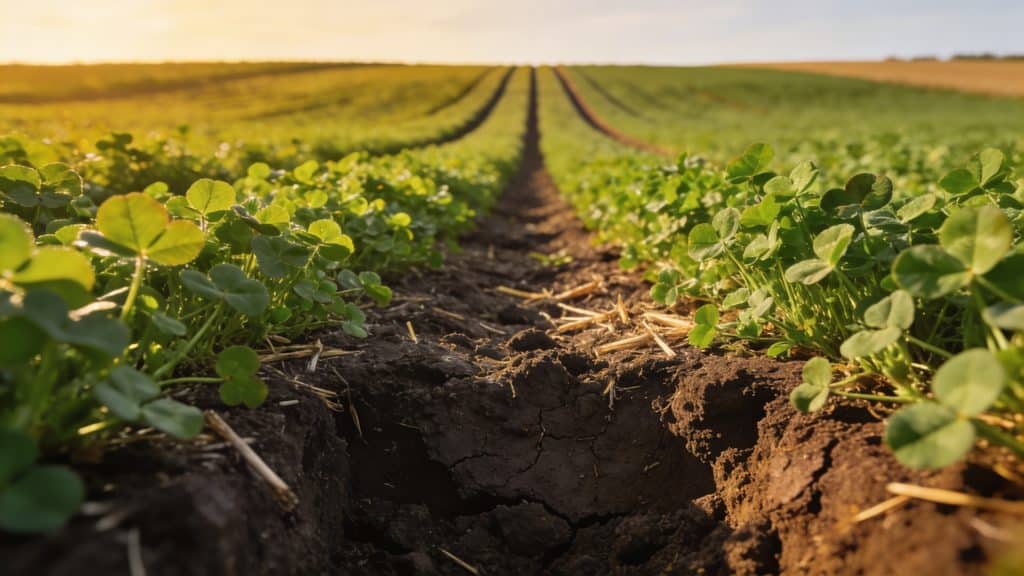
- Legumes: Such as clovers, vetch, and peas. These crops have the remarkable ability to fix atmospheric nitrogen into the soil through a symbiotic relationship with bacteria in their root nodules. This ‘free’ nitrogen reduces the need for synthetic fertilizers for subsequent cash crops.
- Grasses: Including rye, oats, wheat, and annual ryegrass. Grasses are excellent for producing large amounts of biomass, which, when incorporated or left as residue, significantly contributes to soil organic matter. Their fibrous root systems are also highly effective at preventing erosion and improving soil structure.
- Brassicas: Such as radishes, turnips, and mustard. These crops have deep taproots that can break up compacted soil layers, improving drainage and nutrient access for subsequent crops. Some brassicas also have biofumigant properties, helping to suppress soil-borne pests and diseases.
- Mixtures: Often, the most beneficial approach is to plant a mixture of cover crop types. A diverse mix can provide a broader range of benefits, combining nitrogen fixation with biomass production and deep root penetration.
Strategic Planting and Termination of Cover Crops
The success of cover cropping hinges on strategic timing. Cover crops are typically planted after the main cash crop harvest in the fall or winter, or sometimes inter-seeded during the cash crop’s growing season. The goal is to establish a robust cover crop stand that can grow and accumulate biomass before being terminated.
Planting Timing and Methods:
- Post-Harvest Planting: This is the most common method. Cover crops are drilled or broadcasted into fields after the cash crop has been harvested. Early planting is crucial to allow sufficient growth before winter dormancy.
- Inter-seeding: Planting cover crops directly into a standing cash crop (e.g., corn or soybeans) before harvest. This extends the cover crop’s growing season, allowing for more biomass accumulation and earlier establishment.
- Aerial Application: For large acreages, cover crops can be broadcasted by air into standing crops, particularly effective for establishing cover crops before harvest is complete.
Termination Methods:
Terminating cover crops correctly is as important as planting them. The goal is to allow the cover crop to provide its benefits without competing with the subsequent cash crop. Common termination methods include:
- Winterkill: In colder climates, some cover crops (e.g., oats, radishes) will naturally die over winter, simplifying management.
- Mechanical Termination: Rolling, crimping, or mowing can effectively terminate cover crops, especially large-biomass species like cereal rye. This leaves a thick mat of residue on the soil surface.
- Herbicides: Chemical termination is a common and effective method, particularly with glyphosate, allowing for precise control. Care must be taken to ensure proper timing to avoid herbicide resistance and off-target effects.
Maximizing Biomass for Soil Organic Matter Accumulation
The more biomass a cover crop produces, the greater its contribution to soil organic matter. Factors influencing biomass accumulation include:
- Species Selection: Choose cover crops known for high biomass production in your region.
- Planting Date: Earlier planting generally leads to more growth.
- Fertility: Ensure adequate soil fertility for cover crop growth, though legumes can fix their own nitrogen.
- Termination Timing: Delaying termination until the cover crop has reached its maximum growth stage (e.g., anthesis for cereal rye) can significantly increase biomass.
The Power of No-Till Techniques
No-till farming, also known as conservation tillage, is an agricultural technique for growing crops or pasture without disturbing the soil through tillage. It is a fundamental component of regenerative agriculture and, when combined with cover cropping, forms a powerful synergy for building soil organic matter.
The Detrimental Effects of Tillage
Traditional tillage practices, such as plowing and disking, have been used for centuries to prepare seedbeds, control weeds, and incorporate crop residues. However, extensive research has revealed the significant negative impacts of tillage on soil health:
- Organic Matter Decomposition: Tillage aerates the soil, which stimulates microbial activity and accelerates the decomposition of soil organic matter, releasing carbon into the atmosphere.
- Soil Structure Degradation: Tillage breaks down soil aggregates, leading to compaction, reduced water infiltration, and increased susceptibility to erosion.
- Disruption of Soil Biology: Tillage disrupts the delicate networks of fungi, bacteria, and other organisms that are vital for nutrient cycling and soil health.
- Erosion: Tilled soils are much more vulnerable to wind and water erosion, leading to loss of topsoil and nutrients.
Benefits of Adopting No-Till Farming
Transitioning to no-till farming offers a multitude of benefits, directly and indirectly contributing to increased soil organic matter:
- Reduced Organic Matter Loss: By minimizing soil disturbance, no-till significantly slows the decomposition of soil organic matter, allowing it to accumulate over time.
- Improved Soil Structure: Undisturbed soil develops stable aggregates, enhancing water infiltration, aeration, and root penetration.
- Enhanced Water Conservation: Crop residues left on the surface act as a mulch, reducing evaporation and improving water retention. This is crucial for drought resilience.
- Increased Microbial Activity: A stable, undisturbed soil environment fosters a healthier and more diverse microbial community, which is essential for nutrient cycling and soil health.
- Reduced Erosion: Surface residue and improved soil structure drastically reduce soil loss from wind and water erosion.
- Lower Fuel and Labor Costs: Fewer passes with machinery mean less fuel consumption and reduced labor requirements, leading to significant cost savings for farmers.
Implementing No-Till Effectively
Successfully adopting no-till requires careful planning and often a shift in management philosophy. Key considerations include:
- Residue Management: Uniform distribution of crop residues is crucial. Residues protect the soil, suppress weeds, and contribute to soil organic matter.
- Equipment Selection: No-till planters and drills are designed to cut through residue and place seeds accurately into undisturbed soil. Investing in appropriate equipment is essential.
- Weed Management: With no tillage to bury weeds, alternative strategies become more important. This includes the use of cover crops, crop rotation, and judicious herbicide application.
- Nutrient Management: Nutrients may be applied to the soil surface or banded below the surface. Soil testing is critical to ensure proper nutrient availability.
- Crop Rotation: Diverse crop rotations are even more beneficial in no-till systems, helping to manage pests, diseases, and nutrient cycling.
Synergy: Cover Cropping and No-Till Working Together
While both cover cropping and no-till techniques offer substantial benefits individually, their true power is unleashed when they are implemented together. This integrated approach creates a highly effective system for rapidly building soil organic matter and achieving truly regenerative outcomes.
Mutual Reinforcement of Benefits
- Enhanced Biomass Accumulation: No-till allows cover crop residues to remain on the surface, where they slowly decompose and contribute to SOM without being rapidly oxidized by tillage.
- Improved Soil Structure: The continuous root activity of cover crops, combined with the undisturbed nature of no-till, leads to superior soil aggregation and porosity.
- Weed Suppression: The combination of a standing cover crop and a thick residue layer from no-till provides excellent weed suppression, reducing reliance on herbicides.
- Nutrient Cycling: Cover crops scavenge residual nutrients, preventing their loss, and then release them as they decompose in the no-till environment, creating a closed-loop nutrient system.
- Increased Microbial Activity: The stable environment of no-till, coupled with the continuous supply of organic matter from cover crops, fosters a thriving and diverse soil microbial community.
Measuring and Monitoring Soil Organic Matter
To achieve the ambitious goal of a 5% increase in soil organic matter by 2026, farmers need to establish a baseline and regularly monitor their progress. Soil testing is the key to this process.
Baseline Soil Testing
Before implementing new practices, conduct comprehensive soil tests to determine current SOM levels, pH, and nutrient status. Use a consistent sampling methodology (e.g., same depth, same time of year, same locations) to ensure accurate comparisons over time.
Regular Monitoring
Re-test your soil every 2-3 years to track changes in soil organic matter. Look for trends and adjust your practices as needed. Beyond laboratory tests, simple on-farm observations can also provide valuable insights:
- Earthworm Counts: Higher numbers of earthworms are a good indicator of increasing SOM and healthy soil.
- Water Infiltration Rates: Observe how quickly water soaks into the soil after rainfall or irrigation. Improved infiltration suggests better soil structure.
- Soil Aggregation: Examine the soil for stable aggregates. A ‘crumbly’ soil texture is desirable.
- Residue Decomposition: Monitor how quickly crop residues break down, indicating active microbial communities.
Challenges and Solutions for Adoption
While the benefits of increasing soil organic matter through cover cropping and no-till are clear, farmers may face challenges during adoption. Understanding these can help in successful transitions.
Initial Investment in Equipment
No-till farming often requires specialized planters and drills. This initial investment can be a barrier. Solutions include:
- Government Programs: USDA and state-level conservation programs (e.g., EQIP, CSP) often offer cost-share assistance for equipment purchases or practice implementation.
- Shared Equipment: Farmers can pool resources to purchase equipment or utilize custom applicators.
- Leasing Options: Explore leasing new no-till equipment to spread out the cost.
Learning Curve and Management Complexity
Integrating cover crops and no-till can introduce new management considerations, such as cover crop selection, planting, termination, and weed management in a residue-heavy environment. Solutions include:
- Education and Training: Attend workshops, field days, and webinars offered by extension services, conservation districts, and farmer networks.
- Peer Learning: Connect with experienced no-till and cover crop farmers in your region to learn from their successes and challenges.
- Consultation: Work with agricultural consultants specializing in regenerative practices.
Weed and Pest Management
Shifting from tillage-based systems can alter weed and pest dynamics. Solutions:
- Integrated Pest Management (IPM): Employ a holistic approach combining cultural, biological, and chemical controls.
- Diverse Crop Rotations: Break pest and weed cycles with varied cash crops and cover crops.
- Strategic Cover Crop Selection: Use cover crops known for weed suppression (e.g., cereal rye).
- Scouting: Regular field scouting is crucial to identify and address issues early.
The Economic Case for Higher Soil Organic Matter
Beyond environmental stewardship, increasing soil organic matter offers tangible economic benefits for US farmers, making the 5% by 2026 goal not just an environmental aspiration but a sound business strategy.
Reduced Input Costs
As SOM increases, soil health improves, leading to:
- Lower Fertilizer Needs: Improved nutrient cycling and nitrogen fixation by legumes reduce the need for synthetic fertilizers.
- Decreased Herbicide Use: Cover crops and residue cover provide natural weed suppression.
- Reduced Fuel and Labor: No-till farming significantly cuts down on equipment passes, saving on fuel and labor costs.
- Less Water Consumption: Enhanced water retention capacity of high SOM soils can reduce irrigation needs.
Increased Yield Stability and Resilience
Healthy soils with higher SOM are more resilient to extreme weather events, such as droughts and heavy rainfall. This leads to more consistent yields year after year, reducing financial risk for farmers.
Potential for Carbon Credits and Ecosystem Service Payments
As the market for ecosystem services matures, farmers who sequester carbon in their soils through practices like cover cropping and no-till may be eligible for carbon credit payments or other incentives, creating new revenue streams.
Conclusion: A Sustainable Future for US Agriculture
The journey to boosting soil organic matter by 5% by 2026 is a critical one for US agriculture. By embracing and mastering cover cropping and no-till techniques, farmers can unlock a cascade of benefits: healthier soils, more resilient crops, reduced input costs, and a significant contribution to climate change mitigation. This isn’t just about incremental improvements; it’s about fundamentally transforming our agricultural systems into more sustainable, productive, and profitable enterprises. The tools and knowledge are available; the time to act is now, laying the foundation for a vibrant and sustainable future for generations of US farmers.