U.S. Organic Certification: 8% Growth Projected by 2026
Anúncios
The landscape of American agriculture is undergoing a significant transformation, with organic farming leading the charge towards a more sustainable and health-conscious future. A compelling projection indicates an 8% growth in U.S. organic certifications by 2026, a testament to the surging consumer demand for organic products and the increasing commitment of producers to sustainable practices. This anticipated expansion is not merely a statistical blip; it represents a fundamental shift in how food is produced, marketed, and consumed across the nation. Understanding the drivers behind this organic certification growth is crucial for farmers, businesses, policymakers, and consumers alike.
The journey towards an 8% increase in organic certifications is paved with several key factors, including heightened consumer awareness about health and environmental impacts, the evolving retail landscape, and robust support systems for organic producers. As more Americans seek out food produced without synthetic pesticides, GMOs, or artificial fertilizers, the demand for certified organic products continues to outpace conventional offerings. This article will delve deep into the multifaceted aspects contributing to this projected growth, exploring the economic, environmental, and social implications of a burgeoning organic sector.
Anúncios
The Unstoppable Tide of Consumer Demand for Organic Certification Growth
At the heart of the projected 8% organic certification growth is the undeniable power of consumer demand. Over the past decade, there has been a steady and significant increase in consumer preference for organic products. This isn’t just a fleeting trend; it’s a deeply ingrained shift in values and priorities. Consumers are becoming increasingly educated about the food they eat, the methods used to produce it, and the impact of these choices on their health and the planet. This heightened awareness translates directly into purchasing decisions, with a growing segment of the population actively seeking out the USDA organic seal.
Several factors contribute to this escalating demand. Health concerns are paramount; many consumers believe organic foods are healthier due to the absence of synthetic chemicals and potential exposure to pesticide residues. The perception of better nutritional value, though sometimes debated, also plays a role. Beyond personal health, environmental stewardship is a powerful motivator. Consumers are increasingly aware of the detrimental effects of conventional farming practices on soil health, water quality, and biodiversity. They see organic farming as a solution, a way to support agricultural systems that work in harmony with nature rather than against it.
Furthermore, ethical considerations, such as animal welfare in organic livestock production, resonate with a significant portion of the consumer base. The transparency and traceability that often accompany organic certification also build trust, allowing consumers to feel more connected to their food source. This confluence of health, environmental, and ethical concerns creates a powerful pull towards organic products, driving retailers to expand their organic offerings and, in turn, encouraging more producers to pursue organic certification growth.
Anúncios
The growth in demand is not uniform across all organic categories. While fresh produce remains a strong entry point for many consumers, processed organic foods, dairy, meat, and packaged goods are also experiencing robust growth. This diversification indicates a maturing market where organic is no longer a niche choice but an integral part of many households’ regular shopping lists. As the market expands, so too does the opportunity for U.S. producers to capitalize on this trend by obtaining organic certification, thereby contributing to the projected 8% increase.
Economic Incentives and Market Opportunities Driving Organic Certification Growth
While consumer demand provides the impetus, economic incentives and expanding market opportunities are the fuel for organic certification growth among U.S. producers. Farmers are astute business owners, and they respond to market signals. The premium prices often commanded by organic products, coupled with the consistent growth in sales, present a compelling financial argument for transitioning to organic practices.
The ‘organic premium’ is a significant draw. Organic products typically fetch higher prices at retail compared to their conventional counterparts. This premium helps offset the potentially higher labor costs and initial investment associated with organic farming, making it a viable and often more profitable option in the long run. As consumer demand for organic continues to rise, this premium is likely to remain stable or even increase in certain categories, further incentivizing organic certification growth.
Beyond higher prices, access to new markets is another powerful economic driver. Many mainstream retailers, from large supermarket chains to online grocers, are actively expanding their organic sections to meet consumer demand. For producers, organic certification opens doors to these lucrative markets, allowing them to reach a broader customer base and diversify their sales channels. Specialized organic markets, food cooperatives, and direct-to-consumer models also offer strong opportunities for certified organic producers.
Government programs and initiatives also play a role in supporting organic transition. The USDA, for instance, offers various programs that provide financial assistance, technical support, and educational resources to farmers interested in organic certification. These programs help mitigate some of the risks and challenges associated with transitioning from conventional to organic farming, making the process more accessible and attractive. Such support is crucial for encouraging organic certification growth, especially for smaller and mid-sized farms.
The global market for organic products is also expanding, offering export opportunities for U.S. organic producers. As more countries embrace organic standards, the potential for international trade in certified organic goods grows, providing an additional economic incentive for U.S. farms to pursue and maintain organic certification. This global perspective adds another layer of opportunity to the overall organic certification growth trajectory.
Policy and Regulatory Frameworks: Facilitating Organic Certification Growth
The robust policy and regulatory frameworks governing organic agriculture in the U.S. are foundational to the projected 8% organic certification growth. The USDA National Organic Program (NOP) sets the standards for organic production, handling, labeling, and enforcement. This comprehensive system provides clarity, ensures integrity, and builds consumer trust, all of which are essential for market expansion.
The existence of a clear, legally defined ‘organic’ standard gives producers a target to aim for and consumers confidence in what they are buying. Without these stringent regulations, the term ‘organic’ would be open to interpretation, leading to confusion and potential fraud, which would undoubtedly stifle organic certification growth. The NOP’s continuous efforts to update and improve these standards, in response to evolving agricultural practices and scientific understanding, further reinforces the credibility of the organic label.
The certification process itself, while rigorous, is designed to be accessible. Farmers work with accredited certifying agents who verify compliance with organic standards. This third-party verification is a cornerstone of the organic system, providing an independent check on organic claims. As the demand for organic products grows, the infrastructure for certification has also expanded, with more certifying agents available to assist producers through the process, thereby supporting organic certification growth.
Policy initiatives, such as those promoting organic research and development, also contribute significantly. Investments in organic breeding programs, pest management strategies, and soil health research provide farmers with the tools and knowledge necessary to successfully transition to and maintain organic production. These advancements make organic farming more efficient and productive, addressing some of the common concerns producers may have about yield or disease management in an organic system.
Moreover, policies that encourage land conservation and sustainable resource management often align well with organic principles, creating a supportive environment for organic agriculture. As climate change concerns become more pressing, the role of organic farming in sequestering carbon, reducing greenhouse gas emissions, and promoting biodiversity is gaining recognition, potentially leading to further policy support that will accelerate organic certification growth.
Technological Innovations and Sustainable Practices in Organic Farming
The projected 8% organic certification growth is not solely a story of demand and policy; it’s also a narrative of innovation. Modern organic farming is increasingly embracing technological advancements and refined sustainable practices to enhance efficiency, productivity, and environmental benefits. These innovations are making organic farming more viable and attractive to a broader range of producers.

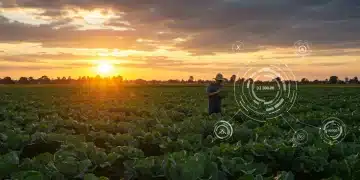
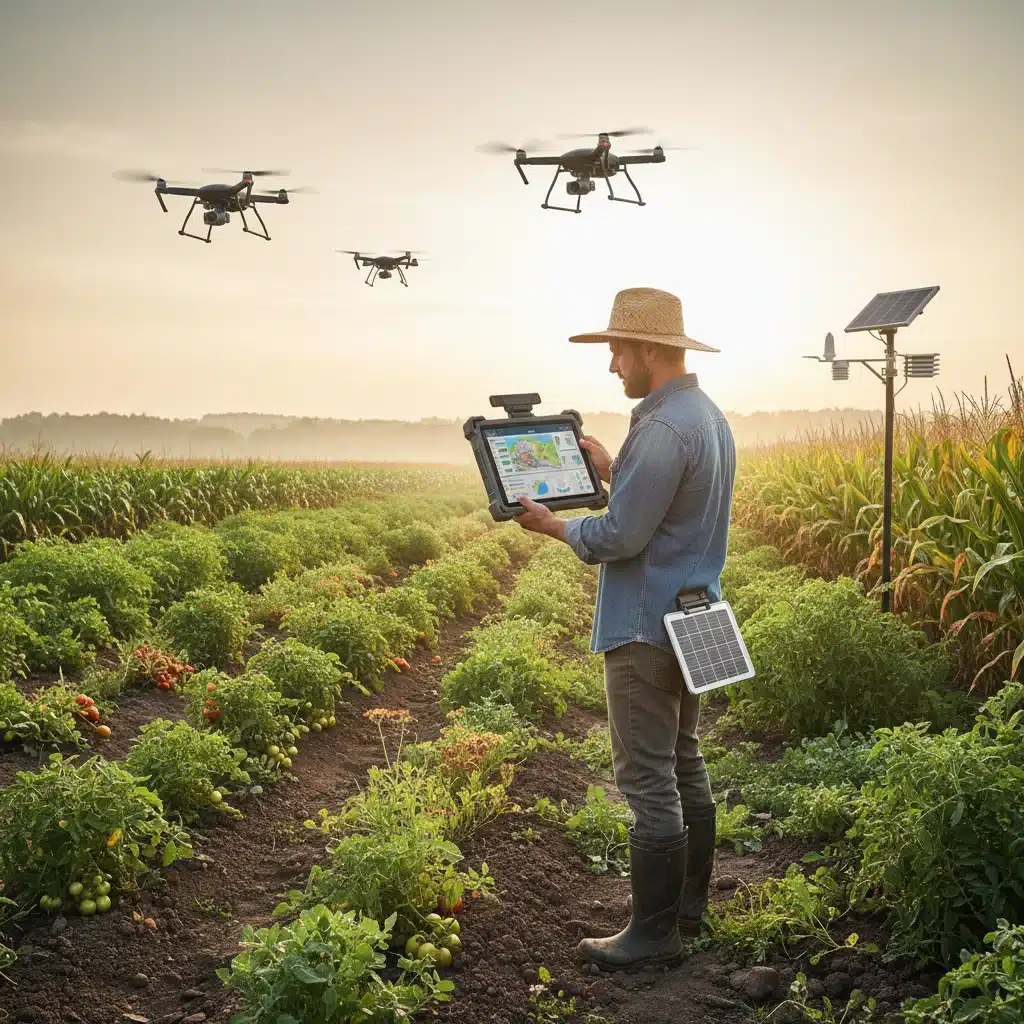
Precision agriculture, once primarily associated with conventional farming, is finding its place in organic systems. Technologies like GPS-guided tractors, drone-based crop monitoring, and sensor networks for soil and moisture analysis are helping organic farmers optimize resource use, manage pests and diseases more effectively, and improve yields. These tools allow for more targeted interventions, reducing the need for broad-spectrum treatments and aligning perfectly with organic principles.
Advancements in organic pest and weed management are also crucial. Biological controls, beneficial insect releases, organic approved biopesticides, and sophisticated crop rotation strategies are constantly being developed and refined. Similarly, innovative approaches to nutrient management, such as advanced composting techniques, cover cropping, and the use of diverse organic amendments, are improving soil health and fertility, which are cornerstones of organic production. These practices not only meet organic standards but often exceed the environmental performance of conventional methods.
Furthermore, research into organic seed varieties that are naturally resistant to pests and diseases, and better adapted to specific organic growing conditions, is making organic farming more resilient. Genetic diversity in crops is a key component of organic agriculture, and ongoing breeding efforts are vital for the sector’s long-term success and for fostering organic certification growth.
The sharing of knowledge and best practices among organic farmers, often facilitated by extension services, farmer networks, and online platforms, also accelerates the adoption of sustainable techniques. Experienced organic farmers mentor new entrants, creating a community of practice that supports continuous improvement and innovation. This collaborative spirit is a significant asset in driving organic certification growth.
Challenges and Opportunities on the Path to 8% Organic Certification Growth
While the outlook for an 8% organic certification growth by 2026 is optimistic, it’s important to acknowledge the challenges that producers face and the opportunities that arise from addressing them. Understanding these dynamics is key to sustaining and accelerating the growth trajectory.
One of the primary challenges is the transition period. Farmers transitioning from conventional to organic practices must adhere to organic standards for three years before their land and products can be certified organic. This ‘transition period’ can be financially challenging, as producers incur organic-level costs without yet receiving organic price premiums. Support programs, both governmental and private, are crucial for helping farmers bridge this gap and encourage organic certification growth.
Another challenge lies in the availability of organic inputs, such as organic seeds, feed, and approved pest control products. While the market for these inputs is growing, ensuring a consistent and diverse supply remains important. Developing robust supply chains for organic inputs is essential for scaling up organic production. Labor costs can also be higher in organic farming, as it often relies more on manual labor for weeding and pest management rather than synthetic chemical solutions.
However, these challenges also present significant opportunities. The demand for organic inputs creates a new market for businesses specializing in sustainable agricultural products and services. Innovation in organic machinery and automation can help address labor challenges. Furthermore, the increasing consumer willingness to pay a premium for organic products makes the investment in transition and organic practices worthwhile.
Education and outreach are also critical opportunities. Informing both producers about the benefits and processes of organic certification, and educating consumers about the value of organic products, can further stimulate demand and supply. Building stronger regional food systems, where organic producers can connect directly with local consumers and businesses, also strengthens the organic sector.
The opportunity for continuous improvement in organic standards and practices is also ever-present. As scientific understanding evolves, so too can the NOP standards, ensuring that organic agriculture remains at the forefront of sustainable food production. This adaptability will be vital for maintaining the integrity and relevance of organic certification growth in the long term.
The Future Landscape: Beyond 2026 for Organic Certification Growth
Looking beyond the projected 8% organic certification growth by 2026, the future of organic agriculture in the U.S. appears bright and dynamic. This anticipated growth is not an endpoint but rather a milestone in a larger, ongoing movement towards a more sustainable and resilient food system. Several emerging trends and long-term implications suggest that the organic sector will continue its upward trajectory.
One significant trend is the increasing integration of organic principles into broader sustainable agriculture initiatives. As concerns about climate change, biodiversity loss, and food security intensify, organic farming’s role in addressing these challenges will become even more prominent. Expect to see greater collaboration between organic advocates, environmental organizations, and policymakers to leverage organic practices for wider ecological and societal benefits.
The growth of urban and peri-urban organic farming is another exciting development. As consumers seek fresher, locally sourced food, and as land use patterns evolve, organic farms are emerging in and around metropolitan areas. These operations often employ innovative techniques like vertical farming and controlled environment agriculture, bringing organic produce closer to consumers and reducing transportation footprints. This localized organic production can significantly contribute to overall organic certification growth.
Furthermore, the educational pipeline for organic agriculture is strengthening. More universities and agricultural colleges are offering specialized programs in organic farming, producing a new generation of farmers, researchers, and policymakers equipped with the knowledge and skills to advance the sector. This investment in human capital is crucial for sustaining long-term organic certification growth and innovation.
Consumer demographics also point to continued expansion. Younger generations, in particular, demonstrate a strong preference for organic and sustainably produced goods. As these demographics gain more purchasing power, their influence on the food market will only grow, further driving demand for organic products and encouraging more producers to pursue organic certification. The mainstreaming of organic food means it’s no longer just for a niche market but an expectation for a significant portion of the population.
Finally, the resilience of organic systems in the face of environmental challenges, such as extreme weather events, is gaining recognition. The emphasis on soil health, biodiversity, and ecological balance in organic farming often makes these systems more adaptable and less susceptible to the impacts of climate change, positioning organic agriculture as a key component of future food security strategies. This inherent resilience will likely encourage further organic certification growth as producers seek more robust farming models.
Conclusion: Embracing the Organic Future
The projected 8% organic certification growth in the U.S. by 2026 is a powerful indicator of a fundamental shift in the nation’s agricultural landscape. Driven by an informed and values-driven consumer base, supported by economic incentives, robust policy frameworks, and fueled by technological innovation, the organic sector is poised for continued expansion. This growth represents not just an increase in certified farms and products, but a broader commitment to health, environmental stewardship, and sustainable food systems.
For U.S. producers, embracing organic certification growth offers a pathway to increased profitability, market diversification, and the satisfaction of contributing to a healthier planet. While challenges remain, the opportunities are vast and compelling. As consumers increasingly demand transparency, sustainability, and quality in their food choices, the organic label stands as a beacon of trust and integrity.
The journey towards a more organic future is a collaborative one, requiring ongoing commitment from farmers, consumers, retailers, policymakers, and researchers. By working together, the U.S. can not only achieve but potentially exceed the projected 8% growth, solidifying its position as a leader in sustainable agriculture and ensuring a vibrant, healthy food system for generations to come. The momentum is undeniable, and the future is organic.