Sensor-Based Soil Analysis: 3 New Technologies for Enhanced Nutrient Management in 2026
Anúncios
The agricultural landscape is undergoing a profound transformation, driven by an urgent need for increased efficiency, sustainability, and productivity. As global populations continue to rise and climate change presents unprecedented challenges, farmers are turning to cutting-edge technologies to optimize their operations. Central to this revolution is the advancement of soil sensor technology, a field that promises to redefine how we understand and manage the very foundation of agriculture: the soil.
For decades, soil analysis has been a cornerstone of effective nutrient management. However, traditional methods, often involving laboratory analysis of soil samples, can be time-consuming, labor-intensive, and provide only a snapshot of soil conditions. The advent of sensor-based systems has begun to change this, offering real-time, in-situ data that empowers farmers to make more informed and immediate decisions. By 2026, we anticipate a significant leap forward with the widespread adoption of several new and innovative soil sensor technology solutions that will revolutionize nutrient management.
The Evolution of Soil Sensor Technology: From Basic to Brilliant
Early soil sensors were relatively simple, primarily measuring basic parameters like soil moisture and temperature. While valuable, their capabilities were limited. The next generation introduced sensors capable of detecting pH and electrical conductivity, providing a slightly more comprehensive picture. However, the true game-changer lies in the development of sensors that can accurately and reliably measure specific nutrient levels, organic matter content, and even microbial activity directly in the field. This evolution is critical for precision agriculture, allowing farmers to apply inputs precisely where and when they are needed, minimizing waste and maximizing yield.
Anúncios
The benefits of advanced soil sensor technology extend far beyond mere efficiency. They contribute significantly to environmental sustainability by reducing nutrient runoff, which can pollute waterways and contribute to greenhouse gas emissions. By optimizing fertilizer application, farmers can decrease their carbon footprint and promote healthier ecosystems. Furthermore, improved nutrient management leads to stronger, more resilient crops, better able to withstand pests, diseases, and adverse weather conditions. This holistic approach to soil health is not just good for business; it’s good for the planet.
Why Nutrient Management is Critical for Modern Agriculture
Nutrient management is the strategic process of supplying crops with the right amount of essential nutrients at the right time. It’s a delicate balance; too little can stunt growth and reduce yields, while too much can be wasteful, costly, and environmentally damaging. Traditional nutrient management often relies on broad recommendations based on regional soil types and general crop requirements. This approach, while better than none, often fails to account for the highly variable conditions that can exist even within a single field. Factors such as soil texture, organic matter content, topography, and previous cropping history all influence nutrient availability and uptake.
The limitations of traditional methods become particularly apparent when considering the dynamic nature of soil. Nutrient levels fluctuate throughout the growing season due to plant uptake, microbial activity, precipitation, and fertilization. A soil test taken at the beginning of the season may not accurately reflect the soil’s nutrient status weeks or months later. This is where real-time data from advanced soil sensor technology becomes indispensable. It allows for adaptive nutrient strategies, enabling farmers to respond to changing conditions and ensure their crops always have optimal access to the nutrients they need.
Anúncios
The Economic and Environmental Imperatives
Economically, over-fertilization is a direct hit to a farmer’s bottom line. Fertilizers represent a significant input cost, and any wasted application translates directly into lost profit. Conversely, under-fertilization leads to reduced yields and lower quality produce, also impacting revenue. Precision nutrient management, facilitated by advanced soil sensor technology, ensures that every dollar spent on fertilizer is maximized for crop benefit. Environmentally, the stakes are even higher. Excess nitrogen and phosphorus can leach into groundwater or run off into surface waters, causing eutrophication, algal blooms, and harming aquatic ecosystems. Nitrous oxide, a potent greenhouse gas, is also released from nitrogen fertilizers, contributing to climate change. By minimizing excess nutrient application, sensor technology plays a crucial role in mitigating these environmental impacts.
Moreover, healthy soil is a carbon sink, capable of sequestering atmospheric carbon dioxide. Practices that improve soil health, such as optimized nutrient management, contribute to climate change mitigation efforts. The integration of sophisticated soil sensor technology is not just about making farming more efficient; it’s about making it more sustainable and resilient for future generations.
3 New Soil Sensor Technologies Revolutionizing Nutrient Management by 2026
The pace of innovation in agricultural technology is accelerating, and by 2026, we expect to see several groundbreaking soil sensor technology solutions move from research labs to widespread commercial adoption. These technologies promise to offer unprecedented insights into soil health and nutrient dynamics, enabling a new era of precision agriculture.
1. Nanotechnology-Enhanced Spectroscopic Sensors (NESS)
Nanotechnology, the manipulation of matter on an atomic and molecular scale, is poised to revolutionize soil sensor technology. Nanotechnology-Enhanced Spectroscopic Sensors (NESS) leverage the unique properties of nanomaterials to detect and quantify specific nutrient ions in soil with extreme precision and sensitivity. Traditional spectroscopic methods often require lab-based analysis or are limited in their in-situ capabilities due to interference from soil particles and water.
NESS sensors overcome these limitations by incorporating plasmonic nanoparticles or quantum dots that enhance the spectroscopic signal of adjacent nutrient ions like nitrate, phosphate, and potassium. This allows for rapid, accurate, and non-destructive measurement directly in the field. The miniaturization possible with nanotechnology also means these sensors can be extremely small, durable, and cost-effective to deploy at high densities across a field.
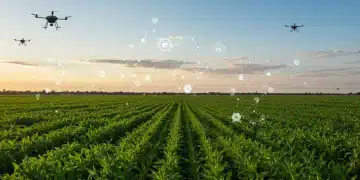
By 2026, we anticipate NESS systems being integrated into autonomous field robots or drone-mounted platforms, capable of mapping nutrient variability at an unprecedented resolution. Imagine a fleet of small robots traversing a field, continuously sampling and reporting on nutrient levels, allowing for dynamic, zone-specific fertilization strategies. This level of detail in soil sensor technology will enable farmers to apply nutrients with surgical precision, dramatically reducing waste and environmental impact while maximizing crop uptake and yield potential.
2. AI-Powered Microbial Activity Sensors (AIMAS)
Beyond chemical nutrients, the microbial life within the soil plays a critical role in nutrient cycling, organic matter decomposition, and overall soil health. Traditional methods for assessing microbial activity are often labor-intensive and provide delayed results. AI-Powered Microbial Activity Sensors (AIMAS) represent a breakthrough in understanding the living component of soil, offering real-time insights into microbial health and function.
AIMAS sensors utilize advanced electrochemical or optical techniques to detect specific metabolic byproducts or genetic markers associated with microbial respiration, biomass, and diversity. For instance, some AIMAS prototypes are designed to measure minute changes in electrical potential or fluorescence patterns that correlate directly with microbial activity. The raw data collected by these sensors is then fed into sophisticated Artificial Intelligence (AI) algorithms. These AI models are trained on vast datasets of microbial genomics, environmental conditions, and crop performance, allowing them to interpret complex sensor readings and provide actionable insights.
The AI component is crucial because microbial ecosystems are incredibly complex. The AI can identify patterns and correlations that human analysis might miss, predicting nutrient mineralization rates, disease suppression potential, and overall soil vitality. By 2026, AIMAS will allow farmers to monitor the health of their soil microbiome in real-time, enabling them to adjust practices like tillage, cover cropping, and biological amendments to foster a thriving microbial community. This advanced soil sensor technology will move nutrient management beyond simply adding chemical inputs, towards a more holistic approach that nurtures the soil’s natural fertility and resilience.
3. Wireless Self-Powered Geochemical Sensor Networks (WSGSN)
One of the persistent challenges in deploying widespread soil sensor technology has been power supply and data transmission. Batteries require regular replacement, and wired networks are impractical in large fields. Wireless Self-Powered Geochemical Sensor Networks (WSGSN) address these issues by combining energy harvesting technologies with robust, long-range wireless communication protocols, creating truly autonomous and scalable sensing solutions.
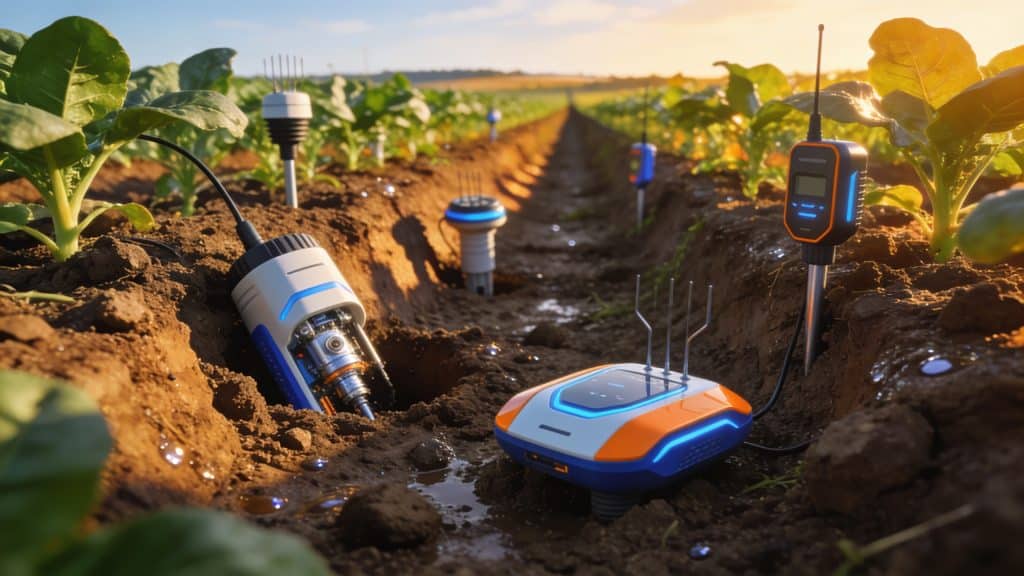
These sensors are designed to draw power from their environment, utilizing miniature solar panels, thermoelectric generators (harvesting temperature differences), or even vibrational energy harvesting from wind or machinery. This eliminates the need for battery replacements, drastically reducing maintenance costs and making dense sensor deployments feasible. Each sensor node in a WSGSN is equipped with multiple geochemical sensors (e.g., for pH, EC, specific ions, dissolved gases) and a small processing unit. They communicate with each other and a central gateway using low-power, long-range wireless protocols like LoRaWAN or NB-IoT, which are optimized for agricultural environments.
By 2026, WSGSN will allow farmers to deploy thousands of sensors across their fields, creating a high-resolution, dynamic map of soil conditions. This continuous stream of data will feed into farm management platforms, providing real-time alerts and recommendations for irrigation, fertilization, and even pest and disease risk assessment. The self-powered nature ensures continuous operation, providing an uninterrupted flow of critical information. This advancement in soil sensor technology represents a significant step towards fully autonomous and data-driven farming systems, where the soil itself communicates its needs directly to the farmer.
Integrating Sensor Data for Holistic Farm Management
The true power of these new soil sensor technology advancements lies not just in their individual capabilities, but in their integration into comprehensive farm management systems. Raw sensor data, no matter how precise, is only useful if it can be translated into actionable insights. This requires sophisticated data analytics platforms that can aggregate data from multiple sensor types (soil, weather, plant, imagery), apply machine learning algorithms, and present the information in an intuitive, user-friendly format.
Imagine a dashboard that provides a real-time health score for each zone of a field, highlighting areas with nutrient deficiencies, water stress, or suboptimal microbial activity. Such a system, fueled by continuous input from NESS, AIMAS, and WSGSN, would allow farmers to implement variable-rate applications of fertilizers, water, and biological amendments with unprecedented accuracy. This level of precision minimizes waste, reduces environmental impact, and significantly boosts crop yield and quality.
The Role of Artificial Intelligence and Machine Learning
Artificial Intelligence (AI) and Machine Learning (ML) are the brains behind these integrated systems. They can identify complex patterns and correlations within the massive datasets generated by new soil sensor technology that would be impossible for humans to discern. For example, ML models can predict nutrient uptake rates based on soil type, weather forecasts, crop growth stage, and microbial activity, allowing for predictive rather than reactive nutrient management. AI can also optimize irrigation schedules by combining soil moisture data with evapotranspiration rates and crop water requirements.
Furthermore, AI-driven platforms can learn from past seasons’ data, continuously refining their recommendations and improving their accuracy over time. This adaptive learning capability ensures that the farm management system becomes increasingly intelligent and efficient with each passing year. The synergy between advanced soil sensor technology and AI/ML is what truly unlocks the potential for sustainable and highly productive agriculture.
Challenges and Future Outlook for Soil Sensor Technology
While the future of soil sensor technology looks incredibly promising, several challenges need to be addressed for widespread adoption. Cost remains a significant barrier for many farmers, especially small and medium-sized operations. As these technologies mature and economies of scale are achieved, prices are expected to decrease, making them more accessible. Durability and longevity in harsh agricultural environments are also critical considerations. Sensors need to withstand extreme temperatures, moisture, chemical exposure, and physical impact from machinery. Continued research and development are focused on creating robust, long-lasting devices.
Data interpretation and connectivity are another area of focus. While AI helps, farmers still need user-friendly interfaces and reliable network infrastructure in rural areas to fully leverage real-time data. Ensuring interoperability between different sensor types and farm management platforms is also essential to avoid fragmented data ecosystems. Standardization efforts will play a key role in overcoming these integration hurdles.
The Road Ahead: 2026 and Beyond
By 2026, we anticipate a significant increase in the adoption of these advanced soil sensor technology solutions. Early adopters will demonstrate clear returns on investment through reduced input costs, increased yields, and improved environmental compliance. This success will drive further innovation and market penetration. We will see sensors becoming even more miniaturized, potentially integrating directly into seeds or roots to monitor plant-level nutrient uptake. The concept of ‘living sensors’ – genetically engineered microbes that change color or emit signals in response to specific soil conditions – is also on the horizon, offering a truly biological approach to soil monitoring.
Furthermore, the integration of these sensors with robotic platforms and autonomous farm machinery will become standard. Tractors and drones will not just apply inputs; they will continuously scan, analyze, and adapt their operations based on real-time soil intelligence. This holistic, closed-loop system will represent the pinnacle of precision agriculture, transforming farming into a highly optimized, data-driven science.
Conclusion: A New Era for Nutrient Management with Advanced Soil Sensor Technology
The future of agriculture is inextricably linked to the health and productivity of our soil. The emergence of new soil sensor technology, such as Nanotechnology-Enhanced Spectroscopic Sensors (NESS), AI-Powered Microbial Activity Sensors (AIMAS), and Wireless Self-Powered Geochemical Sensor Networks (WSGSN), is set to revolutionize nutrient management by 2026. These innovations offer unprecedented levels of detail, accuracy, and real-time insights into the complex dynamics of soil ecosystems.
By embracing these technologies, farmers can move beyond traditional, generalized approaches to nutrient application and adopt highly precise, adaptive strategies. This shift will not only lead to substantial economic benefits through optimized input use and increased yields but will also drive significant environmental improvements by reducing nutrient runoff, minimizing greenhouse gas emissions, and promoting healthier, more resilient soils. The integration of these sensors with AI and machine learning platforms will create intelligent farm management systems that continuously learn and adapt, making farming more efficient, sustainable, and profitable than ever before.
The journey towards fully data-driven agriculture is well underway, and by 2026, soil sensor technology will undoubtedly be at the forefront, empowering farmers to cultivate a more sustainable and productive future for global food security. The ground beneath our feet is about to become the smartest part of the farm.