Data Analytics in US Agriculture: Boosting Yields by 18% with Predictive Models
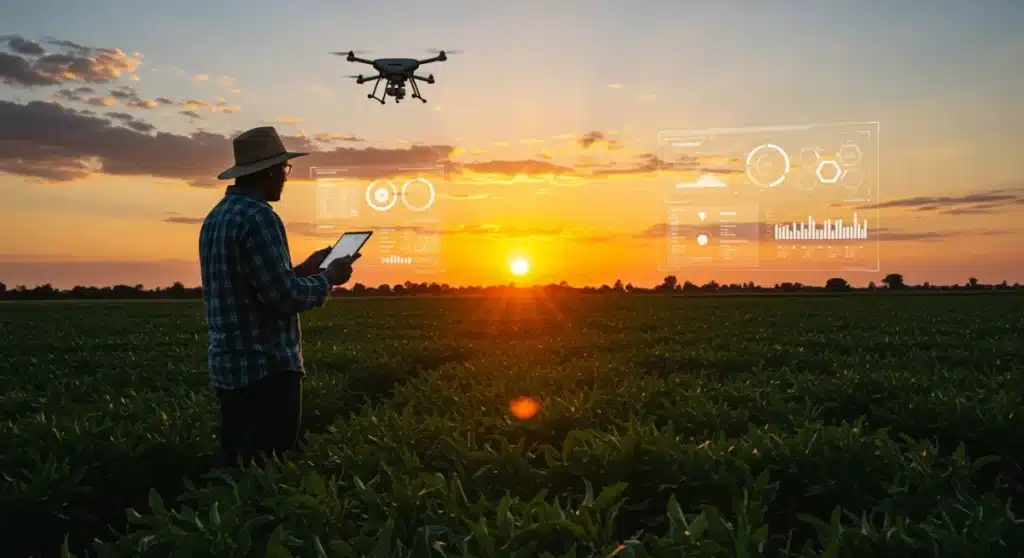
The integration of data analytics and predictive models is set to propel US agricultural output, forecasting an impressive 18% surge in crop yields by 2026, leading to substantial financial gains for the industry.
The landscape of American farming is undergoing a profound transformation, driven by technological advancements. Among these, the application of predictive agriculture analytics stands out as a game-changer, promising not just incremental improvements but a significant leap in productivity. By leveraging vast amounts of data, farmers and agribusinesses are gaining unprecedented insights, leading to smarter decisions and, ultimately, higher yields and greater profitability. This shift is not merely theoretical; projections indicate an 18% increase in US agricultural yields by 2026, translating into a substantial financial impact across the nation.
The Dawn of Data-Driven Farming in the US
Agriculture in the United States has always been at the forefront of innovation, constantly seeking methods to improve efficiency and output. Today, the digital revolution is providing tools that were once unimaginable, turning every farm into a potential data powerhouse. This era of data-driven farming moves beyond traditional guesswork, empowering producers with precise, actionable intelligence.
The shift towards data-centric operations is fueled by an explosion of information from various sources. Sensors embedded in the soil, drones surveying vast fields, satellite imagery capturing plant health, and advanced weather forecasting systems all contribute to a rich tapestry of data. This collective information, when analyzed effectively, forms the bedrock of predictive models that anticipate future conditions and optimize farm management strategies.
Collecting and Consolidating Agricultural Data
The first step in any robust data analytics strategy is efficient data collection. Modern farms are increasingly equipped with an array of smart devices designed to gather real-time information. This data is then consolidated into centralized platforms, creating a comprehensive digital twin of the farm environment.
- Sensor Networks: Ground-based sensors monitor soil moisture, nutrient levels, and temperature, providing critical insights into growing conditions.
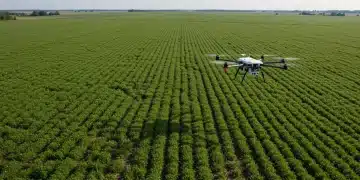
- Aerial Imagery: Drones and satellites capture high-resolution images, detecting plant stress, pest infestations, and variations in crop growth across fields.
- Farm Equipment Telematics: Modern tractors and harvesters generate data on fuel consumption, operational efficiency, and spatial application of inputs.
- Weather Stations: Localized weather data, combined with regional forecasts, helps predict precipitation, temperature fluctuations, and potential extreme weather events.
By meticulously gathering and integrating this diverse data, farmers can move from reactive problem-solving to proactive, predictive management. This foundational data layer is crucial for building accurate predictive models that support the ambitious goal of boosting yields.
Predictive Models: The Engine of Yield Optimization
At the heart of the projected yield increase lies the sophistication of predictive models. These complex algorithms process historical and real-time data to forecast outcomes, identify potential risks, and recommend optimal interventions. They are essentially digital crystal balls for farmers, offering a glimpse into the future of their fields.
Predictive models in agriculture are not monolithic; they encompass a variety of techniques, from machine learning algorithms that identify patterns in vast datasets to statistical models that quantify relationships between variables. The goal is always the same: to provide farmers with the best possible information to make timely and effective decisions.
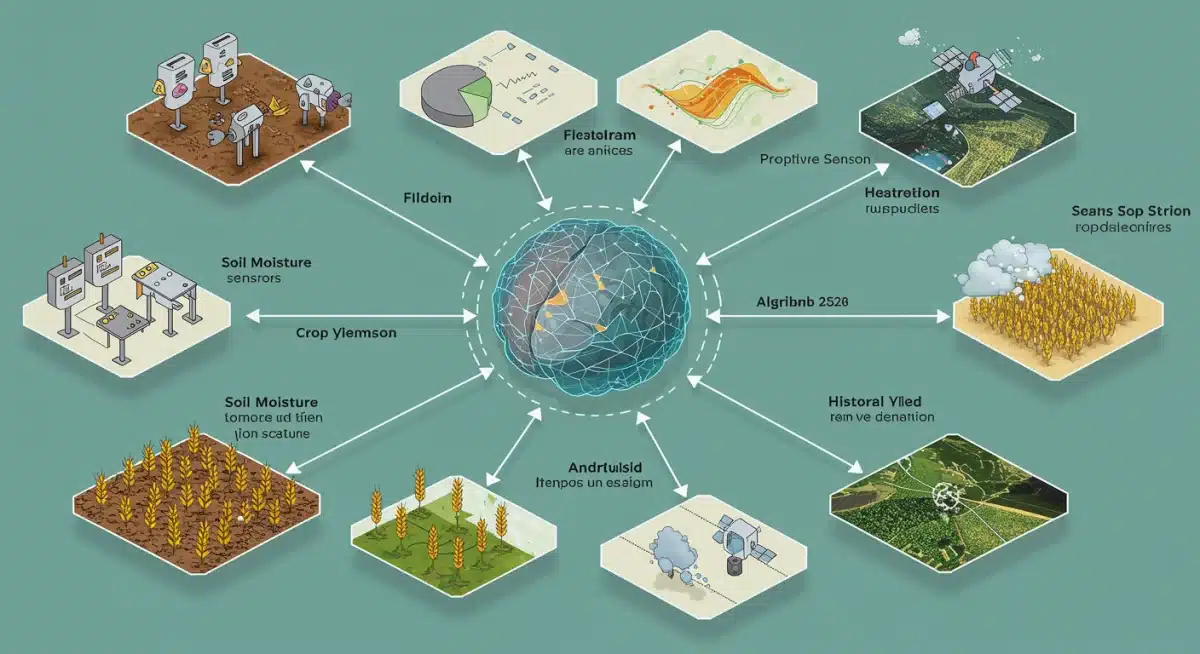
One of the primary applications of these models is in forecasting crop yields. By analyzing historical yield data alongside current environmental conditions, planting schedules, and input usage, models can estimate future harvests with remarkable accuracy. This allows farmers to plan logistics, negotiate contracts, and manage market expectations more effectively.
Forecasting and Risk Mitigation
Beyond simple yield prediction, predictive analytics plays a crucial role in mitigating risks. By anticipating potential issues like pest outbreaks, disease spread, or nutrient deficiencies, farmers can intervene early, preventing significant losses. This proactive approach saves resources and protects the financial viability of farming operations.
- Pest and Disease Prediction: Models analyze weather patterns, historical outbreak data, and satellite imagery to predict the likelihood and spread of pests and diseases, enabling targeted pesticide or fungicide applications.
- Water Management: Predicting soil moisture levels and crop water demand helps optimize irrigation schedules, conserving water and ensuring plants receive adequate hydration.
- Nutrient Optimization: By forecasting nutrient uptake and soil needs, models guide precise fertilizer application, reducing waste and environmental impact.
The ability of these models to synthesize complex information into clear, actionable recommendations is what truly empowers farmers. It transforms raw data into strategic advantage, driving efficiency and sustainability.
Precision Agriculture: Applying Insights for Impact
Predictive analytics wouldn’t be as impactful without the advancements in precision agriculture, which allow for the precise application of resources based on data-driven insights. It’s the practical implementation arm of data analytics, ensuring that recommendations from predictive models are executed with minimal waste and maximum effect.
Precision agriculture tools, such as GPS-guided machinery, variable rate applicators, and automated irrigation systems, translate analytical insights into tangible actions on the ground. This synergy between data intelligence and precise execution is fundamental to achieving the projected 18% yield increase.
Optimizing Resource Allocation
One of the most significant financial impacts of precision agriculture, guided by predictive models, is the optimization of resource allocation. Farmers can apply water, fertilizers, and pesticides only where and when they are needed most, reducing input costs and environmental footprint.
- Variable Rate Technology (VRT): VRT allows for the precise application of inputs like seeds, fertilizers, and chemicals, varying the rate across a field based on soil maps and crop needs identified by predictive models.
- Automated Irrigation: Smart irrigation systems, informed by soil moisture sensors and weather forecasts, deliver water precisely when and where crops require it, preventing over- or under-watering.
- Targeted Pest Control: Instead of blanket spraying, predictive models pinpoint areas at high risk for pests, allowing for localized treatment that minimizes chemical use and protects beneficial insects.
By preventing waste and ensuring optimal conditions for growth, precision agriculture directly contributes to higher yields and improved crop quality. This translates into better returns for farmers and a more sustainable agricultural system.
The Financial Impact: Quantifying the 18% Yield Boost
The projected 18% increase in US agricultural yields by 2026 is not merely an academic statistic; it represents billions of dollars in potential revenue for American farmers and a significant boost to the national economy. This financial uplift stems from a combination of higher output, reduced operational costs, and improved market competitiveness.
For individual farmers, an 18% yield increase can mean the difference between a challenging season and a highly profitable one. It provides a stronger financial foundation, enabling reinvestment in technology, land, and future growth. For the US agricultural sector as a whole, it solidifies its position as a global leader in food production and innovation.
Increased Revenue and Reduced Costs
The financial benefits are multifaceted. Higher yields directly translate to more produce available for sale, thus increasing revenue. Simultaneously, the optimized use of inputs, guided by predictive analytics, leads to significant cost savings. Less waste means fewer expenditures on seeds, fertilizers, water, and pesticides.
Consider a corn farmer who averages 180 bushels per acre. An 18% increase would bring that to over 212 bushels per acre. If corn sells for $5 per bushel, that’s an additional $160 per acre, which, across thousands of acres, quickly accumulates into substantial profits. Furthermore, the reduction in input costs amplifies these gains, leading to a higher net income per acre.
Challenges and the Path Forward for Adoption
While the benefits of predictive agriculture analytics are clear, the path to widespread adoption is not without its challenges. Farmers, particularly those with smaller operations, may face hurdles related to initial investment costs, the complexity of new technologies, and the need for specialized skills. Addressing these challenges is crucial for realizing the full potential of data-driven farming.
Government initiatives, educational programs, and accessible technology solutions will play a vital role in accelerating the adoption rate. Collaboration between technology providers, agricultural institutions, and farming communities is essential to bridge the knowledge gap and ensure that these powerful tools are available to all.
Overcoming Barriers to Entry
To ensure that all farmers can benefit from these advancements, efforts must focus on simplifying technology, providing robust support, and demonstrating clear returns on investment. The long-term economic and environmental benefits far outweigh the initial hurdles.
- Accessibility and Usability: Developing user-friendly platforms that integrate seamlessly with existing farm equipment will reduce the learning curve for farmers.
- Training and Education: Offering workshops and online resources to equip farmers with the necessary skills to interpret data and utilize predictive tools effectively.
- Financial Incentives: Government grants, subsidies, or low-interest loans can help offset the initial capital investment required for new agricultural technologies.
By proactively addressing these challenges, the US agricultural sector can ensure that the benefits of predictive analytics are widely distributed, fostering a more resilient and prosperous farming community.
The Future Landscape: Sustainability and Innovation
The integration of data analytics and predictive models in agriculture extends beyond mere yield increases; it is a cornerstone of sustainable farming practices. By optimizing resource use and minimizing waste, these technologies contribute significantly to environmental stewardship, aligning with the broader goals of sustainable agriculture.
Looking ahead to 2026 and beyond, we can anticipate even more sophisticated models, driven by artificial intelligence and advanced robotics. The continuous evolution of these tools will further refine precision, reduce environmental impact, and enhance the overall resilience of the agricultural system.
Beyond Yield: Environmental and Social Benefits
The benefits of advanced agricultural technology ripple through society. Environmentally, reduced chemical runoff and optimized water usage protect ecosystems. Socially, a more stable and profitable agricultural sector ensures food security and strengthens rural economies.
The future of US agriculture is inextricably linked to technological innovation. Predictive analytics is not just a trend; it is a fundamental shift that will redefine how we grow food, manage our resources, and sustain our planet for generations to come. The 18% yield increase by 2026 is just one compelling indicator of this transformative power.
| Key Aspect | Brief Description |
|---|---|
| Yield Boost Goal | Achieve an 18% increase in US agricultural yields by 2026 through data-driven strategies. |
| Core Technology | Predictive models and data analytics processing vast agricultural datasets. |
| Financial Impact | Increased farmer revenue, reduced operational costs, and enhanced market competitiveness. |
| Key Challenge | Overcoming initial investment costs and complexity for widespread adoption across farms. |
Frequently Asked Questions About Predictive Agriculture Analytics
Predictive models in agriculture are advanced algorithms that use historical and real-time data from various sources (sensors, drones, weather) to forecast future outcomes, such as crop yields, pest outbreaks, or nutrient deficiencies, enabling proactive farm management decisions.
By providing precise insights into soil health, weather patterns, and crop needs, data analytics helps optimize planting, irrigation, fertilization, and pest control. This precision minimizes waste, enhances plant growth conditions, and ultimately leads to significantly higher yields, projected at 18% by 2026.
The financial benefits include increased revenue from higher yields, reduced operational costs due to optimized resource use (water, fertilizer, pesticides), and improved decision-making that mitigates risks and enhances overall farm profitability. This contributes billions to the US agricultural economy.
Agricultural predictive models utilize diverse data, including soil sensor readings (moisture, nutrients), drone and satellite imagery (plant health), weather forecasts, historical yield records, and telemetry data from farm machinery. This comprehensive dataset fuels accurate predictions.
Key challenges include the initial investment cost for new equipment and software, the complexity of integrating and managing diverse data systems, and the need for farmers to acquire new technical skills. Education and accessible solutions are crucial for broader adoption.
Conclusion
The ambitious target of an 18% increase in US agricultural yields by 2026, driven by data analytics and predictive models, is a testament to the transformative power of technology in farming. This shift represents more than just higher output; it signifies a move towards more efficient, resilient, and sustainable agricultural practices. By embracing these innovations, American farmers are not only securing their financial future but also contributing to global food security and environmental stewardship. The journey ahead involves continuous innovation, education, and collaboration to ensure that the benefits of this data revolution are accessible to every corner of the agricultural landscape. The future of farming is undeniably digital, and the harvest promises to be abundant.