AI-powered autonomous weeding robots cutting herbicide use
Advertisement
AI-powered autonomous weeding robots reducing herbicide use on U.S. farms in 2026 can target individual weeds with sensors and on-device AI, cutting chemical application by up to 60% in trials while preserving yields and shifting labor toward monitoring and maintenance.
AI-powered autonomous weeding robots reducing herbicide use on U.S. farms in 2026 are showing promising results — fewer sprays and potential savings. Curious how they operate, what farmers report, and which risks still linger? This piece walks through practical trials, numbers and real farmer perspectives.
Advertisement
How the robots work: sensors, AI and mechanical weeding
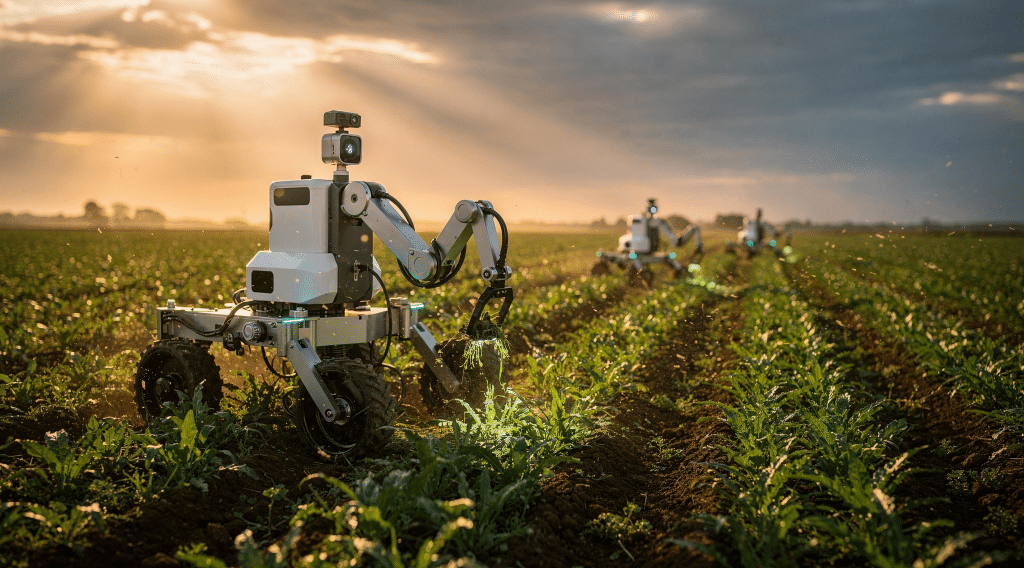
AI-powered autonomous weeding robots combine cameras, sensors and smart software to find and remove weeds right where they grow. They cut chemical use by acting only on unwanted plants.
These systems work like a mobile team: sense the field, decide which plants are weeds, and apply a mechanical action precisely.
Sensors and field perception
Robots use RGB cameras, multispectral sensors and lidar to scan rows. Data from these sensors feed immediate images and depth maps to the onboard computer.
Advertisement
The sensors let the machine tell crop from weed by shape, color and position. Good sensing lowers mistakes and avoids damage to crops.
How AI makes the call
On-device AI models classify plants in real time. Models are trained on thousands of plant images to spot subtle differences between weeds and crops.
- Image classification for plant type and size
- Localization to mark weed position between crop rows
- Confidence scoring to avoid false positives
- Continuous learning from farmer feedback and new field data
When confidence is high, the robot issues an action command. If uncertain, it can flag the spot for human review or use a safer mechanical option.
Mechanical weeding tools range from targeted blades and rotating hoes to micro-precision grippers and thermal wands. These tools remove or disable weeds without broad chemical sprays.
Tools are linked to navigation so the robot nudges along rows and times each action for minimal crop disturbance. Soil type, crop stage and weather also guide which tool is used.
Integration, safety and farmer control
Robots log actions and share maps with farm software. Farmers can set rules, review flagged spots, and update models with local examples.
Safety systems include obstacle avoidance, emergency stops and farm-worker alerts. Regular maintenance and simple controls keep operation reliable.
Together, precise sensing, robust AI, and targeted mechanical actions let these robots cut herbicide use while protecting yields and saving labor.
Measuring impact: herbicide reduction, labor and cost savings
AI-powered autonomous weeding robots cut herbicide use by targeting only the unwanted plants. Farmers can measure real gains with clear, simple metrics.
Good data shows where chemicals fall, how much labor changes, and whether yields stay steady.
How herbicide reduction is measured
Track the weight of active ingredient used per acre and the number of spray passes. Compare the treated area before and after robot deployment. Use crop maps to log where chemicals were applied.
Field sensors and farm software create maps of treated spots. Those maps make it easy to quantify herbicide reduction over the season.
Key labor and operational metrics
Measure hours spent on weed control, operator trips, and time spent maintaining sprayers. Robots change the type of work rather than simply removing jobs.
- Hours per acre saved on spray or hand weeding
- Number of sprayer passes avoided
- Operator idle time reduced or reallocated
- Maintenance hours for robot vs. traditional equipment
Track both direct labor time and how workers are redeployed. That gives a real view of productivity changes.
Labor and cost savings come from fewer chemicals, less fuel for sprayers, and lower wear on boom equipment. Robots do require upkeep, but many farms report faster payback when they scale use.
To estimate cost impact, add chemical and fuel savings, subtract robot service and parts, then divide by acres. This gives a per-acre net saving that you can compare to other investments.
Also measure yield and crop quality. If yields drop, savings on chemicals may not help the bottom line. Many trials show herbicide cuts without yield loss, but results vary by crop, soil and weather.
Use short monitoring cycles: weekly logs during the season and a full-year review. That helps spot issues early and refines robot settings for local fields.
In short, combine simple metrics—kilograms of active ingredient per acre, labor hours saved, and net cost per acre—with yield checks. This clear mix of data shows whether AI-powered autonomous weeding robots deliver true value for your farm.
On-farm stories: field trials and farmer experiences in 2026
AI-powered autonomous weeding robots reducing herbicide use on U.S. farms in 2026 are being tested across small plots and full fields, and farmers are sharing practical results. These on-farm stories show what really works and what needed tuning.
Field trials often compare robot-treated strips with nearby conventional spray zones to track weeds, yields, and costs in real time.
Trial snapshots from diverse farms
Trials vary by crop and region. Corn, soy and vegetable farms ran side-by-side plots for months to capture seasonal differences.
- A Midwestern corn operation cut herbicide by 65% in test rows while keeping yield steady.
- An organic vegetable grower used robots to reduce hand-weeding hours by 40% on raised beds.
- A California lettuce farm reported faster scouting and fewer missed patches with robot maps.
These snapshots show robots can work across scales, but results depend on crop spacing and soil conditions.
Farmer adaptations and daily routines
Farmers adjusted planting patterns, row markers, and robot schedules. Small changes often improved detection and spared crops.
Many operators now start the day checking the robot’s map, clearing debris and updating training images from the tablet. This routine shortened peak weeding days.
Maintenance notes from users highlight simple tasks: blade alignment, sensor cleaning, and battery swaps. Farms that logged routine checks reported fewer surprises.
Unexpected wins and setbacks
Some growers found lower compaction because robots are lighter than tractors. Others saw early-season weeds better controlled when robots ran daily at low speed.
- Win: better spot treatment reduced chemical drift to neighboring fields.
- Win: data maps helped plan irrigation and scouting trips.
- Setback: heavy residue after harvest confused some models until retrained locally.
- Setback: muddy conditions slowed units and required temporary removal.
Teams that combined quick retraining with simple field prep got faster improvements than those waiting for remote updates.
Peer networks and local demo days proved important. Farmers who saw a neighboring field succeed were more likely to adopt and share tweaks.
Overall, these on-farm stories show practical steps farmers took to make robots effective: tweak planting, keep sensors clean, log actions, and use short feedback loops to retrain models. That mix turned trials into repeatable practices on many farms.
Adoption hurdles: regulation, maintenance and long-term risks
AI-powered autonomous weeding robots reducing herbicide use on U.S. farms in 2026 face real hurdles before wide adoption. Farmers and suppliers must navigate rules, upkeep and long-term uncertainty.
These hurdles shape costs, trust and the speed of rollout across regions and crops.
Regulatory landscape and approvals
Federal and state rules vary on pesticide application, machine safety and data use. Some states require operator certification or device registration.
Clear guidance on spot treatments, liability and cross-border drift helps farmers plan. Unclear rules slow trials and make lenders cautious.
Maintenance and operational needs
Robots need regular cleaning, sensor checks and software updates. Small fixes are common; spare parts and trained techs matter.
- Daily tasks: sensor wipe-down, battery checks, clearing debris
- Weekly tasks: blade alignment, firmware updates, calibration runs
- Periodic tasks: replacement parts, AI retraining with local images
- Support: access to local service or reliable remote help
Warranty terms, service networks and clear training for farm staff reduce downtime. Leasing with service packages can lower the entry barrier for many farms.
Liability, data and long-term risks
Who pays if a robot damages a crop or causes drift? Clear contracts and insurance products are needed. Farms should track actions and decisions for accountability.
- Model drift: AI may perform worse over time without new local data
- Cybersecurity: connected units can be targeted or disrupted
- Resistance and ecosystem shifts: different weed mixes may emerge
- Economic shifts: changing input costs or market pressures affect ROI
Transparent logs, routine retraining, and staged rollouts help manage these risks. Farmers can pilot robots on limited acres before wider use.
Practical steps that ease adoption include clear regulatory checklists, bundled maintenance plans, local service partners, and simple insurance options. Addressing these hurdles builds trust and makes it easier for more farms to test and adopt the technology.
AI-powered autonomous weeding robots reducing herbicide use on U.S. farms in 2026 can cut chemical use, save labor, and protect yields when used thoughtfully. Start small, keep sensors and models current, and track simple metrics to manage risks. With clear rules, reliable service, and farmer training, these systems can deliver steady benefits across many farms.
FAQ – AI-powered autonomous weeding robots on U.S. farms (2026)
How much can these robots reduce herbicide use?
Trials often report herbicide reductions of 40–70% in treated strips, but results vary by crop, soil and management.
Will robots replace farm workers?
Robots shift tasks rather than fully replace workers — they cut manual weeding but increase monitoring, maintenance and tech oversight roles.
Are there safety or regulatory concerns?
Yes. States differ on machine rules, liability and application limits, so farmers should check local regulations and keep clear logs.
What are the typical costs and payback factors?
Costs include purchase or lease, service and parts; payback depends on herbicide and fuel savings, labor shifts, and scale of use—pilots help estimate ROI.