Achieving 30% Water Savings in US Farms by 2026: Precision Irrigation Strategies for Sustainable Agriculture
Anúncios
Achieving 30% Water Savings in US Farms by 2026: Precision Irrigation Strategies for Sustainable Agriculture
The agricultural sector in the United States faces an unprecedented challenge: feeding a growing population while grappling with finite water resources and the increasing pressures of climate change. Water, the lifeblood of farming, is becoming scarcer in many regions, necessitating revolutionary approaches to its management. The ambitious goal of achieving a 30% water saving in US farms by 2026 is not merely a target; it’s a crucial imperative for ensuring the long-term sustainability and economic viability of American agriculture. This article will delve into the transformative power of precision irrigation US farms strategies, exploring the technologies, benefits, and practical steps required to reach this vital milestone.
Understanding the current state of agricultural water use is the first step. Traditional irrigation methods, while effective in their time, often lead to significant water wastage through evaporation, runoff, and deep percolation. As water scarcity intensifies, these inefficiencies are no longer sustainable. Precision irrigation, however, offers a paradigm shift, allowing farmers to apply water precisely when and where it is needed, in the exact quantities required by the crops. This targeted approach minimizes waste, optimizes crop growth, and conserves one of our most precious natural resources.
Anúncios
The journey towards 30% water savings by 2026 requires a multi-faceted strategy encompassing technological adoption, data-driven decision-making, and a commitment to sustainable practices. It’s about more than just installing new equipment; it’s about fostering a culture of efficiency and innovation across the agricultural landscape. The benefits extend beyond water conservation, touching upon improved crop yields, reduced energy consumption, lower fertilizer runoff, and enhanced environmental stewardship. For US farms, embracing precision irrigation is not just an option; it’s the pathway to a resilient and prosperous future.
The Imperative for Water Conservation in US Agriculture
Anúncios
The United States is a global agricultural powerhouse, producing a significant portion of the world’s food supply. However, this productivity comes at a cost, particularly concerning water consumption. Agriculture accounts for approximately 80% of the nation’s consumptive water use, and in some western states, this figure can soar to 90% or more. The reliance on irrigation to support crop growth, especially in arid and semi-arid regions, places immense pressure on freshwater sources, including rivers, lakes, and groundwater aquifers.
Several factors underscore the urgency for significant water savings. Climate change is leading to more frequent and intense droughts, particularly in key agricultural areas like California and the Southwest. Depleting aquifers, such as the Ogallala Aquifer, which sustains a vast portion of the Great Plains, pose a long-term threat to regional food production. Furthermore, increasing competition for water from urban areas, industry, and environmental needs adds another layer of complexity. Without proactive measures, the long-term viability of many farming operations is at risk.
The economic implications of water scarcity are also substantial. Farmers face rising costs for water rights, energy to pump water, and potential crop losses due to insufficient irrigation. Implementing water-saving strategies, therefore, isn’t just an environmental responsibility; it’s a sound business decision. By reducing water consumption, farms can lower operational costs, enhance resilience to drought, and secure their future in an increasingly water-constrained world. The 30% water saving target by 2026 for precision irrigation US farms is ambitious but achievable, representing a critical step towards sustainable agriculture.
Understanding Precision Irrigation: The Core of Water Savings
Precision irrigation is a sophisticated approach to water management that optimizes water application based on the specific needs of crops, soil conditions, and prevailing weather patterns. Unlike traditional flood or furrow irrigation, which often applies water uniformly across entire fields, precision irrigation systems deliver water directly to the plant root zone, minimizing waste and maximizing efficiency. This targeted delivery is crucial for achieving significant water savings.
At its heart, precision irrigation leverages data and technology to make informed decisions about irrigation scheduling and volume. This involves a combination of sensors, software, and advanced delivery mechanisms. The goal is to provide “just enough” water, preventing both under-watering (which stresses crops and reduces yields) and over-watering (which wastes water, leaches nutrients, and can lead to disease).
The evolution of precision irrigation has been rapid, moving from simple drip systems to highly intelligent, interconnected networks. These advancements enable farmers to respond dynamically to changing conditions, ensuring optimal water use throughout the growing season. Embracing these technologies is fundamental to the 30% water saving goal for precision irrigation US farms.
Key Components of Precision Irrigation Systems
Several interconnected components form the backbone of effective precision irrigation:
- Sensors: These are the “eyes and ears” of the system, collecting real-time data.
- Data Analysis and Software: Platforms that interpret sensor data, weather forecasts, and crop models to generate irrigation recommendations.
- Automated Delivery Systems: Modern irrigation hardware that can be controlled remotely and precisely.
- Connectivity: The infrastructure (e.g., cellular, satellite, LoRaWAN) that allows sensors, controllers, and software to communicate.
Each of these components plays a vital role in creating an intelligent and efficient irrigation ecosystem designed to optimize water use and enhance agricultural productivity.
Advanced Precision Irrigation Technologies for US Farms
The push for 30% water savings by 2026 hinges on the widespread adoption of cutting-edge precision irrigation technologies. These innovations offer unprecedented control and efficiency in water application, moving beyond traditional guesswork to data-driven strategies.
1. Drip and Micro-Irrigation Systems
Drip irrigation, also known as trickle irrigation, is arguably the most water-efficient irrigation method. It delivers water directly to the plant’s root zone through a network of narrow tubes with emitters. This minimizes evaporation and runoff, ensuring that almost all applied water is used by the plant. Micro-sprinklers and micro-jets are variations that provide a fine spray over a smaller area, suitable for orchards and vineyards. The benefits include:
- High Water Use Efficiency: Water is applied precisely where needed.
- Reduced Evaporation: Water is delivered at or below the soil surface.
- Minimized Weed Growth: Only the crop roots receive water, starving weeds.
- Improved Nutrient Uptake: Fertilizers can be applied directly with water (fertigation).
- Flexibility: Adaptable to various terrains and crop types.
For many US farms, especially those growing high-value crops or in water-stressed regions, converting to drip systems represents one of the most impactful steps towards achieving the 30% water saving goal. The initial investment can be significant, but the long-term savings in water, energy, and labor, coupled with potential yield increases, often provide a strong return on investment.
2. Soil Moisture Sensors
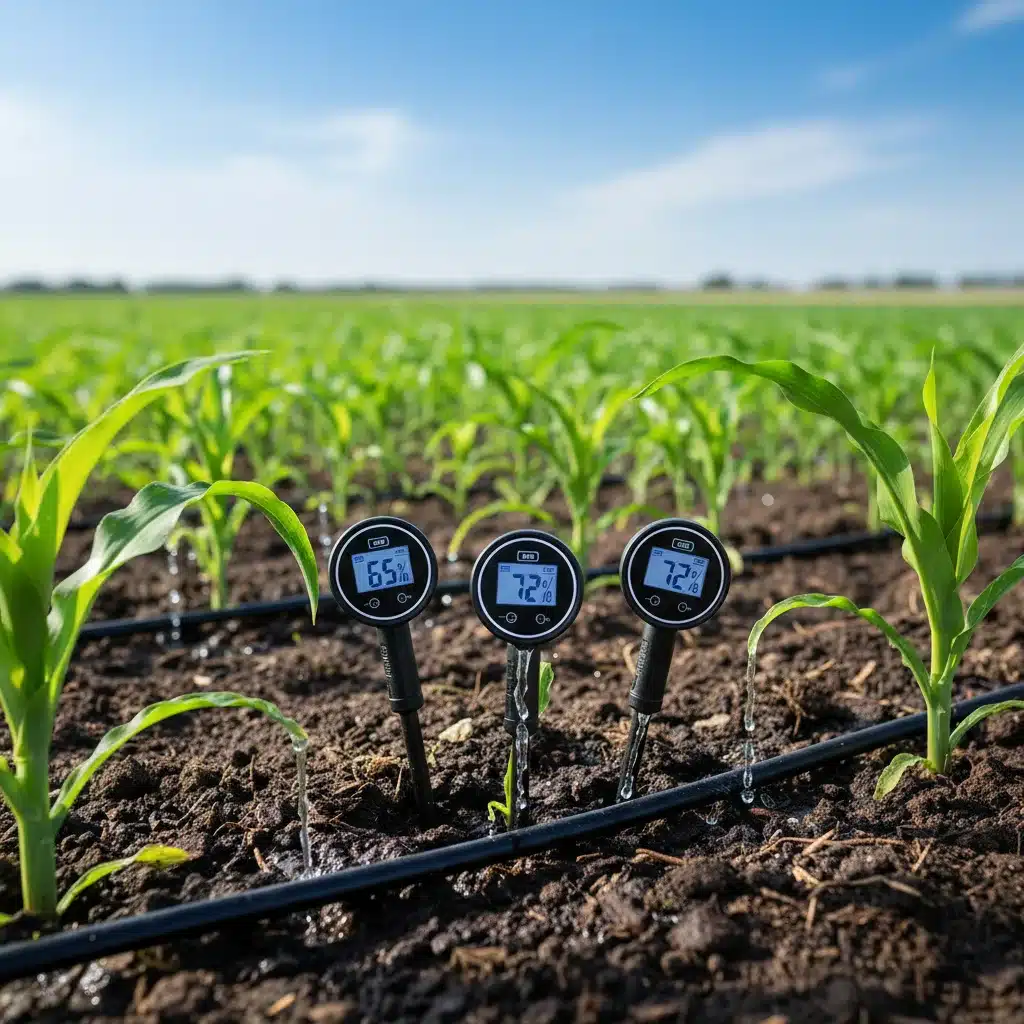
Soil moisture sensors are foundational to truly intelligent irrigation. These devices are placed at various depths within the soil profile to measure the volumetric water content. By providing real-time data on how much moisture is available to plants, farmers can avoid over-watering and irrigate only when necessary. Different types of sensors include:
- Capacitance Sensors: Measure the dielectric constant of the soil, which is related to its water content.
- Tensiometers: Measure soil water potential, indicating how tightly water is held by the soil.
- Time-Domain Reflectometry (TDR) / Time-Domain Transmissivity (TDT): Use electromagnetic pulses to determine soil moisture.
Integrating soil moisture sensor data with irrigation controllers allows for dynamic scheduling. Instead of following a fixed schedule, irrigation events are triggered by actual plant needs, leading to substantial water savings and healthier crops. For precision irrigation US farms, these sensors are indispensable.
3. Weather Stations and Evapotranspiration (ET) Data
Local weather stations provide crucial data such as temperature, humidity, wind speed, and solar radiation. This information is used to calculate evapotranspiration (ET), which is the total amount of water transpired by plants and evaporated from the soil surface. By understanding the ET rate, farmers can estimate how much water their crops are losing and, consequently, how much needs to be replenished.
- On-farm Weather Stations: Provide highly localized data.
- Regional Weather Networks: Offer broader coverage and forecasts.
- ET-based Scheduling: Irrigation systems can be programmed to apply water based on calculated ET losses, ensuring crops receive adequate but not excessive water.
Combining ET data with soil moisture readings creates a powerful decision-making tool, optimizing water application for maximum efficiency and helping US farms achieve their water saving goals.
4. Remote Sensing (Satellite, Drone, Aerial Imagery)
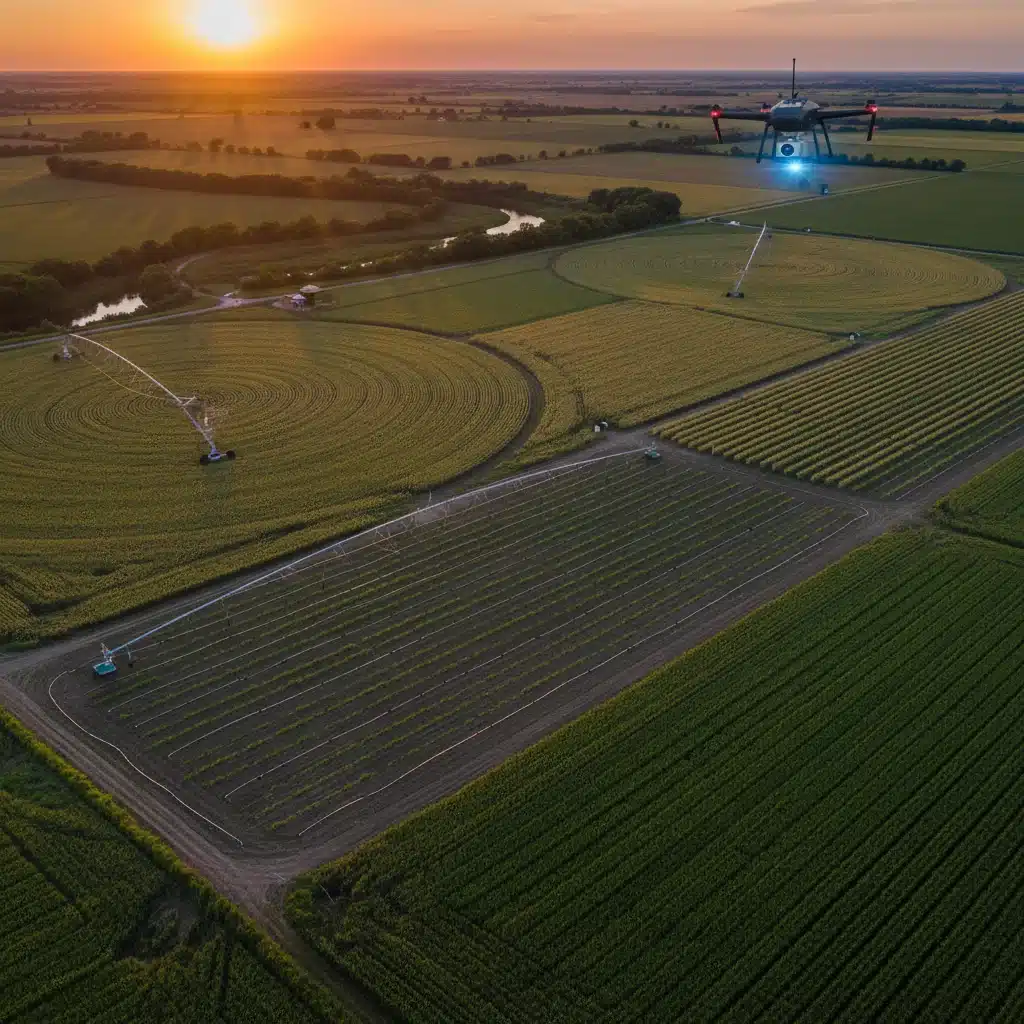
Remote sensing technologies offer a bird’s-eye view of crop health and water stress across large fields. Satellites, drones, and aircraft equipped with multispectral or thermal cameras can detect variations in plant vigor, temperature, and biomass. These variations often indicate areas that are under-watered, over-watered, or experiencing nutrient deficiencies.
- Normalized Difference Vegetation Index (NDVI): A common index derived from multispectral imagery that indicates plant health and chlorophyll content.
- Thermal Imaging: Detects temperature differences in crops, which can signal water stress (stressed plants tend to be warmer).
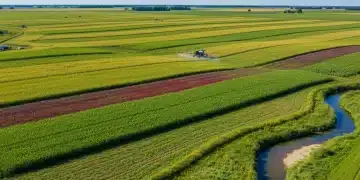
- Variable Rate Irrigation (VRI): Based on remote sensing data, VRI systems can adjust water application rates across different zones within a single field, matching irrigation to localized needs.
Remote sensing enables proactive management, allowing farmers to identify problems before they become severe and to precisely target irrigation, further contributing to the 30% water saving objective for precision irrigation US farms.
5. Smart Controllers and IoT Integration
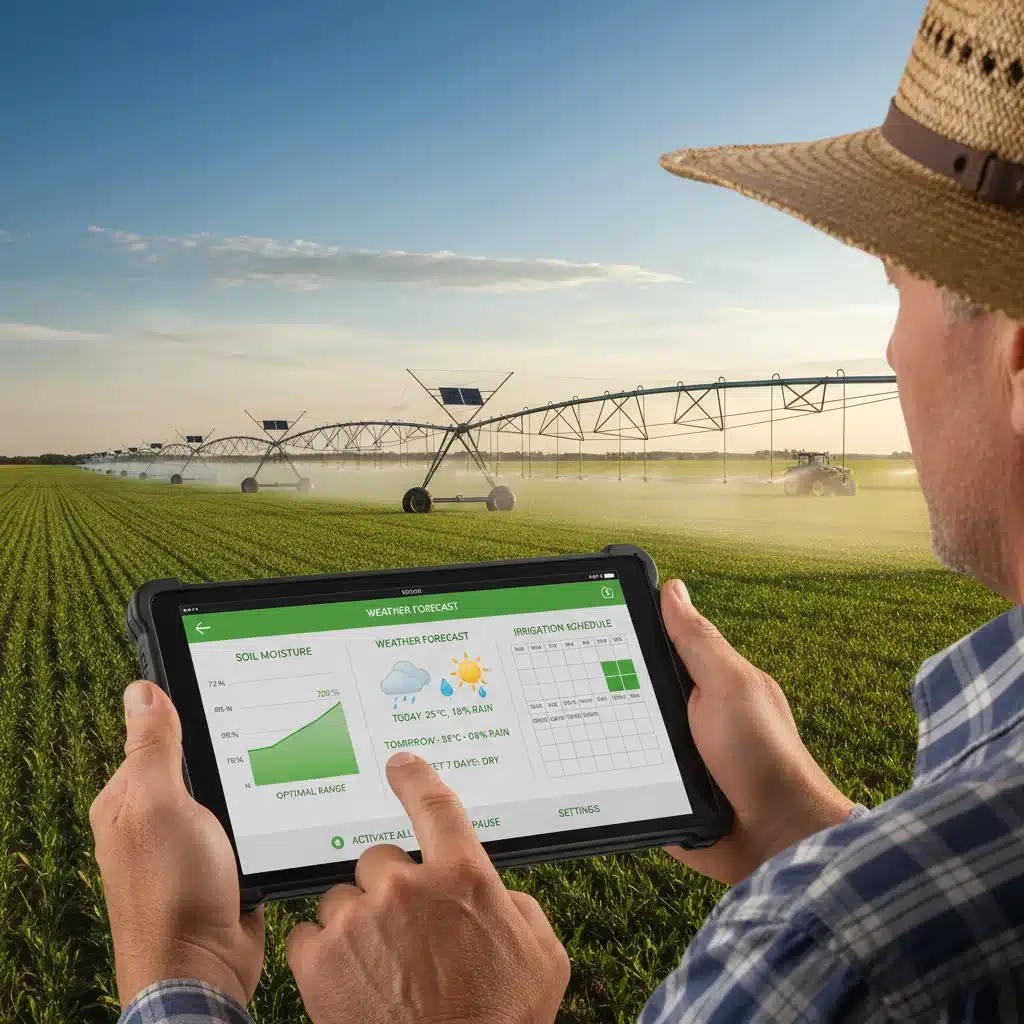
The advent of smart irrigation controllers, often integrated with the Internet of Things (IoT), has revolutionized irrigation management. These controllers can communicate wirelessly with sensors, weather stations, and even online weather forecast services. They can be programmed to automatically adjust irrigation schedules based on real-time data, eliminating the need for manual intervention.
- Real-time Adjustments: Controllers can dynamically change irrigation duration and frequency.
- Mobile Access: Farmers can monitor and control their systems from smartphones or tablets.
- Alerts and Notifications: Systems can send alerts for leaks, malfunctions, or critical moisture levels.
- Integration with Farm Management Software: Allows for holistic farm planning and data analysis.
IoT-enabled smart controllers are central to creating truly autonomous and highly efficient irrigation systems, playing a pivotal role in achieving significant water savings for US farms.
Benefits Beyond Water Savings for US Farms
While the primary focus is on achieving 30% water savings, the adoption of precision irrigation US farms strategies yields a multitude of additional benefits that contribute to overall farm sustainability and profitability.
Increased Crop Yields and Quality
By delivering the right amount of water at the right time, precision irrigation systems reduce plant stress, leading to healthier growth and often higher yields. Consistent moisture levels also contribute to improved crop quality, which can fetch better market prices. Preventing both drought stress and waterlogging ensures that plants can optimally absorb nutrients and photosynthesize, maximizing their productive potential.
Reduced Fertilizer and Chemical Runoff
Over-watering can lead to the leaching of valuable fertilizers and pesticides below the root zone or their runoff into waterways. Precision irrigation minimizes this, keeping nutrients and chemicals where they are needed – around the plant roots. This not only saves money on inputs but also reduces the environmental impact of agriculture by preventing water pollution and eutrophication of aquatic ecosystems.
Lower Energy Consumption
Pumping water for irrigation is an energy-intensive process. By irrigating less frequently and applying water more efficiently, farms can significantly reduce the amount of energy required to power their pumps. This translates directly into lower electricity or fuel bills, improving the farm’s bottom line and reducing its carbon footprint. The synergy between water and energy savings is a powerful incentive for adoption.
Enhanced Resilience to Drought
Farms with precision irrigation systems are inherently more resilient to periods of drought. Their ability to optimize every drop of water means they can stretch limited supplies further, maintaining crop health even when water allocations are reduced. This enhanced resilience is critical in an era of unpredictable climate patterns and increasing water scarcity.
Improved Soil Health
Precision irrigation methods, particularly drip irrigation, can help maintain optimal soil moisture levels without causing saturation or erosion. This fosters a healthier soil microbiome, prevents compaction, and preserves the soil structure, which is vital for long-term agricultural productivity. Healthy soil acts as a better sponge, further improving water retention and nutrient cycling.
Labor Savings and Automation
Automated precision irrigation systems reduce the need for manual monitoring and adjustment of irrigation equipment. Farmers can manage vast areas from a central control panel or even a smartphone, freeing up valuable labor for other essential farm tasks. This automation not only saves on labor costs but also reduces human error, leading to more consistent and effective irrigation.
Challenges and Solutions for Widespread Adoption
Despite the clear benefits, the widespread adoption of precision irrigation technologies in US farms faces several challenges. Addressing these obstacles is crucial for achieving the 30% water saving target by 2026.
Initial Investment Costs
The upfront cost of installing precision irrigation systems, including sensors, smart controllers, and new delivery infrastructure, can be substantial. This is often the biggest barrier for many farmers, especially smaller operations or those with tight margins.
Solutions:
- Government Subsidies and Grants: Programs like those offered by the USDA’s Natural Resources Conservation Service (NRCS) (e.g., Environmental Quality Incentives Program – EQIP) provide financial assistance.
- Low-Interest Loans: Agricultural lenders and specialized financial institutions can offer tailored loan products.
- Cost-Benefit Analysis: Educating farmers on the long-term ROI through water, energy, and yield savings.
- Phased Implementation: Encouraging farmers to adopt technologies incrementally, starting with high-impact areas.
Technical Expertise and Training
Operating and maintaining sophisticated precision irrigation systems requires a certain level of technical knowledge. Many farmers may lack the expertise to effectively utilize these technologies, from sensor calibration to data interpretation.
Solutions:
- Extension Services and Workshops: Universities and agricultural extension offices can provide training programs.
- Vendor Support: Irrigation technology providers should offer comprehensive training and ongoing technical support.
- Peer-to-Peer Learning: Facilitating knowledge sharing among experienced and new adopters.
- User-Friendly Interfaces: Developing intuitive software and hardware that simplifies operation.
Data Management and Connectivity
Precision irrigation generates vast amounts of data. Managing, interpreting, and acting upon this data effectively can be overwhelming. Additionally, reliable internet connectivity, especially in rural areas, can be a limiting factor for IoT-enabled systems.
Solutions:
- Integrated Farm Management Platforms: Software that consolidates data from various sources into a single dashboard.
- AI and Machine Learning: Utilizing algorithms to analyze data and provide actionable insights or automate decisions.
- Improved Rural Broadband Infrastructure: Government and private sector investments in expanding high-speed internet access.
- Offline Capabilities: Designing systems that can store data and operate locally even without constant connectivity.
Perceived Risk and Resistance to Change
Some farmers may be hesitant to abandon traditional methods and invest in new technologies due to a perceived risk of failure or simply a resistance to change. Demonstrating tangible successes is key.
Solutions:
- Demonstration Farms: Establishing pilot projects where farmers can see precision irrigation in action and witness its benefits firsthand.
- Case Studies and Success Stories: Highlighting farmers who have successfully implemented these technologies and achieved significant savings.
- Flexible Solutions: Offering modular systems that can be customized to individual farm needs and budgets.
By proactively addressing these challenges, the path to achieving 30% water savings through precision irrigation US farms becomes clearer and more attainable.
Government Policies and Support for Sustainable Water Use
Government policies and support programs play a pivotal role in incentivizing the adoption of precision irrigation and other water-saving practices across US farms. Federal, state, and local initiatives are crucial for overcoming financial barriers and promoting education.
Federal Programs
The U.S. Department of Agriculture (USDA) offers several programs designed to support water conservation in agriculture:
- Environmental Quality Incentives Program (EQIP): Administered by the Natural Resources Conservation Service (NRCS), EQIP provides financial and technical assistance to agricultural producers to address natural resource concerns. A significant portion of EQIP funding goes towards irrigation efficiency improvements, such as converting to drip irrigation, updating pivot systems, and installing soil moisture sensors.
- Conservation Stewardship Program (CSP): CSP helps agricultural producers maintain and improve their existing conservation systems and adopt new conservation activities. This can include advanced water management strategies.
- Agricultural Conservation Easement Program (ACEP): While not directly focused on irrigation technology, ACEP protects wetlands and grasslands, which are vital for water quality and quantity.
- Research and Development Funding: Federal grants support research into new irrigation technologies and water-efficient crop varieties.
These programs are vital for offsetting the initial investment costs associated with precision irrigation and providing the technical guidance needed for successful implementation. Farmers seeking to embrace precision irrigation US farms should actively explore these opportunities.
State and Local Initiatives
Many states and local water districts have their own programs to encourage water conservation, often tailored to regional water challenges:
- State-Specific Grant Programs: States like California, Texas, and Arizona, which face severe water scarcity, often have dedicated grant programs for agricultural water efficiency.
- Water Conservation Districts: Local districts may offer rebates for irrigation system upgrades, water audits, and educational workshops.
- Water Trading and Banking: Some regions are exploring market-based approaches to water management, providing incentives for efficient water use.
Regulatory Frameworks
While incentives are key, some regions also implement regulatory measures to encourage water efficiency. These might include water usage limits, reporting requirements, or tiered pricing structures that penalize excessive consumption. Such regulations, though sometimes controversial, can accelerate the adoption of water-saving technologies by making inefficiency economically unsustainable.
The combination of robust federal programs, targeted state and local initiatives, and appropriate regulatory frameworks creates a supportive environment for US farms to transition towards highly efficient water use, making the 30% water saving goal by 2026 a tangible reality.
Case Studies: Success Stories in Precision Irrigation
Across the United States, numerous farms are already demonstrating the transformative power of precision irrigation. These success stories provide compelling evidence that achieving significant water savings is not only possible but also economically beneficial.
Case Study 1: Central Valley, California – Almond Orchards
In California’s Central Valley, a region frequently plagued by drought, many almond growers have transitioned from flood or furrow irrigation to highly sophisticated subsurface drip irrigation (SDI) systems. One prominent farm reported a 35% reduction in water use over five years, primarily due to the installation of SDI combined with soil moisture sensors and weather-based scheduling. Despite using less water, their almond yields either remained stable or saw slight increases, and nut quality improved. The farm also noted a decrease in fertilizer application due to efficient fertigation, leading to additional cost savings and environmental benefits. This success highlights the effectiveness of advanced precision irrigation US farms technologies in high-value, water-intensive crops.
Case Study 2: Nebraska – Corn and Soybean Fields
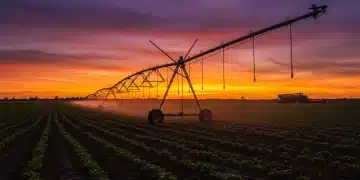
A large-scale farm in Nebraska, primarily growing corn and soybeans, implemented variable rate irrigation (VRI) on its center pivot systems. Using satellite imagery and soil mapping, they identified different management zones within their fields. The VRI system then applied varying amounts of water to each zone based on soil type, topography, and crop needs. This resulted in an average of 20-25% water savings across their fields, with some zones seeing even greater reductions. The farmer also observed more uniform crop growth and reduced instances of waterlogging in low-lying areas, leading to optimized yields and healthier plants. This demonstrates how existing infrastructure can be upgraded for precision.
Case Study 3: Arizona – Vegetable Production
In the arid climate of Arizona, a vegetable farm specializing in leafy greens and melons adopted a comprehensive precision irrigation strategy. They installed drip irrigation for all their crops, integrated with an IoT-enabled smart controller and a network of soil moisture sensors. Their system automatically adjusts irrigation based on real-time soil conditions and local weather forecasts. This farm achieved over 40% water savings compared to their previous sprinkler system and significantly reduced their energy costs for pumping. Furthermore, they experienced fewer disease outbreaks related to excessive leaf wetness, leading to higher quality produce and fewer losses.
These examples illustrate that precision irrigation is not a one-size-fits-all solution but a customizable approach that can be tailored to diverse crops, climates, and farm sizes. The common thread is the commitment to leveraging data and technology to optimize water use, proving that the 30% water saving goal for precision irrigation US farms is not only achievable but often surpassed, leading to more resilient and profitable agricultural enterprises.
Future Outlook: Beyond 2026
Achieving a 30% water saving in US farms by 2026 through precision irrigation is an ambitious yet attainable goal. However, the journey towards sustainable agricultural water management doesn’t end there. The future holds even greater potential for efficiency and innovation, pushing the boundaries of what’s possible in water conservation.
Integration of Artificial Intelligence and Machine Learning
The next frontier in precision irrigation will heavily involve Artificial Intelligence (AI) and Machine Learning (ML). These technologies can analyze vast datasets – including historical weather patterns, soil data, crop growth models, sensor readings, and market prices – to make predictive irrigation decisions with unprecedented accuracy. AI-powered systems could anticipate crop water needs days or even weeks in advance, optimizing schedules for maximum efficiency and yield, and further enhancing the capabilities of precision irrigation US farms.
Advanced Sensor Technology
Expect to see the development of even more sophisticated and affordable sensors. This could include plant-based sensors that directly measure plant water stress (e.g., sap flow sensors, dendrometers), allowing for truly plant-centric irrigation. Additionally, advancements in remote sensing, such as hyperspectral imaging and lidar, will provide even more detailed insights into crop health and water status from above.
Robotics and Autonomous Systems
Robotics will play an increasing role, not just in applying water but also in monitoring and maintaining irrigation infrastructure. Autonomous robots could patrol fields, checking for leaks, clogged emitters, or sensor malfunctions, and even perform minor repairs. This would further reduce labor costs and ensure the continuous optimal performance of precision irrigation systems.
Water Recycling and Non-Conventional Water Sources
Beyond efficiency, the agricultural sector will increasingly explore water recycling and the use of non-conventional water sources. This includes treating and reusing agricultural runoff, capturing stormwater, and potentially desalinated water in coastal regions. While these approaches have significant infrastructure and energy requirements, they represent long-term solutions to water scarcity that complement precision irrigation efforts.
Genetically Modified Crops and Precision Breeding
Advances in plant science will contribute to water savings by developing crop varieties that are inherently more water-efficient or drought-tolerant. Precision breeding techniques can accelerate the development of crops that require less water to achieve optimal yields, working in tandem with advanced irrigation systems.
Policy Evolution and Collaborative Water Management
Government policies will likely evolve to further incentivize water conservation and promote integrated water resource management across agricultural, urban, and environmental sectors. Collaborative approaches, where different water users work together to manage shared resources, will become more common, ensuring equitable and sustainable water distribution.
The future of agriculture in the US is one of smart, sustainable, and resilient farming. Precision irrigation is the cornerstone of this transformation, and by continuing to innovate and adapt, US farms can not only meet the 30% water saving target by 2026 but also pave the way for even greater efficiencies and a more secure food future for generations to come.
Conclusion: A Sustainable Future for US Agriculture
The journey to achieving a 30% water saving in US farms by 2026 is a critical undertaking that promises to redefine the landscape of American agriculture. This ambitious goal is not merely about conservation; it is about building a more resilient, efficient, and profitable farming sector capable of meeting the demands of a growing population amidst intensifying environmental pressures. Precision irrigation strategies stand at the forefront of this transformation, offering tangible solutions that leverage cutting-cutting-edge technology and data-driven decision-making.
We have explored how advanced technologies such as drip and micro-irrigation systems, sophisticated soil moisture sensors, real-time weather data and evapotranspiration calculations, remote sensing capabilities, and smart IoT-enabled controllers are revolutionizing water application. These tools empower farmers to move beyond traditional, often wasteful, irrigation practices toward a highly targeted approach that delivers “just enough” water, precisely when and where crops need it most. The immediate and long-term benefits are profound: significant water savings, increased crop yields and quality, reduced input costs (fertilizer and energy), enhanced drought resilience, improved soil health, and substantial labor efficiencies.
While challenges such as initial investment costs, the need for technical expertise, data management complexities, and resistance to change are present, they are not insurmountable. Through robust government support programs like EQIP, dedicated extension services, vendor training, and the sharing of compelling success stories, these barriers can be effectively addressed. The collaborative efforts of policymakers, researchers, technology providers, and farmers themselves are essential to foster an environment conducive to widespread adoption of precision irrigation US farms.
Looking beyond 2026, the integration of artificial intelligence, advanced sensor development, robotics, and the strategic use of non-conventional water sources will further propel US agriculture towards unprecedented levels of water efficiency. These future innovations will ensure that the momentum gained in achieving the 30% water saving target continues, securing a sustainable and prosperous future for US farms.
Embracing precision irrigation is more than just an operational upgrade; it’s a commitment to environmental stewardship, economic stability, and food security. By investing in these smart water management strategies, US farms are not only conserving a vital resource but also cultivating a legacy of sustainability for generations to come. The time for action is now, and the path to a water-efficient agricultural future is clear.