Drone-Based Crop Health Monitoring: Identify Pests 5 Days Earlier for Targeted Treatment
Anúncios
In the ever-evolving landscape of modern agriculture, the race against time is a constant factor. Farmers grapple with myriad challenges, from unpredictable weather patterns to soil degradation, but few threats are as insidious and destructive as pests and diseases. A small infestation, if left unchecked, can rapidly spiral into a full-blown crisis, decimating yields and eroding profits. Traditionally, pest detection has relied on manual scouting, a time-consuming, labor-intensive, and often reactive approach. By the time a human scout identifies a problem, significant damage may have already occurred, necessitating broad-spectrum treatments that are costly, environmentally impactful, and sometimes less effective.
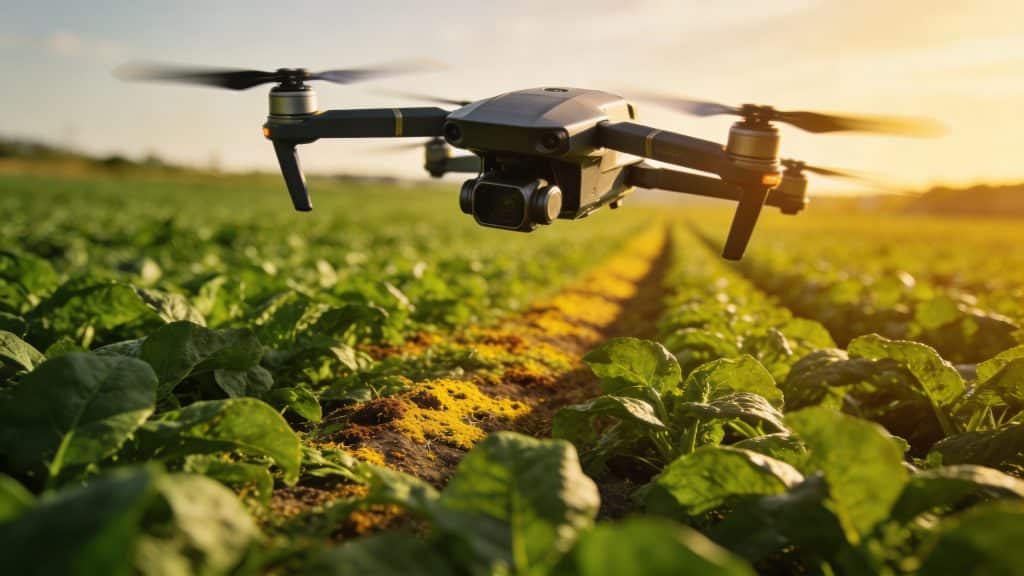
Enter Drone Crop Health Monitoring – a revolutionary paradigm shift that is fundamentally transforming how farmers approach crop protection. This cutting-edge technology harnesses the power of unmanned aerial vehicles (UAVs) equipped with sophisticated sensors to provide an unprecedented view of crop health. The promise? Identifying pest infestations and disease outbreaks not just days, but often five days earlier than conventional methods. This critical lead time is not merely a convenience; it’s a strategic advantage that empowers farmers to implement targeted, proactive interventions, minimizing crop damage, optimizing resource allocation, and ultimately securing healthier, more abundant harvests.
The implications of this early detection capability are profound. Imagine being able to pinpoint the exact location of an emerging pest problem before it spreads across an entire field. This allows for precision treatment, reducing the overall use of pesticides, protecting beneficial insects, and fostering a more sustainable agricultural ecosystem. It’s a move from reactive firefighting to proactive prevention, a change that benefits not only the farmer’s bottom line but also the environment and consumer health. As we delve deeper into this article, we will explore the intricate mechanisms behind Drone Crop Health Monitoring, its myriad benefits, the technologies that power it, and the practical steps for integrating it into your farming operations.
Anúncios
The Critical Need for Early Pest Detection in Agriculture
Pests and diseases represent a constant existential threat to agricultural productivity worldwide. The Food and Agriculture Organization (FAO) estimates that up to 40% of global crop yields are lost annually due to pests and diseases. This staggering figure underscores the urgent need for more effective and efficient detection and management strategies. Traditional methods, while foundational for centuries, are increasingly proving inadequate in the face of evolving agricultural challenges.
Manual scouting involves trained personnel walking through fields, visually inspecting plants for signs of distress, pests, or disease. While valuable for its direct observation, this method is inherently limited by several factors:
Anúncios
- Scale: Large fields make comprehensive manual scouting impractical and prohibitively expensive. It’s simply impossible to inspect every plant.
- Time-consuming: Covering even a moderate-sized field manually can take days, by which time a localized problem can escalate significantly.
- Human Error and Subjectivity: Detection relies on the keen eye and experience of the scout, leading to potential inconsistencies and missed early signs.
- Delayed Detection: By the time visual symptoms are evident to the naked eye, the pest population might have already reached a damaging threshold or the disease might be well-established.
- Accessibility: Certain areas of a field may be difficult or impossible to access on foot due to terrain, crop density, or weather conditions.
The consequences of delayed detection are severe:
- Significant Yield Loss: Pests consume or damage crops, directly leading to reduced harvestable quantity and quality.
- Increased Treatment Costs: Larger infestations require more extensive and often more potent pesticide applications, increasing input costs.
- Environmental Impact: Broad-spectrum pesticide use can harm beneficial insects, pollinators, and soil health, contributing to ecological imbalance.
- Development of Resistance: Over-reliance on chemical treatments can lead to pests developing resistance, rendering current solutions ineffective.
- Economic Instability: Crop losses can severely impact a farmer’s income, leading to financial hardship and instability.
The ability to detect issues even a few days earlier can dramatically alter this trajectory. An early warning system allows farmers to intervene when pest populations are small and localized, requiring less intensive and more targeted treatments. This proactive approach saves money, reduces environmental impact, and protects the long-term health of the farm ecosystem. This is precisely where Drone Crop Health Monitoring shines, offering a solution that addresses the limitations of traditional methods head-on.
How Drone Crop Health Monitoring Works: The Technology Behind Early Detection
The core principle behind Drone Crop Health Monitoring lies in its ability to capture and analyze data that is invisible to the human eye. Drones, equipped with specialized sensors, fly over fields, collecting high-resolution imagery and spectral data. This data is then processed using advanced algorithms and artificial intelligence to identify anomalies indicative of stress, disease, or pest activity.
The Key Components:
- Drones (UAVs): These are the flying platforms, ranging from multi-rotor quadcopters to fixed-wing aircraft. They are selected based on field size, flight duration requirements, and payload capacity. Modern agricultural drones are robust, GPS-enabled, and often capable of autonomous flight along pre-programmed routes.
- Specialized Sensors: This is where the magic happens. While standard RGB cameras (which capture visible light, just like our eyes) can provide useful visual information, the true power of drone monitoring comes from:
- Multispectral Sensors: These cameras capture light across several discrete spectral bands, including visible light (red, green, blue) and specific non-visible bands like near-infrared (NIR) and red edge. Plants reflect and absorb light differently across these bands depending on their health. For instance, healthy plants reflect a lot of NIR light due to their internal cell structure, while stressed or diseased plants show a significant drop in NIR reflectance.
- Hyperspectral Sensors: Even more advanced than multispectral, hyperspectral sensors capture hundreds of narrow spectral bands, providing a much richer and more detailed spectral signature of the plants. This allows for the detection of very subtle physiological changes.
- Thermal Sensors: These cameras measure the temperature of the plant canopy. Stressed plants often transpire less, leading to higher leaf temperatures, which can be an early indicator of water stress, disease, or pest damage.
- GPS and RTK/PPK Systems: For precise mapping and repeatable data collection, drones are equipped with highly accurate GPS systems. RTK (Real-Time Kinematic) or PPK (Post-Processed Kinematic) technologies further enhance positional accuracy to centimeter-level precision, ensuring that data points can be accurately referenced to specific locations in the field over time.
- Data Processing Software: Once collected, the raw data (thousands of images) is stitched together to create orthomosaic maps of the entire field. Specialized software then processes the spectral information to generate various vegetation indices.
Vegetation Indices: The Language of Plant Health
Vegetation indices are mathematical formulas applied to the spectral data to quantify plant health and vigor. The most common and widely recognized is the Normalized Difference Vegetation Index (NDVI). NDVI leverages the difference in how healthy plants absorb red light and reflect near-infrared light. A high NDVI value indicates lush, healthy vegetation, while lower values suggest stress, disease, or bare soil.
Beyond NDVI, other indices provide specific insights:
- NDRE (Normalized Difference Red Edge): Similar to NDVI but uses the red-edge band, which is particularly sensitive to chlorophyll content and nitrogen levels, making it useful for detecting issues earlier in the plant’s growth cycle or within dense canopies.
- SAVI (Soil Adjusted Vegetation Index): Designed to minimize the influence of soil brightness on the vegetation index, particularly useful in fields with sparse vegetation or where soil is exposed.
- LCI (Leaf Chlorophyll Index): Directly correlates with chlorophyll content, a key indicator of photosynthetic efficiency and overall plant health.
The Detection Process: From Flight to Insight
- Flight Planning: Farmers or drone operators pre-program flight paths using specialized software, ensuring comprehensive coverage of the field at optimal altitude and overlap for data capture.
- Data Acquisition: The drone autonomously executes the flight, capturing images and spectral data at regular intervals.
- Data Processing: Images are uploaded to cloud-based or local processing platforms. These platforms use photogrammetry techniques to stitch the individual images into a georeferenced orthomosaic map.
- Index Generation: The software then applies algorithms to calculate various vegetation indices, creating color-coded maps of the field.
- Anomaly Detection and Analysis: Areas on the map displaying abnormally low (or sometimes high, depending on the index and context) index values are flagged as potential problem zones. AI and machine learning algorithms are increasingly being used to automate the identification of specific pest or disease signatures based on spectral patterns.
- Actionable Insights: The processed maps and analysis highlight specific areas of concern. This allows farmers to precisely locate the problem, investigate further, and apply targeted treatments.
This entire process, from data collection to actionable insights, can often be completed within hours, providing farmers with a near real-time understanding of their crop health. This speed is what enables the crucial 5-day earlier detection advantage.
The Unprecedented Advantage: Identifying Pests 5 Days Earlier
The ability of Drone Crop Health Monitoring to detect anomalies days before they become visually apparent is its most compelling benefit. This ‘5-day earlier’ claim isn’t hyperbole; it’s a testament to the sensitivity of multispectral and hyperspectral sensors. Pests and diseases initiate physiological changes within plants long before external symptoms like yellowing leaves, wilting, or visible insect damage become obvious to the human eye.
How Early Detection is Achieved:
- Physiological Stress Signatures: When a plant is attacked by pests or infected by a pathogen, its internal processes change. It might alter its chlorophyll production, cell structure, or water uptake. These changes directly impact how the plant reflects and absorbs different wavelengths of light. Multispectral sensors are specifically designed to pick up on these subtle shifts in spectral signatures. For example, a slight decrease in chlorophyll content due to early disease can be detected as a change in red-edge reflectance, even before any visible discoloration.
- Localized Infestations: Pests rarely appear uniformly across an entire field. They often start in small, localized patches. Manual scouting might miss these nascent hotspots until they spread. Drones, with their comprehensive field coverage and high-resolution imaging, can identify these small, isolated areas of stress, allowing for immediate, localized intervention.
- Temporal Monitoring: Regular drone flights (e.g., weekly or bi-weekly) create a time-series dataset. By comparing current data with previous flights, farmers can track changes in plant health over time. A sudden drop in NDVI in a specific area, even if not yet critical, signals an emerging problem, prompting closer inspection. This trend analysis is incredibly powerful for predictive pest management.
- Beyond Visible Light: Our eyes are limited to the visible light spectrum. Pests like spider mites or diseases like fungal infections might cause changes in the near-infrared spectrum due to cell damage or changes in water content long before visible symptoms appear. This invisible data is crucial for early warning.
The Impact of This Lead Time:
- Proactive vs. Reactive Management: Instead of reacting to a visible infestation, farmers can act proactively. This means applying treatments when pest populations are smaller and more vulnerable, or when disease inoculum is minimal.
- Targeted Treatment: With precise location data, farmers can apply pesticides or fungicides only to the affected areas, rather than broadcasting them across the entire field. This is known as ‘spot treatment’ or ‘variable rate application’.
- Reduced Pesticide Use: Targeted treatment significantly reduces the overall volume of chemicals applied, leading to substantial cost savings and decreased environmental impact. This aligns perfectly with sustainable farming practices and integrated pest management (IPM) strategies.
- Minimized Crop Damage: Catching problems early means less time for pests to feed and reproduce, and less time for diseases to spread and cause irreversible damage. This directly translates to higher yields and better quality crops.
- Optimized Resource Allocation: Farmers can direct their resources (labor, machinery, chemicals) exactly where they are needed most, improving efficiency and operational effectiveness.
- Informed Decision-Making: The data provides concrete evidence of where and when problems are emerging, enabling data-driven decisions rather than relying on guesswork or generalized assumptions. This builds a more resilient and responsive farming system.
Consider the example of a fungal disease. If detected five days earlier, a preventative fungicide application might be sufficient to halt its spread, saving the crop. If detected late, a more aggressive and costly curative treatment might be necessary, and even then, significant yield loss may be unavoidable. This early detection capability is not just an incremental improvement; it’s a fundamental shift in how agricultural threats are perceived and managed.
Benefits Beyond Early Detection: A Holistic View
While the 5-day earlier pest detection is a monumental advantage, Drone Crop Health Monitoring offers a suite of additional benefits that contribute to overall farm efficiency, profitability, and sustainability.
1. Optimized Resource Management
- Precision Fertilization: Just as drones can identify stressed areas due to pests, they can also pinpoint areas of nutrient deficiency or excess. Multispectral data can indicate nitrogen levels, allowing for variable rate fertilizer application. This ensures that fertilizer is applied only where needed, reducing waste, preventing runoff, and cutting costs.
- Efficient Irrigation: Thermal cameras can detect variations in plant temperature, indicating water stress. This data can inform precision irrigation schedules, ensuring water is delivered efficiently to thirsty plants while avoiding over-watering in other areas. This is crucial in regions facing water scarcity.
- Labor Savings: Automated drone flights significantly reduce the need for manual scouting, freeing up valuable labor for other critical farm tasks.
2. Enhanced Yield and Quality
- Reduced Crop Loss: By mitigating the impact of pests and diseases, and optimizing nutrient and water management, drones directly contribute to higher overall yields.
- Improved Crop Quality: Healthier plants, free from severe stress, produce higher quality produce, which can command better prices in the market.
- Uniformity: Addressing localized issues promptly leads to more uniform crop growth across the field, simplifying harvesting and further improving quality.
3. Environmental Sustainability
- Reduced Chemical Use: Targeted pest and disease treatments mean less pesticide and fungicide application, which protects beneficial insects, soil microorganisms, and reduces chemical runoff into water sources.
- Lower Carbon Footprint: Efficient use of fertilizers and reduced need for machinery passes (due to targeted applications) can contribute to a lower carbon footprint for farming operations.
- Promotes Biodiversity: By minimizing broad-spectrum chemical use, drones help preserve biodiversity within the agricultural ecosystem.
4. Data-Driven Decision Making and Record Keeping
- Historical Data: Regular drone flights create a valuable historical record of crop health for every section of the field. This data can be used for long-term trend analysis, identifying recurring problem areas, and evaluating the effectiveness of different management strategies over seasons.
- Performance Benchmarking: Farmers can compare the performance of different crop varieties, planting methods, or treatment protocols based on objective data.
- Compliance and Reporting: Detailed records of crop health and treatment applications can be valuable for regulatory compliance and certification purposes.
5. Increased Efficiency and Scalability
- Large Area Coverage: Drones can cover vast areas of land much faster than human scouts, making them ideal for large-scale farming operations.
- Accessibility: They can access difficult-to-reach areas, such as fields with dense canopy or uneven terrain, providing a complete picture of the farm.
- Operational Flexibility: Flights can be scheduled according to specific needs, weather conditions, and crop growth stages, offering greater flexibility.
In essence, Drone Crop Health Monitoring transforms farming from a largely reactive and generalized practice into a precise, data-driven, and proactive science. It’s not just about finding pests; it’s about building a more resilient, profitable, and environmentally responsible agricultural enterprise.
Implementing Drone Crop Health Monitoring: Practical Considerations
Adopting Drone Crop Health Monitoring requires careful planning and consideration. While the benefits are clear, successful implementation depends on understanding the practical aspects of this technology.
1. Choosing the Right Drone and Sensors
- Drone Type: For smaller to medium-sized farms (under 100 acres), multi-rotor drones are often sufficient due to their vertical take-off/landing capabilities and ease of use. For larger farms, fixed-wing drones offer longer flight times and cover more ground per flight.
- Sensor Selection: Multispectral sensors are typically the workhorse for crop health monitoring. Consider sensors with at least 5-6 bands (RGB, Red Edge, Near-Infrared). For more advanced research or highly specific detection needs, hyperspectral or thermal sensors might be considered, though they come with higher costs and more complex data processing.
- Accuracy: Look for drones with RTK/PPK capabilities for precise georeferencing, which is crucial for repeat flights and accurate variable rate applications.
2. Data Processing and Analysis Software
- Cloud-Based vs. On-Premise: Cloud platforms offer scalability and often include advanced AI/ML algorithms for automated anomaly detection. On-premise solutions provide more control over data but require significant computing power.
- Ease of Use: Choose software with an intuitive interface that allows for easy flight planning, data upload, map generation, and interpretation of vegetation indices.
- Integration: Ensure the software can integrate with other farm management systems (FMS) or precision agriculture equipment for seamless data flow and application.
- AI/ML Capabilities: Increasingly, software is incorporating AI and machine learning to identify specific pest and disease patterns based on spectral signatures, reducing the need for manual interpretation.
3. Regulatory Compliance and Training
- Drone Regulations: Understand and comply with local aviation regulations regarding drone operation (e.g., licensing, flight restrictions, altitude limits).
- Pilot Training: While many drones are autonomous, basic pilot skills and an understanding of safe operation are essential.
- Data Interpretation Training: Farmers or farm managers need to be trained to effectively interpret the output maps and insights generated by the software.
4. Cost-Benefit Analysis
- Initial Investment: Drones and multispectral sensors represent a significant upfront investment. Factor in the cost of the drone, sensors, software subscriptions, and training.
- Return on Investment (ROI): Calculate potential ROI based on anticipated savings from reduced pesticide/fertilizer use, labor savings, and increased yields due to early detection and targeted treatment. Many studies show a quick ROI, often within one to two seasons.
- Service Providers: For smaller farms or those hesitant to invest directly, engaging a drone service provider for data collection and analysis can be a cost-effective entry point.
5. Integrating with Existing Farm Practices
- Workflow Adaptation: Plan how drone data will integrate into your existing farm workflow. Who will fly the drone? Who will analyze the data? How will treatment recommendations be implemented?
- Ground Truthing: While drone data is powerful, it should always be complemented by ground truthing. When the drone identifies a problem area, a quick visit to that specific spot can confirm the issue and identify the exact pest or disease. This helps calibrate the system and build confidence in the data.
- Variable Rate Application Equipment: To fully capitalize on targeted treatment, ensure your farm machinery (e.g., sprayers, spreaders) is capable of variable rate application based on prescription maps generated from drone data.
The learning curve for Drone Crop Health Monitoring is manageable, and the long-term benefits far outweigh the initial challenges. As the technology continues to evolve, becoming more affordable and user-friendly, its adoption will only accelerate, solidifying its role as an indispensable tool in modern agriculture.
The Future of Precision Agriculture with Drones
The integration of Drone Crop Health Monitoring into agricultural practices is not just a passing trend; it’s a foundational element of the future of precision agriculture. As technology advances, we can anticipate even more sophisticated and integrated systems that will further empower farmers.
Emerging Trends and Future Possibilities:
- Enhanced AI and Machine Learning: The ability of AI to identify specific pest species or disease types from spectral signatures will become more refined and accurate. Machine learning models will continuously learn from vast datasets, leading to highly precise diagnostic capabilities. We might see systems that not only detect stress but can confidently identify ‘Corn Borer Infestation’ or ‘Early Blight’ with high certainty.
- Robotic Integration: Drones will increasingly work in tandem with ground-based agricultural robots. Drones identify the problem areas, and then autonomous ground vehicles can be dispatched to apply ultra-precise treatments, potentially even at the individual plant level. This further minimizes chemical use and labor.
- Hyper-resolution and Micro-drones: As sensor technology miniaturizes and improves, drones may be able to capture even finer details, potentially even identifying individual pest insects or early pathogen spores at a microscopic level, pushing the detection window even earlier.
- Real-time Data Processing at the Edge: Instead of uploading data for cloud processing, drones might come equipped with onboard processing capabilities, allowing for real-time analysis and immediate alerts or even autonomous decision-making in the field.
- Swarm Technology: Fleets of smaller, coordinated drones (swarms) could cover vast areas more rapidly and resiliently, providing redundancy and efficiency in large-scale operations.
- Integration with Weather and Environmental Data: Combining drone data with real-time weather forecasts, historical climate data, and soil sensor information will create comprehensive predictive models for pest and disease outbreaks, moving towards truly preventative agriculture.
- Blockchain for Data Integrity: Blockchain technology could be used to secure and verify agricultural data, ensuring traceability and trust in crop health records, which could be valuable for organic certifications or supply chain transparency.
The ultimate vision is a fully autonomous farm where drones, ground robots, and IoT sensors work in concert, constantly monitoring, analyzing, and responding to the needs of each plant. This level of precision agriculture promises not only maximum yields and profitability but also unprecedented levels of sustainability and environmental stewardship. Farmers will transition from managing fields to orchestrating complex, intelligent ecosystems.
Drone Crop Health Monitoring is more than just a tool; it’s a strategic investment in the future of farming. By embracing this technology, farmers are not just protecting their crops; they are building a more efficient, resilient, and sustainable agricultural future for generations to come. The ability to identify pests and diseases 5 days earlier is just the beginning of a revolution that promises to redefine agricultural productivity and environmental responsibility.
Conclusion: Cultivating a Smarter Future with Drone Crop Health Monitoring
The agricultural sector stands at the precipice of a technological revolution, and at its forefront is Drone Crop Health Monitoring. We’ve explored how this innovative approach leverages advanced UAVs and sophisticated sensors to peer into the hidden world of plant health, detecting the subtlest signs of stress, disease, and pest infestations days before they become visible to the human eye. This critical lead time, often up to five days earlier detection, transforms traditional, reactive pest management into a proactive and precise science.
The benefits are far-reaching and impactful. From significantly reducing crop losses and boosting yields to optimizing resource allocation through targeted treatments, drones are proving to be indispensable tools. They enable farmers to drastically cut down on pesticide and fertilizer use, leading to substantial cost savings and, more importantly, fostering greater environmental sustainability. By minimizing chemical runoff and preserving beneficial insects, Drone Crop Health Monitoring aligns perfectly with the global push towards more eco-friendly and responsible farming practices.
Beyond the immediate advantages, this technology empowers farmers with invaluable data. The ability to generate detailed, georeferenced maps of crop health, track changes over time, and make data-driven decisions transforms farming into a highly efficient and analytical enterprise. This historical data provides insights that can inform long-term strategies, improve crop variety selection, and refine management techniques, ultimately leading to more resilient and profitable operations.
While implementation requires careful consideration of drone types, sensor capabilities, software integration, and regulatory compliance, the return on investment is compelling. The future promises even more advanced integration, with AI-powered diagnostics, robotic ground treatments, and comprehensive environmental modeling, creating a truly autonomous and intelligent agricultural ecosystem.
In a world where food security and environmental stewardship are paramount, Drone Crop Health Monitoring offers a powerful solution. It’s not merely about detecting problems; it’s about cultivating a smarter, more sustainable, and ultimately more prosperous future for agriculture. By embracing this technology, farmers are not just adopting a new tool; they are investing in the health of their crops, the vitality of their land, and the sustainability of their livelihood for years to come. The era of precision agriculture is here, and drones are leading the flight path.