Water Conservation Technologies: Saving 35% in US Agriculture by 2026
The Imperative of Agricultural Water Conservation: A 2026 Vision for 35% Savings
The future of US agriculture hinges on its ability to adapt to changing environmental conditions, particularly water scarcity. As we approach 2026, the urgency to implement advanced agricultural water conservation technologies has never been greater. This article delves into the innovative solutions and strategic approaches that promise to revolutionize water management in farming, targeting an ambitious 35% reduction in water usage across the American agricultural landscape. The aim is not just to save water, but to foster a more resilient, productive, and sustainable agricultural sector for generations to come.
The Dire Need for Agricultural Water Conservation in the US
Water is the lifeblood of agriculture, yet its availability is increasingly threatened by climate change, population growth, and competing demands. The US agricultural sector, a significant consumer of freshwater resources, faces mounting pressure to optimize its water use. Droughts in key agricultural regions, dwindling aquifers, and stricter environmental regulations necessitate a paradigm shift in how water is managed on farms. Without robust agricultural water conservation strategies, the long-term viability of food production and rural economies is at risk.
Historical data reveals a concerning trend: while agricultural output has increased, so has the strain on water resources. Traditional irrigation methods, often characterized by significant water loss through evaporation, runoff, and inefficient application, are no longer sustainable. The goal of achieving a 35% reduction in agricultural water usage by 2026 is not merely aspirational; it is a critical benchmark for ensuring food security and ecological balance. This target requires a concerted effort, integrating policy changes, technological advancements, and a renewed commitment from farmers.
Smart Irrigation Systems: The Cornerstone of Efficient Water Use
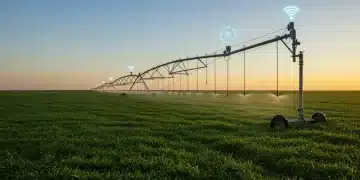
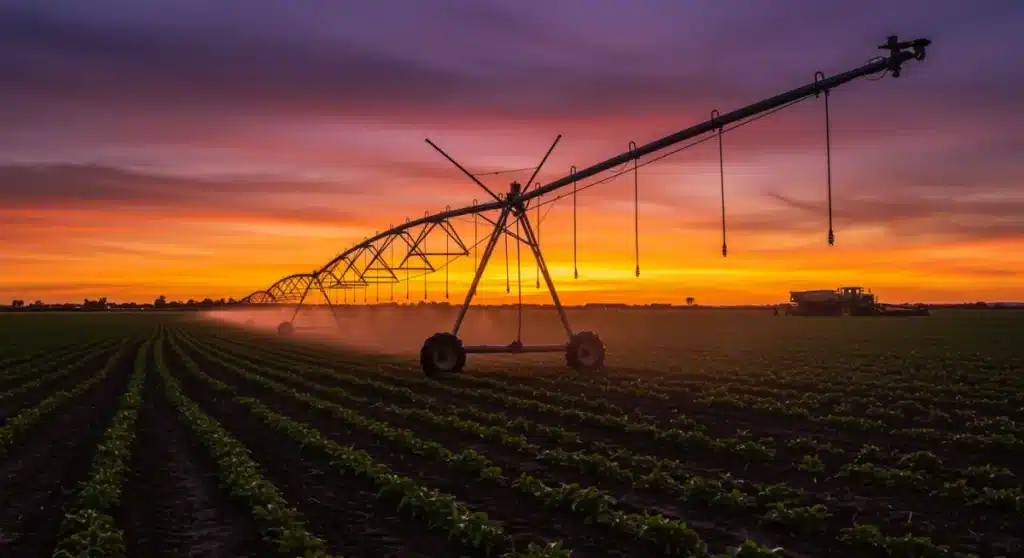
At the forefront of agricultural water conservation are smart irrigation systems. These sophisticated technologies move beyond simple timers, utilizing real-time data to deliver water precisely when and where it’s needed. By integrating sensors, weather forecasts, and predictive analytics, smart irrigation minimizes waste and maximizes efficiency. The impact on water savings can be substantial, often exceeding 20-30% compared to conventional methods.
Sensor-Based Irrigation: Knowing When and How Much
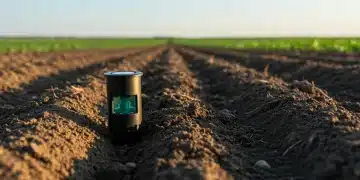
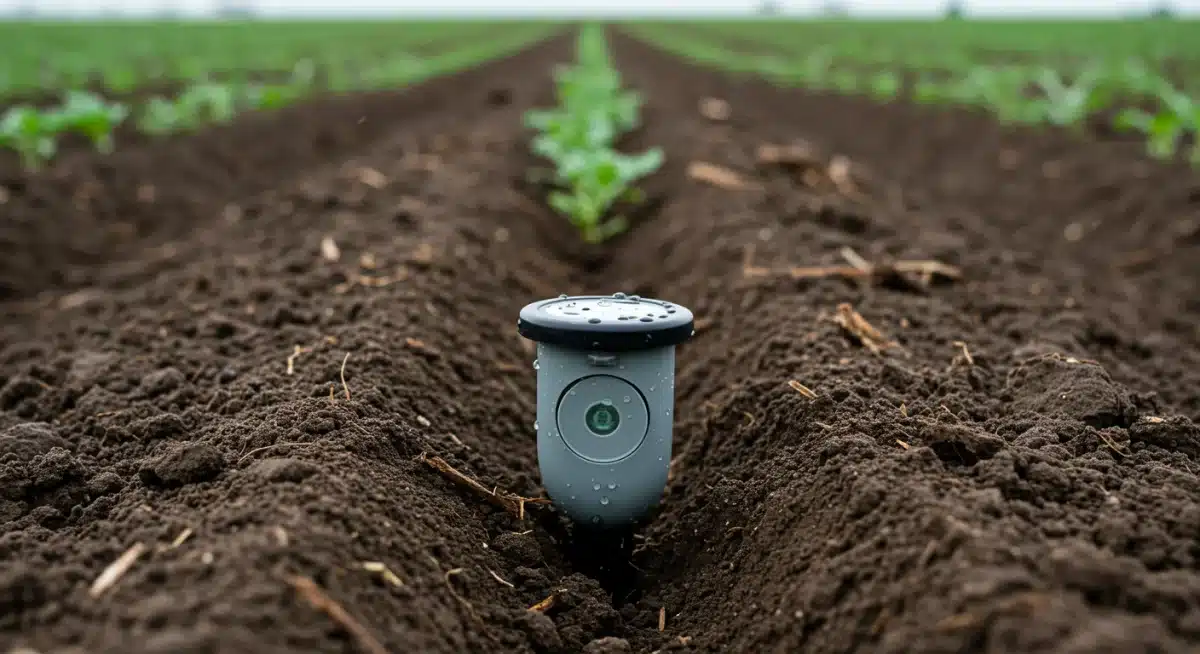
Soil moisture sensors are a game-changer in precision irrigation. Embedded directly into the soil at various depths, these sensors provide continuous data on moisture levels, allowing farmers to irrigate only when the soil moisture drops below a predefined threshold. This eliminates guesswork and prevents over-watering, a common source of water waste and nutrient leaching. Combined with evapotranspiration (ET) sensors that measure water loss from crops and soil, farmers gain a comprehensive understanding of their fields’ water needs.
Advancements in sensor technology mean these devices are becoming more affordable, durable, and accurate. Wireless sensor networks allow for easy deployment and data collection across large agricultural areas, transmitting information to a central hub or cloud-based platform for analysis. The real-time feedback loop empowers farmers to make informed decisions, ensuring optimal plant health while conserving precious water resources. This direct approach to agricultural water conservation is fundamental to achieving significant savings.
Weather-Based Irrigation Controllers: Adapting to Nature’s Whims
Weather-based controllers take smart irrigation a step further by incorporating local weather data. These systems access real-time and forecasted weather information – including temperature, humidity, rainfall, and wind speed – to adjust irrigation schedules automatically. If rain is expected, the system might skip an irrigation cycle. If temperatures are unusually high, increasing evapotranspiration, it might increase water application. This dynamic adaptation ensures that irrigation aligns with actual environmental conditions, preventing unnecessary watering and responding effectively to drought conditions.
The integration of artificial intelligence (AI) and machine learning (ML) into these controllers is pushing the boundaries of efficiency. AI algorithms can learn from historical data and predict future water needs with remarkable accuracy, optimizing irrigation schedules over time. This proactive approach to water management is crucial for achieving the 35% water saving target in agricultural water conservation efforts.
Drip and Micro-Irrigation Systems: Delivering Water Directly
Drip irrigation, micro-sprinklers, and subsurface drip irrigation (SDI) are highly efficient methods that deliver water directly to the plant root zone, minimizing evaporation and runoff. Unlike flood or furrow irrigation, which can lose significant amounts of water, these systems achieve water application efficiencies often exceeding 90%. SDI, in particular, buries the drip lines below the soil surface, further reducing evaporation and making water available precisely where roots can access it.
While the initial cost of installing drip and micro-irrigation systems can be higher than traditional methods, the long-term savings in water, energy, and labor, coupled with increased crop yields, often justify the investment. These systems are particularly beneficial for high-value crops and in regions facing severe water scarcity, making them a cornerstone of modern agricultural water conservation strategies.
Precision Agriculture and Data Analytics: The Brains Behind Water Savings
Precision agriculture leverages technology to observe, measure, and respond to variability in crops and fields. When applied to water management, it becomes a powerful tool for agricultural water conservation. By collecting and analyzing vast amounts of data, farmers can make highly targeted decisions about water application, moving away from uniform, field-wide irrigation practices.
Remote Sensing and Satellite Imagery: A Bird’s-Eye View of Water Needs
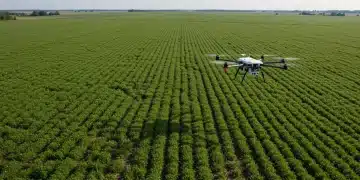
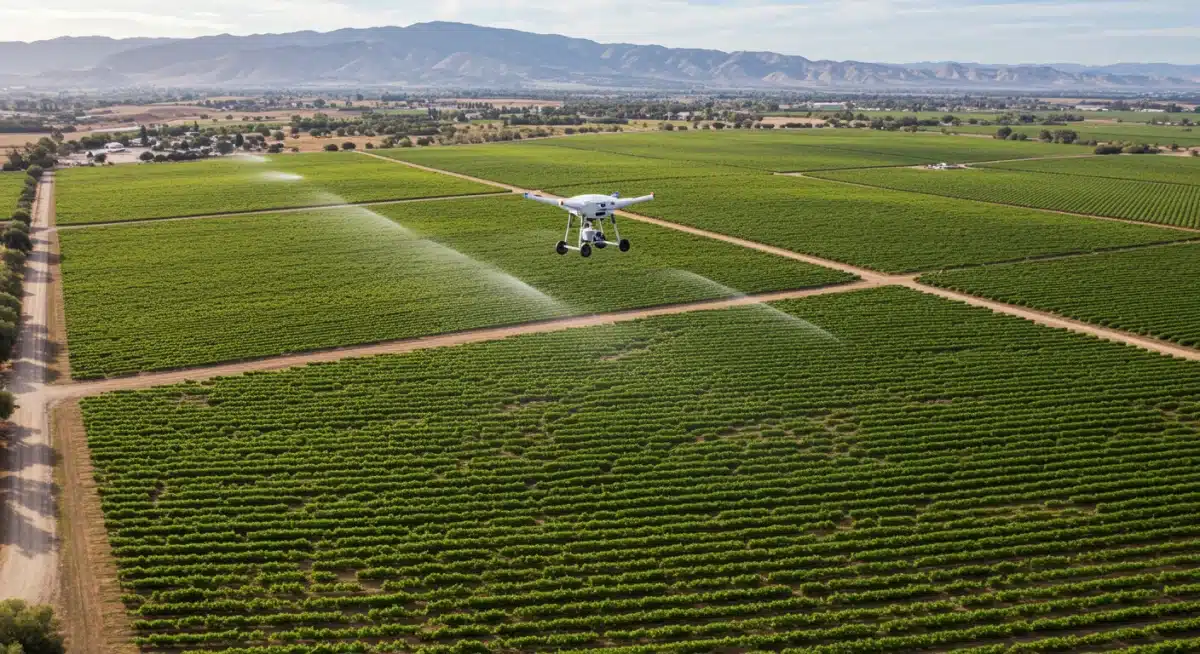
Drones, satellites, and aerial imagery provide invaluable insights into crop health and water stress across large agricultural areas. Multispectral and thermal imaging can detect subtle changes in plant vigor and temperature, indicating areas that are under- or over-watered before these issues become visible to the naked eye. This data can then be used to create variable rate irrigation (VRI) maps, guiding smart irrigation systems to apply water differentially across a field.
The ability to monitor fields from above allows for early detection of problems and proactive water management. For instance, a drone equipped with a thermal camera can identify cooler, well-watered areas versus warmer, water-stressed areas. This real-time, comprehensive view is instrumental in optimizing water distribution and is a key enabler for advanced agricultural water conservation.
Geographic Information Systems (GIS) and Mapping: Spatial Data for Smarter Decisions
GIS technology helps farmers integrate and visualize diverse data layers, including soil type, topography, historical yield, and irrigation zone boundaries. By mapping these variables, farmers can identify areas with different water requirements and tailor their irrigation strategies accordingly. For example, a sandy patch of soil will require more frequent, lighter irrigation than a clay-rich area. GIS platforms provide the spatial intelligence necessary for implementing highly localized agricultural water conservation plans.
The combination of GIS with remote sensing and sensor data creates a powerful decision-making framework. Farmers can precisely delineate management zones within their fields, applying different irrigation prescriptions to each zone, thereby maximizing water use efficiency and crop uniformity.
Water-Saving Crop Management Practices
Beyond technology, specific crop management practices play a significant role in agricultural water conservation. These methods focus on enhancing the soil’s water-holding capacity, reducing evaporation, and selecting drought-tolerant varieties.
Cover Cropping and No-Till Farming: Enhancing Soil Health
Cover crops, planted between cash crop cycles, protect the soil from erosion, suppress weeds, and significantly improve soil organic matter. Increased organic matter enhances the soil’s ability to absorb and retain water, making it more resilient to drought. Similarly, no-till or minimum-till farming practices disturb the soil less, preserving its structure and organic content, which in turn improves water infiltration and reduces evaporation from the soil surface.
These regenerative agricultural practices not only conserve water but also contribute to overall soil health, nutrient cycling, and carbon sequestration, offering multiple environmental benefits. Their adoption is a fundamental component of sustainable agricultural water conservation.
Drought-Resistant Crop Varieties: Breeding for Resilience
Plant breeders are continually developing new crop varieties that are more tolerant to drought and require less water. Through conventional breeding and genetic engineering, scientists are identifying and incorporating genes that enhance water use efficiency, improve root architecture for better water uptake, and increase tolerance to water stress conditions. These advancements allow farmers to maintain productivity even in water-scarce environments.
Choosing the right crop varieties for local climate and soil conditions is a proactive agricultural water conservation strategy that complements technological solutions. As climate patterns become more unpredictable, the importance of drought-resistant crops will only grow.
Deficit Irrigation: Strategically Stressing Crops
Deficit irrigation is a technique where crops are intentionally subjected to a certain level of water stress during specific growth stages that are less sensitive to water deficits, without significantly reducing yield. This method can save substantial amounts of water, particularly in regions where water resources are limited. While it requires careful monitoring and understanding of crop physiology, when implemented correctly, deficit irrigation can be a highly effective agricultural water conservation tool, especially for certain crops like grapes, cotton, and some fruits.
Integrated Water Management and Policy Support
Achieving a 35% reduction in agricultural water use by 2026 requires more than just on-farm technologies and practices; it demands a comprehensive approach that includes integrated water management strategies and supportive policies.
Water Harvesting and Storage: Capturing Every Drop
Rainwater harvesting, stormwater capture, and the construction of on-farm reservoirs provide alternative water sources, reducing reliance on groundwater and surface water supplies. These systems can collect and store water during periods of abundance for use during dry spells, enhancing water security for farms. Innovations in reservoir lining technologies and evaporation suppression techniques are also contributing to more efficient water storage.
Reclaimed wastewater, treated to appropriate standards, also presents a significant opportunity for agricultural water conservation, particularly in urban-adjacent agricultural areas. Expanding infrastructure for water recycling and reuse is a crucial long-term strategy.
Government Incentives and Support Programs: Driving Adoption
Government agencies at federal, state, and local levels play a pivotal role in accelerating the adoption of agricultural water conservation technologies and practices. Financial incentives, grants, cost-sharing programs, and technical assistance can help farmers overcome the initial investment barriers associated with new systems. Education and outreach programs are also essential to disseminate knowledge and best practices among the farming community.
Policies that promote water trading, water rights reform, and penalties for inefficient water use can also create market-based incentives for conservation. A multi-pronged policy approach is necessary to create an enabling environment for widespread water savings.
Collaboration and Knowledge Sharing: A Collective Effort
The challenges of water scarcity are complex and require collaborative solutions. Farmers, researchers, technology developers, policymakers, and extension services must work together to share knowledge, develop new solutions, and implement effective strategies. Farmer-led initiatives, peer-to-peer learning networks, and public-private partnerships are vital for fostering innovation and accelerating the adoption of agricultural water conservation practices.
Research and development continue to be critical. Investments in agricultural science can lead to breakthroughs in areas such as plant physiology, soil science, and irrigation engineering, further enhancing our ability to conserve water.
Challenges and the Path Forward for Agricultural Water Conservation
While the technologies and practices for significant agricultural water conservation exist, several challenges must be addressed to achieve the 35% reduction target by 2026. These include the upfront cost of new technologies, the learning curve for farmers, and the need for reliable infrastructure and connectivity in rural areas.
Overcoming Economic Barriers
The initial investment for smart irrigation systems, remote sensing equipment, and other advanced technologies can be substantial. For many small and medium-sized farms, this can be a prohibitive barrier. Expanded access to affordable financing, loan programs, and grants is crucial. Furthermore, demonstrating the clear return on investment (ROI) through case studies and pilot projects can encourage greater adoption.
Bridging the Knowledge Gap
Adopting new technologies requires farmers to learn new skills and adapt their management practices. Comprehensive training programs, accessible technical support, and user-friendly interfaces for agricultural software are essential. Agricultural extension services play a vital role in translating complex scientific and technological information into practical, actionable advice for farmers.
Infrastructure and Connectivity
Many advanced water conservation technologies rely on robust internet connectivity for data transmission and remote control. Ensuring reliable broadband access in rural agricultural areas is a foundational requirement for widespread adoption. Investment in rural digital infrastructure is therefore an indirect but critical component of agricultural water conservation efforts.
The 2026 Outlook: A Sustainable Future for US Agriculture
The journey towards achieving a 35% reduction in agricultural water usage by 2026 is ambitious but entirely attainable. By embracing a combination of smart irrigation technologies, precision agriculture techniques, sustainable crop management practices, and supportive policies, US agriculture can become a global leader in water efficiency.
The benefits extend far beyond immediate water savings. Enhanced water security will lead to more stable crop yields, reduced operational costs, and increased profitability for farmers. Environmentally, it will alleviate pressure on freshwater ecosystems, improve water quality, and contribute to overall ecological resilience. This commitment to agricultural water conservation is not just about saving water; it’s about safeguarding the future of food, rural communities, and the planet.
As we move towards 2026, the ongoing innovation in agricultural technology, coupled with a growing awareness of environmental stewardship, paints a hopeful picture. The collective efforts of farmers, researchers, industry, and government will pave the way for a more water-efficient, sustainable, and prosperous agricultural sector in the United States.