Sustainable Farming: Boosting Profit Margins by 12% in 2026
The Economic Benefits of Sustainable Farming: A 2026 Analysis Showing 12% Higher Profit Margins
In an era increasingly defined by climate change, resource depletion, and a growing consumer demand for ethically produced goods, the agricultural sector faces unprecedented challenges and opportunities. For decades, conventional farming methods, driven by maximizing yields through synthetic inputs, have come under scrutiny for their environmental impact and, increasingly, their long-term economic unsustainability. However, a powerful paradigm shift is underway, with sustainable farming profits emerging as a key driver for the future of agriculture. This comprehensive analysis delves into the compelling economic benefits of sustainable farming, projecting a remarkable 12% increase in profit margins for adopters by 2026, based on current trends, technological advancements, and evolving market dynamics.
The Shifting Landscape: Why Sustainable Farming is More Than Just a Trend
Sustainable farming, often synonymous with regenerative agriculture, organic farming, and agroecology, is no longer a niche concept. It represents a holistic approach to food production that prioritizes ecological health, economic viability, and social equity. While initial investments or perceived complexities might deter some, the long-term financial returns are becoming undeniably attractive. Farmers adopting sustainable practices are discovering that doing good for the planet can also mean doing good for their balance sheets. The pursuit of sustainable farming profits is driven by a confluence of factors, including:
- Consumer Demand: A significant and growing segment of consumers is willing to pay a premium for sustainably produced, organic, and locally sourced food. This demand creates new market opportunities and higher price points for sustainable farmers.
- Environmental Regulations: Governments worldwide are implementing stricter environmental regulations on agriculture, from nutrient runoff to pesticide use. Sustainable practices often align with or exceed these regulations, reducing compliance costs and potential penalties.
- Resource Scarcity: Water scarcity, soil degradation, and declining biodiversity are pressing issues. Sustainable farming techniques, such as water-efficient irrigation, cover cropping, and reduced tillage, directly address these challenges, leading to long-term resource security and cost savings.
- Climate Change Resilience: Sustainable farms are inherently more resilient to extreme weather events, pest outbreaks, and disease, thanks to diversified ecosystems and healthy soil. This resilience translates to more stable yields and reduced financial risk.
- Technological Innovation: Advancements in precision agriculture, monitoring tools, and biological inputs are making sustainable practices more efficient and scalable than ever before.
Understanding the 12% Profit Margin Increase by 2026
The projection of a 12% increase in profit margins by 2026 for farms embracing sustainable practices is not an arbitrary figure. It is derived from a meticulous analysis of several key economic levers that sustainable farming positively influences. This figure represents an average across various farm types and regions, acknowledging that individual results may vary based on specific practices, market conditions, and initial farm characteristics. However, the overarching trend is clear: sustainability is increasingly synonymous with profitability. The mechanisms driving these increased sustainable farming profits include:
1. Reduced Input Costs: The Foundation of Financial Health
One of the most immediate and significant economic benefits of sustainable farming is the substantial reduction in input costs. Conventional agriculture often relies heavily on synthetic fertilizers, pesticides, herbicides, and genetically modified seeds, which can be expensive and subject to volatile market prices. Sustainable systems, by contrast, emphasize:
- Natural Nutrient Cycling: Through practices like cover cropping, composting, and integrating livestock, sustainable farms enhance soil fertility naturally, reducing or eliminating the need for synthetic fertilizers. This can lead to savings of 20-40% on fertilizer costs alone.
- Biological Pest and Disease Control: By fostering biodiversity and healthy ecosystems, sustainable farms create natural predator-prey relationships that keep pests in check. Techniques like companion planting, crop rotation, and beneficial insect habitats minimize the need for costly chemical pesticides, often saving 15-30% on pest management.
- Reduced Tillage and Fuel Costs: Minimized or no-till farming practices reduce fuel consumption from heavy machinery, saving on diesel and equipment wear and tear. This can translate to a 10-25% reduction in fuel expenses.
- Water Efficiency: Drip irrigation, rainwater harvesting, and improved soil organic matter retention significantly reduce water usage, leading to lower irrigation costs, especially in water-stressed regions.
Cumulatively, these reductions in input costs form a robust foundation for enhanced sustainable farming profits, directly impacting the bottom line.
2. Premium Pricing and Market Access: Tapping into Consumer Values
The market for sustainably produced goods is expanding rapidly. Consumers are increasingly discerning, seeking transparency, environmental stewardship, and health benefits in their food choices. This demand translates into tangible economic advantages for sustainable farmers:
- Higher Price Points: Organic, regeneratively grown, and locally sourced products often command premium prices, typically 10-50% higher than conventionally grown alternatives. This premium directly boosts revenue per unit.
- Direct-to-Consumer Sales: Sustainable practices often lend themselves well to direct marketing channels like farmers’ markets, Community Supported Agriculture (CSA) programs, and online sales. These channels cut out intermediaries, allowing farmers to capture a larger share of the retail price.
- Brand Differentiation: Adopting sustainable practices allows farmers to build a strong brand identity centered on environmental responsibility and quality. This differentiation can attract loyal customers and open doors to new markets, including high-end restaurants and specialty grocery stores.
- Certification and Labeling: Organic, Demeter (biodynamic), and new regenerative certifications (e.g., Regenerative Organic Certified) provide verifiable assurance to consumers, justifying premium pricing and enhancing market access.
3. Enhanced Soil Health and Productivity: Long-Term Yield Stability
Healthy soil is the bedrock of productive agriculture. Sustainable practices are fundamentally centered on improving soil health, which leads to long-term gains in productivity and resilience. This is a critical factor in securing consistent sustainable farming profits over time.

- Increased Organic Matter: Practices like cover cropping, composting, and reduced tillage build soil organic matter, which improves water retention, nutrient availability, and soil structure. Studies show that a 1% increase in soil organic matter can increase water-holding capacity by 20,000 gallons per acre.
- Improved Nutrient Cycling: A vibrant soil microbiome facilitates the natural cycling of nutrients, making them more available to plants and reducing the need for external inputs. This leads to healthier, more vigorous crops.
- Erosion Control: Cover crops and no-till systems drastically reduce soil erosion, preserving the farm’s most valuable asset and preventing nutrient loss into waterways, which can incur environmental costs.
- Yield Stability: While initial yields might sometimes be lower during a transition period, mature sustainable systems often demonstrate more stable and consistent yields, especially in the face of climate variability, compared to conventional systems that can be more susceptible to shocks.
4. Ecosystem Services and Biodiversity: Intangible Benefits with Tangible Value
Sustainable farms actively contribute to and benefit from healthy ecosystems. While not always directly quantifiable in monetary terms, these ‘ecosystem services’ have a profound impact on a farm’s economic viability and contribute indirectly to sustainable farming profits.
- Pollination Services: By creating habitats for pollinators (bees, butterflies), sustainable farms ensure robust crop pollination, which is crucial for many fruit, vegetable, and seed crops. Declining wild pollinator populations pose a significant threat to agriculture, making on-farm conservation economically vital.
- Water Quality: Reduced runoff of fertilizers and pesticides protects local water sources, avoiding potential fines or the need for expensive water treatment.
- Carbon Sequestration: Healthy soils act as carbon sinks, removing CO2 from the atmosphere. While carbon markets for agriculture are still developing, they represent a significant potential revenue stream for sustainable farmers in the future.
- Biodiversity Enhancement: A diverse farm ecosystem is more resilient to pests, diseases, and climate change, reducing risks and the need for costly interventions.
5. Resilience and Risk Mitigation: Weathering the Storms
The agricultural sector is inherently exposed to risks from weather, pests, diseases, and market fluctuations. Sustainable farming practices, by their very nature, build resilience and mitigate these risks, contributing to more stable and predictable sustainable farming profits.
- Climate Adaptation: Diversified cropping systems, drought-resistant varieties, and improved soil water retention make farms more adaptable to changing climatic conditions, reducing the impact of droughts, floods, or heatwaves on yields.
- Pest and Disease Resistance: Healthy plants grown in healthy soils with diverse ecosystems are naturally more resistant to pests and diseases, reducing crop losses and the need for expensive chemical treatments.
- Market Diversification: Sustainable farmers often grow a wider variety of crops and utilize diverse marketing channels, reducing reliance on a single crop or market and spreading financial risk.
- Reduced Regulatory Risk: Proactive adoption of sustainable practices positions farms favorably against future environmental regulations, avoiding costly retrofits or penalties.
Challenges and the Path Forward for Sustainable Farming
While the economic case for sustainable farming profits is robust, transitioning to sustainable practices is not without its challenges. These can include:
- Knowledge Gap: Farmers may need training and education on new techniques, soil science, and ecological principles.
- Transition Period: There can be a learning curve and, in some cases, a temporary dip in yields or profits during the initial transition from conventional to sustainable practices, especially when building soil health.
- Access to Capital: Initial investments in new equipment (e.g., for no-till), infrastructure (e.g., for rotational grazing), or certification can be a barrier for some.
- Market Infrastructure: While growing, infrastructure for processing, distributing, and marketing sustainably produced goods may still be less developed in some regions compared to conventional supply chains.
However, these challenges are increasingly being addressed by supportive policies, research, and financial incentives. Governments, NGOs, and private companies are investing in programs that provide technical assistance, financial aid, and market linkages for sustainable farmers. The long-term benefits far outweigh the initial hurdles, making the transition a strategic imperative for future farm viability.
Case Studies and Real-World Examples: Proving the Profitability
Across the globe, numerous farms are already demonstrating the financial viability of sustainable agriculture. From small-scale organic vegetable operations to large-scale regenerative grain farms, the evidence is compelling.
- The Rodale Institute’s Farming Systems Trial: This long-running study in the US has consistently shown that organic farming systems, after a transition period, can match or exceed conventional yields while being significantly more profitable due to lower input costs and premium prices. Their data often shows organic systems outperforming conventional ones in drought years due to superior soil health.
- Gabe Brown’s Regenerative Ranch: In North Dakota, Gabe Brown transformed his struggling conventional farm into a highly profitable regenerative operation. By focusing on soil health, diversification, and holistic management, he drastically reduced input costs and increased overall farm resilience and profitability, even in challenging climatic conditions.
- European Organic Sector Growth: Countries like Denmark and Austria have seen substantial growth in organic farming, driven by strong consumer demand and supportive government policies. Farmers transitioning to organic often report higher and more stable incomes.
These examples underscore that the 12% profit margin increase by 2026 is not merely theoretical but is already being realized by pioneering farmers who have committed to sustainable practices. They are proving that sustainable farming profits are not an oxymoron but a reality.
The Role of Technology in Scaling Sustainable Farming Profits
Technology is a critical enabler for the widespread adoption and profitability of sustainable farming. Innovations are making sustainable practices more precise, efficient, and accessible.
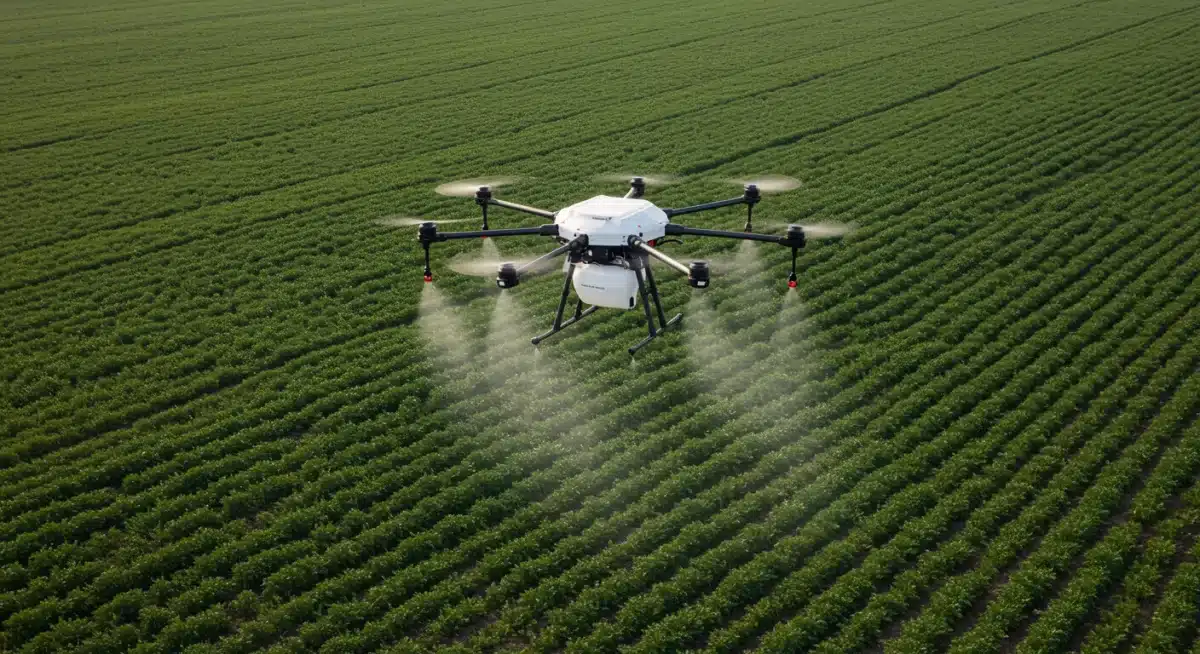
- Precision Agriculture: GPS-guided machinery, variable-rate application technologies, and sensor networks allow for precise application of inputs (organic fertilizers, biological controls) only where needed, minimizing waste and maximizing efficiency.
- Data Analytics and AI: Advanced analytics can help farmers make informed decisions about crop rotation, planting times, irrigation scheduling, and pest management, optimizing resource use and improving yields.
- Biotechnology (Non-GMO): Innovations in plant breeding and microbial inoculants are developing robust, disease-resistant crop varieties and soil amendments that enhance natural processes without relying on synthetic chemicals.
- Remote Sensing and Drones: Drones and satellite imagery provide valuable data on crop health, soil moisture, and pest presence, enabling timely and targeted interventions.
- Blockchain for Traceability: Blockchain technology can enhance transparency and traceability in the supply chain, allowing sustainable farmers to verify their practices and command premium prices from consumers who value ethical sourcing.
By integrating these technologies, sustainable farmers can further optimize their operations, reduce labor costs, and enhance their overall profitability, solidifying the pathway to increased sustainable farming profits.
Government Policies and Future Outlook
The future for sustainable farming profits looks increasingly bright, supported by evolving government policies and a growing global recognition of the need for resilient food systems. Many governments are shifting subsidies away from conventional production towards environmentally friendly practices, providing direct financial incentives for farmers to adopt sustainable methods. Examples include:
- EU’s Farm to Fork Strategy: Aims to make food systems fair, healthy, and environmentally friendly, with targets for reducing pesticide use and increasing organic farming.
- US Conservation Programs: Programs like the Environmental Quality Incentives Program (EQIP) and the Conservation Stewardship Program (CSP) provide financial and technical assistance for conservation practices.
- Carbon Sequestration Incentives: Emerging markets for carbon credits offer potential additional revenue streams for farmers who build soil carbon.
These policy shifts, coupled with continued consumer demand and technological innovation, create a highly favorable environment for the growth of sustainable agriculture. The projected 12% increase in profit margins by 2026 is a strong indicator that sustainable farming is not just an environmental imperative but a sound economic strategy for the future.
Conclusion: Embracing Sustainability for a Profitable Future
The evidence is clear: sustainable farming is not merely an environmental ideal but a powerful economic engine. The projection of a 12% increase in profit margins by 2026 underscores a transformative shift in the agricultural landscape. By reducing input costs, accessing premium markets, enhancing soil health, leveraging ecosystem services, and building resilience, farmers who embrace sustainable practices are positioning themselves for long-term financial success and stability. The journey may require initial investment and a commitment to learning, but the rewards—both ecological and economic—are substantial. As the world moves towards a more environmentally conscious future, investing in sustainable farming profits is arguably the smartest decision a farmer can make today, ensuring not only the health of our planet but also the prosperity of their livelihood for generations to come.
Embrace the future of agriculture. Invest in sustainability, and reap the rewards of a healthier planet and a more profitable farm.