2025 Sustainable Agriculture Certification Standards for US Farmers
The new 2025 sustainable agriculture certification standards are poised to reshape farming practices across the US, requiring farmers to adapt to updated environmental, social, and economic criteria for long-term viability and market access.
Are you a US farmer looking ahead to the future of agriculture? The landscape of farming is constantly evolving, and with the year 2025 fast approaching, significant changes are on the horizon. Understanding and adapting to the new sustainable agriculture standards 2025 is not just about compliance; it’s about securing your farm’s future and enhancing its market competitiveness.
Understanding the Evolution of Sustainable Agriculture Standards
The concept of sustainable agriculture has been gaining momentum for decades, driven by increasing consumer demand for ethically produced food and growing environmental concerns. As we approach 2025, these standards are becoming more formalized and integrated into certification processes, moving beyond voluntary guidelines to essential prerequisites for market access and consumer trust.
This evolution reflects a broader societal shift towards environmental stewardship and social responsibility. For US farmers, this means a deeper dive into practices that not only protect natural resources but also ensure economic viability and social equity within agricultural operations. It’s a holistic approach that seeks to balance the needs of the present without compromising the ability of future generations to meet their own needs.
The Driving Forces Behind New Standards
Several key factors are pushing for the implementation of more stringent and comprehensive sustainable agriculture standards. These include climate change, which necessitates adaptive farming methods; biodiversity loss, requiring practices that protect natural habitats; and consumer awareness, which demands transparency in food production.
- Climate Change Adaptation: Farmers are increasingly required to implement practices that reduce greenhouse gas emissions and build resilience against extreme weather events.
- Biodiversity Preservation: New standards emphasize practices that support pollinator health, protect native flora and fauna, and minimize habitat destruction.
- Consumer Demand: A growing segment of the population actively seeks out products certified as sustainably produced, influencing market trends and agricultural policy.
Ultimately, these new standards are designed to create a more resilient and responsible agricultural system. They challenge farmers to innovate and integrate best practices into their daily operations, ensuring that food production aligns with broader environmental and social goals.
Key Pillars of the 2025 Certification Landscape
The upcoming 2025 sustainable agriculture certification standards are built upon several foundational pillars, each addressing a critical aspect of sustainability. These pillars extend beyond simple environmental considerations to encompass economic viability and social equity, reflecting a comprehensive approach to farm management.
Farmers will need to familiarize themselves with these core areas to effectively navigate the certification process. Each pillar represents an opportunity to improve farm operations, reduce risks, and enhance the overall value proposition of their agricultural products.
Environmental Stewardship: Beyond Basic Compliance
Environmental stewardship will remain a cornerstone, but with a heightened focus on measurable outcomes and continuous improvement. This includes advanced soil health management, water conservation, and reduced chemical inputs.
- Soil Health Management: Emphasizes practices like cover cropping, reduced tillage, and organic matter enhancement to improve soil structure and fertility.
- Water Resource Protection: Focuses on efficient irrigation, preventing runoff, and protecting riparian zones to conserve water and maintain water quality.
- Biodiversity Enhancement: Encourages the creation of habitats for beneficial insects and wildlife, and the use of diverse cropping systems.
Economic Viability: Sustaining the Farm Business
Sustainability also means ensuring the long-term economic health of the farm. The 2025 standards will likely include criteria related to financial planning, risk management, and market diversification, recognizing that a sustainable farm must also be a profitable one.
Social Equity and Community Engagement
This pillar addresses the human element of farming, including fair labor practices, worker safety, and positive community relations. It emphasizes the importance of supporting local economies and ensuring a just and equitable food system for all stakeholders.
Preparing Your Farm for the New Standards: A Practical Guide
Proactive preparation is crucial for US farmers aiming to meet the 2025 sustainable agriculture certification standards. This involves a multi-faceted approach, combining self-assessment, education, and strategic implementation of new practices. Starting early allows for a smoother transition and minimizes potential disruptions to farm operations.
Farmers should view this as an opportunity for improvement and innovation, rather than solely a regulatory burden. By embracing these changes, farms can not only achieve certification but also enhance their efficiency, resilience, and appeal to a broader market.
Conducting a Comprehensive Farm Assessment
Begin by evaluating your current practices against anticipated new standards. Identify areas where your farm already excels and pinpoint those that require significant adjustment. This assessment should cover environmental, economic, and social aspects of your operation.
- Environmental Audit: Review current soil management, water usage, waste management, and energy consumption.
- Economic Analysis: Assess financial stability, market access, and potential for diversification.
- Social Review: Evaluate labor practices, worker conditions, and community engagement initiatives.
Investing in Education and Training
Stay informed about the specific details of the 2025 standards as they are finalized. Participate in workshops, webinars, and extension programs that offer guidance on implementing sustainable practices and navigating the certification process.
Consider training for your farm staff on new techniques and technologies. Knowledge sharing within the agricultural community will also be vital. Local agricultural associations and university extension services are excellent resources for up-to-date information and practical advice.

The Role of Technology in Achieving Certification
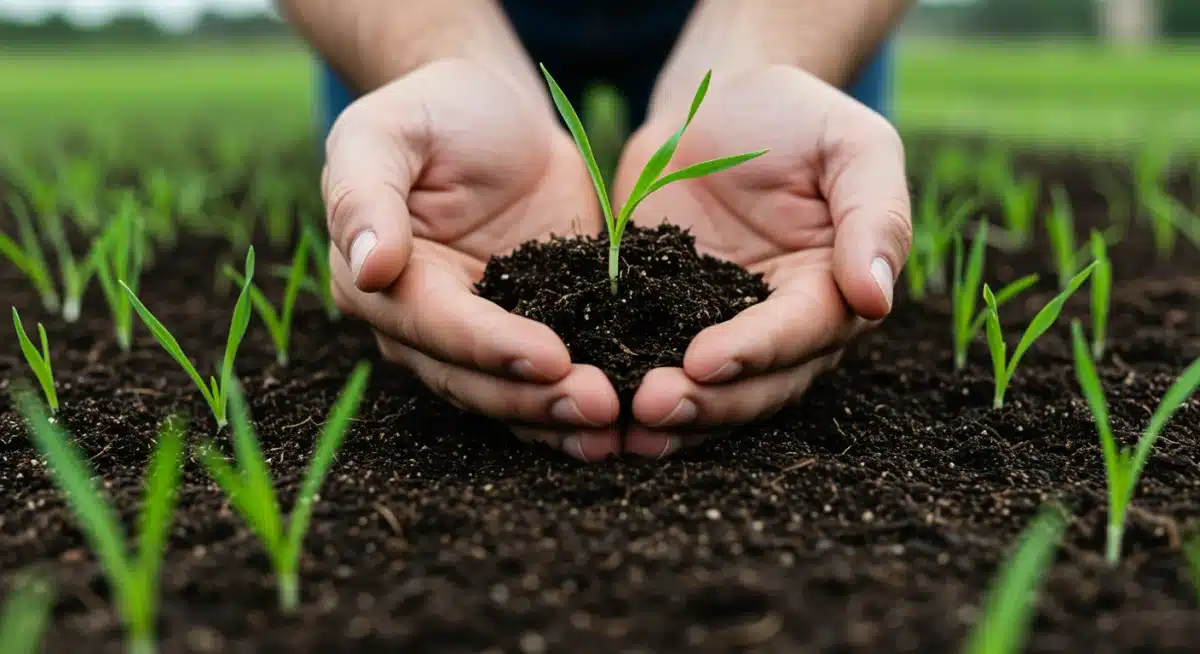
Agricultural technology, or ‘agritech,’ is poised to play a pivotal role in helping US farmers meet the rigorous demands of the new 2025 sustainable agriculture certification standards. From precision farming tools to advanced data analytics, technology offers solutions that can optimize resource use, reduce environmental impact, and streamline compliance reporting.
Embracing these technological advancements can transform the challenge of new standards into an opportunity for increased efficiency and innovation. It allows farmers to gather precise data, make informed decisions, and demonstrate their commitment to sustainability with verifiable evidence.
Precision Agriculture for Resource Optimization
Precision agriculture technologies, such as GPS-guided machinery, variable rate application, and remote sensing, enable farmers to apply inputs like water, fertilizer, and pesticides with unprecedented accuracy. This minimizes waste, reduces costs, and significantly lowers environmental footprints.
- Sensors and Drones: Provide real-time data on crop health, soil conditions, and water needs, allowing for targeted interventions.
- GIS Mapping: Helps in optimizing field layouts, managing nutrient distribution, and identifying areas for conservation efforts.
- Automated Irrigation Systems: Deliver water precisely when and where it’s needed, conserving this vital resource.
Data Management and Reporting for Compliance
Meeting certification standards often requires extensive record-keeping and reporting. Farm management software and blockchain technology can provide robust solutions for tracking practices, inputs, outputs, and environmental metrics, ensuring transparency and traceability.
These systems can automate data collection, generate compliance reports, and even provide insights into areas for improvement. This not only simplifies the certification process but also builds trust with consumers and supply chain partners who demand verifiable sustainability claims.
Potential Challenges and How to Overcome Them
While the new 2025 sustainable agriculture certification standards offer clear benefits, US farmers may encounter several challenges during their implementation. These can range from financial investments to adapting existing farm infrastructure and practices. Recognizing these potential hurdles early allows for strategic planning and proactive solutions.
Addressing these challenges effectively will be key to a successful transition. Farmers who approach these changes with a problem-solving mindset and seek out available resources will be better positioned to thrive under the new framework.
Financial Investment and Access to Capital
Implementing new sustainable practices and technologies often requires upfront financial investment. This can be a significant barrier, especially for small and medium-sized farms. Farmers should explore various funding options.
- Government Grants and Subsidies: Look for federal and state programs that support sustainable agriculture initiatives, such as conservation programs or technology adoption grants.
- Low-Interest Loans: Seek out agricultural lenders who offer favorable terms for investments in sustainable farming equipment or practices.
- Cost-Sharing Programs: Investigate opportunities to share costs with neighboring farms or through cooperative arrangements for expensive equipment or training.
Adapting Existing Infrastructure and Practices
Many farms have established infrastructure and long-standing practices that may not align with the new standards. Transitioning requires careful planning and a willingness to innovate. This could involve modifying irrigation systems, transitioning to different tillage methods, or investing in new energy sources.
It’s important to approach these adaptations incrementally, where possible, and to leverage expert advice from agricultural extension services or private consultants. Pilot projects on a smaller scale can help test new methods before full-scale implementation, minimizing risk and optimizing outcomes.
The Benefits of Early Adoption and Compliance
For US farmers, embracing the new 2025 sustainable agriculture certification standards proactively offers a multitude of advantages that extend far beyond mere compliance. Early adoption can position farms as leaders in a rapidly evolving market, providing a competitive edge and fostering long-term resilience.
These benefits encompass improved market access, enhanced brand reputation, operational efficiencies, and a stronger connection with environmentally conscious consumers. Viewing these standards as an opportunity rather than a burden can unlock significant value for agricultural enterprises.
Enhanced Market Access and Premium Pricing
Certified sustainable products often command higher prices and gain preferential access to markets that prioritize ethical and environmentally responsible sourcing. As consumer awareness grows, this trend is only expected to strengthen.
- Consumer Preference: A growing segment of consumers is willing to pay more for products with verifiable sustainability credentials.
- Retailer Demand: Major retailers and food service providers are increasingly setting sustainability requirements for their supply chains.
- Export Opportunities: Meeting international sustainable standards can open doors to global markets with strict import regulations.
Improved Environmental and Operational Efficiency
Many sustainable practices inherently lead to more efficient use of resources, which can translate into significant cost savings and improved environmental outcomes. Reduced input costs, better soil health, and more resilient crops contribute to a stronger bottom line.
For instance, optimized water usage through precision irrigation reduces consumption and associated pumping costs. Enhanced soil health can decrease the need for synthetic fertilizers, while diversified cropping systems can mitigate pest and disease pressure, reducing reliance on chemical treatments. These efficiencies contribute directly to the farm’s economic health and environmental performance.
Future Outlook: Sustainable Agriculture Beyond 2025
The 2025 sustainable agriculture certification standards represent a significant milestone, but they are by no means the final destination. The journey towards a truly sustainable and resilient food system is continuous, driven by ongoing research, technological innovation, and evolving societal expectations. US farmers should view these upcoming changes as part of a larger, dynamic process.
Looking beyond 2025, the emphasis will likely shift towards even greater integration of ecological principles, advanced data analytics, and collaborative efforts across the agricultural value chain. Farmers who embrace this forward-thinking perspective will be best equipped to navigate future challenges and opportunities.
Emerging Trends and Next-Generation Practices
Expect to see a continued focus on regenerative agriculture, which aims to not just sustain but actively improve ecosystems. This includes practices that enhance biodiversity, sequester carbon, and restore soil health at a more accelerated pace. Precision agriculture will become even more sophisticated, integrating AI and machine learning for hyper-localized management.
Policy and Consumer Influence
Government policies will likely continue to incentivize sustainable practices, potentially offering further support for farmers adopting advanced environmental stewardship. Consumer preferences will also play a crucial role, with an increasing demand for traceability, transparency, and products that align with specific ethical and environmental values. Farmers who can effectively communicate their sustainable practices will gain a significant market advantage.
| Key Point | Brief Description |
|---|---|
| New Standards Ahead | 2025 brings updated sustainable agriculture certification standards focusing on environmental, economic, and social aspects. |
| Pillars of Certification | Standards will cover environmental stewardship, economic viability, and social equity for a holistic approach. |
| Tech Integration | Technology like precision agriculture and data management is crucial for compliance and efficiency. |
| Benefits of Adoption | Early compliance leads to enhanced market access, premium pricing, and improved operational efficiency. |
Frequently Asked Questions About 2025 Sustainable Ag Standards
The core changes in 2025 standards emphasize a more holistic approach, integrating stricter environmental stewardship, ensuring economic viability for farms, and promoting social equity. This includes advanced soil health metrics, comprehensive water management, fair labor practices, and transparent supply chains, moving beyond basic compliance to measurable, impactful sustainability.
Small family farms may face initial challenges due to potential investment costs for new technologies or practice adjustments. However, these standards also offer opportunities for market differentiation, access to premium markets, and increased operational efficiencies. Support programs, grants, and educational resources will be crucial for their successful transition and competitive edge.
Technology is vital for meeting 2025 certification requirements. Precision agriculture tools, like GPS-guided machinery and remote sensing, optimize resource use. Farm management software and blockchain enhance data collection, reporting, and traceability, streamlining compliance and providing verifiable evidence of sustainable practices to certifying bodies and consumers alike.
Yes, various financial incentives and support programs are available or expected to expand. These often include government grants (federal and state), cost-sharing initiatives for conservation practices, and low-interest loans for sustainable farming investments. Farmers are encouraged to consult local agricultural extension offices and USDA resources for up-to-date information on available funding opportunities.
Long-term benefits include enhanced market access, potential for premium pricing, and a stronger brand reputation among conscientious consumers. Farms will also experience improved operational efficiency, greater resilience to environmental challenges, and a more sustainable business model, contributing to both ecological health and economic stability for future generations in agriculture.
Conclusion
The impending 2025 sustainable agriculture certification standards represent a pivotal moment for US farmers. While the transition may present challenges, it also offers unparalleled opportunities for innovation, market differentiation, and long-term resilience. By proactively engaging with these new standards, embracing technological advancements, and seeking out available resources, farmers can not only ensure compliance but also position themselves at the forefront of a more sustainable and profitable agricultural future. The journey ahead demands adaptability and a commitment to continuous improvement, but the rewards for both individual farms and the broader agricultural ecosystem are significant and enduring.