U.S. Farmland Values in 2025: Investment Trends & 7% Appreciation
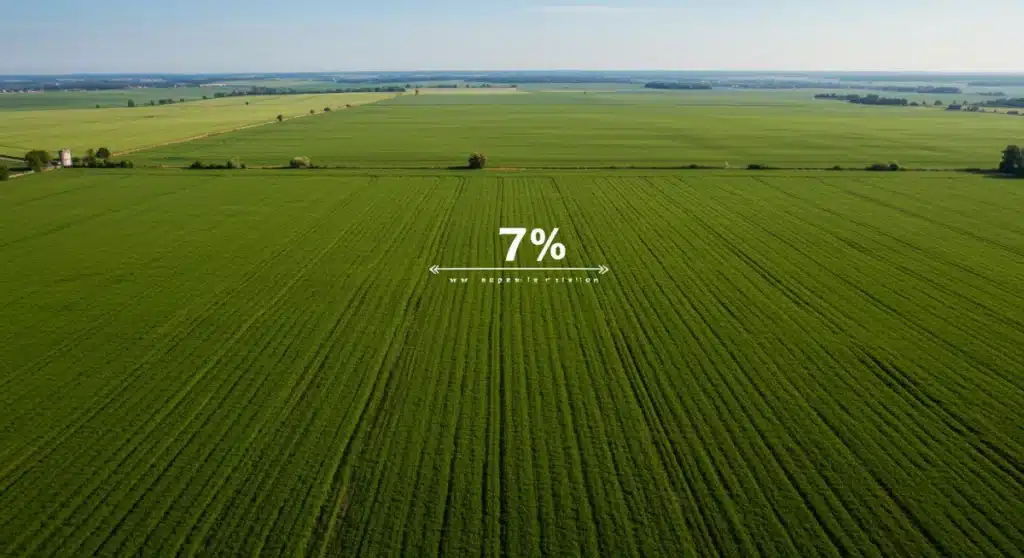
U.S. farmland values are projected to experience a significant 7% appreciation in 2025, driven by strong investment interest, resilient agricultural markets, and evolving economic landscapes, offering a robust outlook for investors.
As we approach 2025, the landscape of agricultural investments continues to evolve, with particular attention turning to U.S. Farmland Values in 2025: A Data-Backed Comparison of Investment Trends and a 7% Projected Appreciation. This sector, historically a beacon of stability, is now poised for significant growth, attracting both seasoned and new investors looking for tangible assets in an uncertain economic climate. Understanding the undercurrents shaping these valuations is crucial for anyone considering an entry or expansion in this vital market.
Understanding the Current Market Dynamics
The current U.S. farmland market is characterized by a blend of persistent demand, limited supply, and a favorable commodity price environment. These factors collectively contribute to the robust appreciation observed in recent years and underpin the optimistic projections for 2025. Investors are increasingly recognizing farmland not just as an agricultural asset, but as a strategic long-term investment that offers both capital appreciation and income generation.
Several macroeconomic elements are influencing these dynamics. Inflationary pressures often push investors towards real assets, and farmland, with its intrinsic value and ability to produce essential goods, stands out. Additionally, global food security concerns are elevating the importance of productive agricultural land, further solidifying its investment appeal.
Key Drivers of Farmland Value Growth
The appreciation of farmland is not a singular event but a confluence of interconnected factors. Analyzing these drivers provides a clearer picture of why this asset class continues to perform strongly.
- Strong Agricultural Commodity Prices: Elevated prices for corn, soybeans, wheat, and other key crops directly translate to higher farm incomes, which in turn support higher land values.
- Limited Supply and High Demand: The finite nature of arable land, coupled with increasing investor interest from both institutional and individual buyers, creates a competitive market.
- Inflation Hedge: Farmland has historically served as an effective hedge against inflation, making it attractive during periods of economic uncertainty.
- Technological Advancements: Innovations in precision agriculture, irrigation, and crop genetics enhance productivity and profitability, increasing the value of the land.
The interplay of these drivers creates a resilient market, making farmland a compelling option for diversification and wealth preservation. The stability offered by this asset class, particularly when juxtaposed with more volatile investment options, reinforces its allure.
In conclusion, the current market dynamics for U.S. farmland are robust, supported by strong demand, limited supply, and favorable economic conditions. These elements are setting the stage for continued growth, making it a significant area of interest for investors looking ahead to 2025.
Projected 7% Appreciation: What’s Behind the Numbers?
The projection of a 7% appreciation in U.S. farmland values for 2025 is not an arbitrary figure but is rooted in rigorous data analysis and an understanding of ongoing market trends. This forecast reflects a continuation of the positive trajectory seen in recent years, albeit potentially at a slightly moderated pace compared to peak growth periods. The underlying strength of the agricultural sector, combined with investor sentiment, forms the bedrock of this projection.
Economists and agricultural analysts are factoring in several key indicators to arrive at this estimate. These include anticipated global demand for agricultural products, the stability of interest rates, and the overall health of the U.S. economy. While no investment is without risk, the historical resilience of farmland values provides a strong foundation for this optimistic outlook.
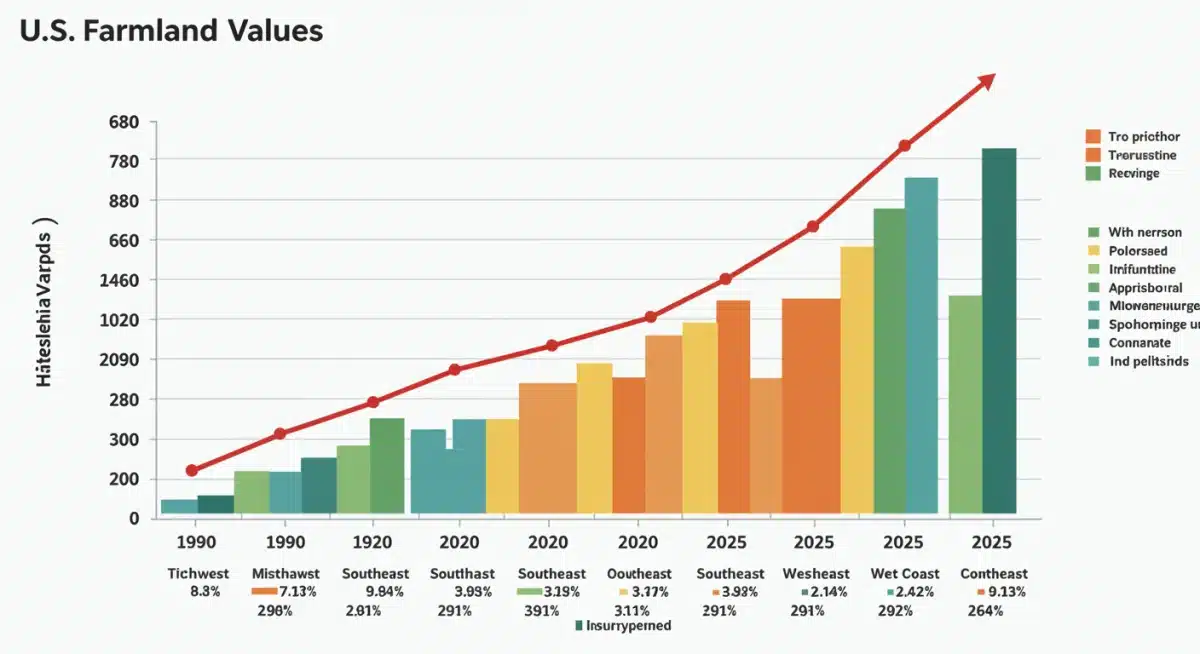
The 7% appreciation forecast also considers the increasing sophistication of agricultural practices. Modern farming techniques are boosting yields and making land more productive, thereby enhancing its inherent value. This technological integration is a crucial component in sustaining profitability and attracting further investment.
Factors Influencing the 2025 Forecast
Forecasting farmland values requires a multifaceted approach, considering both internal agricultural factors and broader economic conditions. The 2025 projection is a result of weighing these various influences.
- Commodity Price Stability: While prices can fluctuate, a general expectation of sustained strong commodity prices provides a baseline for farm income and, consequently, land values.
- Interest Rate Environment: The trajectory of interest rates impacts borrowing costs for farmers and investors. A stable or slightly declining rate environment could further stimulate investment.
- Geopolitical Stability: Global events can significantly affect supply chains and demand for agricultural products. A relatively stable geopolitical landscape would support consistent growth.
- Government Policies: Agricultural subsidies, trade agreements, and environmental regulations can all influence the profitability and attractiveness of farmland.
Understanding these contributing factors allows for a more nuanced interpretation of the 7% projection. It suggests a market that is not only growing but doing so with a degree of predictability based on fundamental economic and agricultural principles.
In summary, the projected 7% appreciation for U.S. farmland in 2025 is a data-backed estimate reflecting strong market fundamentals, ongoing investment interest, and a positive outlook for the agricultural sector amidst various economic considerations.
Regional Variations in Farmland Value Appreciation
While a national average of 7% appreciation for U.S. farmland values in 2025 provides a general overview, it is crucial to recognize that this growth is not uniform across all regions. Farmland values are highly localized, influenced by specific crop types, soil quality, water availability, local economic conditions, and population pressures. Understanding these regional nuances is vital for investors seeking to optimize their portfolios.
For instance, states in the Corn Belt, known for their highly productive soils and established infrastructure, might experience different growth rates compared to regions in the Southeast, where specialty crops or proximity to urban development could be more significant drivers. Similarly, areas prone to drought or with limited water resources might see moderated growth or even declines, despite national positive trends.
Analyzing these regional disparities requires a granular approach, looking beyond national averages to specific county-level data and local market intelligence. This localized perspective helps investors make informed decisions tailored to their investment goals and risk tolerance.
Key Regional Highlights and Influencers
Different regions of the U.S. possess unique characteristics that shape their farmland markets. Identifying these distinct features is paramount for a comprehensive understanding.
- Midwest (Corn Belt): Characterized by fertile land for corn and soybeans; strong commodity prices and established agricultural infrastructure drive consistent demand.
- Great Plains: Focus on wheat and cattle ranching; susceptible to weather patterns, but technological advancements in drought resistance and irrigation can stabilize values.
- California and Pacific Northwest: High-value specialty crops and permanent plantings; water rights and urban encroachment are significant factors influencing land prices.
- Southeast: Diverse agriculture including row crops, timber, and livestock; proximity to population centers and development potential can influence values.
These regional differences underscore the importance of due diligence and localized expertise when investing in farmland. A thorough understanding of each region’s specific drivers and challenges is essential for predicting performance and mitigating risks.
In conclusion, while the national outlook for U.S. farmland appreciation is positive, regional variations are significant. Investors must delve into specific local markets to fully grasp the factors influencing value growth and make strategic investment choices.
Investment Trends: Who is Buying Farmland?
The profile of farmland investors has diversified significantly over the past decade. While traditional farmer-buyers remain a cornerstone of the market, a growing cohort of non-operator investors, including institutional funds, individual investors, and even family offices, are increasingly recognizing the asset’s potential. This shift in buyer demographics is a critical trend influencing U.S. farmland values and contributing to the projected appreciation in 2025.
Institutional investors are attracted by farmland’s low correlation with other asset classes, its inflation-hedging capabilities, and its consistent income generation. For individual investors, farmland offers a tangible asset with a perceived sense of security and a connection to sustainable food production. This broad appeal ensures a robust demand side for available land, further driving up values.
Emerging Investor Categories
Beyond the traditional farming families, several new categories of investors are making their mark on the farmland market.
- Institutional Investment Funds: Pension funds, university endowments, and private equity firms are allocating increasing capital to agricultural land for diversification and long-term returns.
- High-Net-Worth Individuals: Seeking stable, tangible assets, these investors often view farmland as a generational wealth-building tool and a hedge against economic volatility.
- Technology-Driven Companies: Some companies focused on agricultural technology or sustainable food systems are acquiring land to implement and scale their innovations.
- Conservation-Oriented Investors: A niche but growing segment focused on acquiring land for conservation easements, sustainable farming, or environmental restoration, sometimes combining these goals with agricultural production.
The increasing diversity of investors brings new capital and perspectives to the market, but also raises questions about land access for new and expanding farmers. This dynamic interplay between different buyer types will continue to shape the future of U.S. farmland values.
Ultimately, the burgeoning interest from a wide array of investors underscores the enduring appeal of farmland as a strategic asset. This trend is a significant contributor to the forecasted appreciation and indicates a healthy, competitive market.
Economic Factors Shaping Farmland’s Future
Beyond agricultural specifics, broader economic factors play a pivotal role in shaping the future of U.S. farmland values. The overall health of the national economy, monetary policy decisions, and global economic stability all exert considerable influence. Understanding these macro-level dynamics is essential for a comprehensive outlook on the projected 7% appreciation in 2025.
Interest rates, for instance, directly impact the cost of financing land purchases and farm operations. A rise in rates can cool buyer enthusiasm, while stable or declining rates can stimulate investment. Similarly, inflation, while often boosting the appeal of real assets like farmland, can also increase input costs for farmers, affecting profitability.
Global trade policies and agreements also have a direct bearing on commodity prices, which in turn affect farm income and land values. A robust global demand for U.S. agricultural exports is a strong tailwind for the market.
Macroeconomic Influences on Farmland
- Interest Rates: The Federal Reserve’s decisions on interest rates directly affect borrowing costs for land acquisition and operational loans.
- Inflation: While farmland can be an inflation hedge, high inflation also increases input costs like fuel, fertilizer, and labor for farmers.
- Global Demand & Trade: International demand for U.S. agricultural products and trade relationships significantly impact commodity prices and farmer profitability.
- Economic Growth: A strong overall economy generally leads to higher consumer spending, which can indirectly support agricultural markets.
The interplay of these economic elements creates a complex but generally favorable environment for farmland. While specific economic shifts can introduce volatility, the long-term fundamentals suggest continued strength.
In essence, the economic backdrop for U.S. farmland values in 2025 appears supportive, with a balance of factors that are likely to sustain the projected appreciation. Navigating these economic currents will be key for investors.
Risks and Opportunities in Farmland Investment
While the outlook for U.S. farmland values in 2025 is largely positive, with a projected 7% appreciation, it is essential for investors to acknowledge both the inherent risks and the significant opportunities within this asset class. A balanced perspective allows for more strategic decision-making and better risk management. No investment is entirely without its challenges, and farmland is no exception, despite its historical stability.
Key risks include climate change impacts, such as increased frequency of extreme weather events, which can affect crop yields and regional land values. Commodity price volatility, while currently favorable, remains a constant concern. Additionally, changes in government policy or international trade relations could introduce unforeseen challenges. However, these risks are often mitigated by the long-term nature of farmland investment and its diverse income streams.
On the flip side, opportunities abound. The growing global population and increasing demand for food, feed, fuel, and fiber underpin the long-term value proposition of productive land. Advances in agricultural technology continue to enhance efficiency and sustainability, potentially boosting returns. Furthermore, farmland offers diversification benefits, often performing independently of traditional stock and bond markets.
Navigating the Landscape of Farmland Investment
Understanding the dual nature of risks and opportunities is crucial for successful engagement in the farmland market.
- Climate Resilience: Investing in regions with diverse water sources or climate-resilient farming practices can mitigate weather-related risks.
- Market Diversification: Spreading investments across different crop types and geographical regions can reduce exposure to specific market downturns or localized issues.
- Technological Adoption: Embracing and investing in farms that leverage precision agriculture, sustainable practices, and innovative technologies can enhance long-term profitability.
- Long-Term Horizon: Farmland is typically a long-term asset, meaning short-term market fluctuations are less impactful on overall investment strategy.
By carefully assessing these factors, investors can harness the opportunities while prudently managing the risks associated with farmland. This strategic approach is vital for capitalizing on the projected appreciation and ensuring sustainable returns.
In conclusion, while risks like climate variability and market volatility exist, the enduring opportunities in U.S. farmland investment—driven by global demand and technological innovation—make it a compelling asset class, particularly with the projected 7% appreciation in 2025.
| Key Point | Brief Description |
|---|---|
| 2025 Appreciation | U.S. farmland values are projected to appreciate by 7% in 2025. |
| Key Drivers | Strong commodity prices, limited supply, inflation hedge, and technological advances. |
| Investor Profile | Diversifying beyond farmers to include institutional and individual investors. |
| Economic Influences | Interest rates, inflation, global demand, and government policies play significant roles. |
Frequently Asked Questions About Farmland Investment
The projected 7% appreciation is primarily driven by robust agricultural commodity prices, limited supply of arable land, increasing institutional and individual investor demand, and farmland’s role as an inflation hedge. These factors create a strong market environment.
Yes, regional variations are significant. Factors like local crop types, soil quality, water availability, and proximity to urban development cause appreciation rates to differ. For example, the Corn Belt typically shows consistent growth due to high productivity.
While traditional farmers remain key buyers, there’s a growing trend of non-operator investors. This includes institutional funds (pension funds, endowments), high-net-worth individuals, and family offices seeking diversification and stable returns.
Macroeconomic factors like interest rates, inflation, and global trade policies significantly impact farmland values. Stable interest rates can encourage investment, while inflation often boosts real asset appeal. Global demand for agricultural products also plays a crucial role.
Key risks include climate change impacts (e.g., extreme weather), commodity price volatility, and changes in government policies or international trade relations. However, these are often mitigated by the long-term nature and diversification benefits of farmland investment.
Conclusion
The outlook for U.S. Farmland Values in 2025: A Data-Backed Comparison of Investment Trends and a 7% Projected Appreciation paints a compelling picture of stability and growth for investors. Driven by resilient agricultural markets, evolving investor demographics, and supportive economic conditions, farmland continues to solidify its position as a strategic asset class. While regional variations and inherent risks warrant careful consideration, the fundamental drivers of demand and limited supply, coupled with advancements in agricultural technology, suggest a robust future. For those seeking long-term capital appreciation, income generation, and an inflation hedge, U.S. farmland in 2025 represents a significant opportunity.