Financial Impact of Supply Chain Disruptions 2026: Solutions for US Farms

The projected 8% revenue loss for US farms by 2026 due to supply chain disruptions necessitates immediate adoption of diversified logistics, technological integration, and risk management strategies to safeguard financial stability.
The agricultural sector is no stranger to volatility, but the looming threat of an 8% revenue loss for US farms by 2026 due to ongoing supply chain disruptions demands urgent attention. Understanding the financial impact of supply chain disruptions 2026 is not just about identifying the problem, but actively seeking practical solutions to safeguard the future of American agriculture.
Understanding the 2026 Supply Chain Landscape for US Agriculture
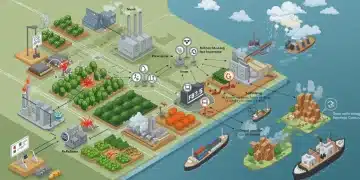
The year 2026 presents a complex and evolving landscape for US agricultural supply chains. Factors ranging from geopolitical instability to climate change, and lingering effects of global pandemics, continue to exert pressure. These pressures manifest as increased transportation costs, labor shortages, and unpredictable input availability, all of which directly impact farm profitability.
Farmers are increasingly facing challenges in securing essential inputs like fertilizers, seeds, and machinery parts, often at inflated prices. This directly affects planting schedules, crop yields, and ultimately, market competitiveness. The ripple effect extends to the distribution of produce, with logistics bottlenecks delaying deliveries and impacting freshness, leading to potential waste and reduced market value.
Key Drivers of Disruption
Several critical factors are shaping the 2026 supply chain environment. Recognizing these drivers is the first step toward developing effective mitigation strategies.
- Geopolitical Volatility: International conflicts and trade disputes can rapidly alter global shipping routes and access to key markets, creating sudden shifts in demand and supply.
- Climate Change Impacts: Extreme weather events, including droughts, floods, and unseasonable temperatures, directly affect crop production and regional transportation infrastructure.
- Labor Shortages: Persistent deficits in agricultural labor, both on farms and in the trucking and processing sectors, continue to strain operational capacity and increase costs.
- Cybersecurity Threats: Increasingly sophisticated cyberattacks on logistics networks and agricultural technology systems can bring operations to a standstill, causing significant financial losses.
The confluence of these factors creates a precarious environment. Farms must prepare not just for isolated incidents, but for a systemic vulnerability that requires a multi-faceted approach to resilience. Proactive planning and investment in robust systems are no longer options but necessities for survival and sustained profitability.
Leveraging Technology for Supply Chain Resilience and Optimization
Technology is emerging as a cornerstone for mitigating the financial impact of supply chain disruptions. Integrating advanced solutions can provide US farms with greater visibility, control, and adaptability, directly addressing the vulnerabilities that lead to revenue loss. The focus shifts from reactive problem-solving to proactive risk management and efficiency gains.
Precision agriculture, often associated with yield optimization, also plays a crucial role in supply chain resilience. By optimizing resource use and predicting outcomes more accurately, farms can reduce waste, forecast inventory needs more effectively, and improve overall operational efficiency. This translates into better planning for inputs and outputs, minimizing unexpected shortages or surpluses.
Digital Platforms for Enhanced Visibility
Adopting digital platforms is vital for real-time tracking and management throughout the supply chain. These platforms offer a consolidated view of operations, from field to market.
- IoT Sensors and Data Analytics: Deploying Internet of Things (IoT) sensors on equipment and in fields provides real-time data on crop health, soil conditions, and machinery performance, enabling predictive maintenance and optimized resource allocation.
- Blockchain Technology: For enhanced transparency and traceability, blockchain can record every transaction and movement of produce, building trust and efficiency within the supply chain, and simplifying compliance.
- AI-Powered Forecasting: Artificial intelligence (AI) can analyze vast datasets, including weather patterns, market prices, and historical performance, to provide more accurate demand forecasts and optimize inventory management.
Furthermore, cloud-based software solutions facilitate seamless communication and data sharing among all stakeholders in the supply chain—from suppliers to distributors and retailers. This interconnectedness allows for faster responses to disruptions, such as rerouting shipments or adjusting production schedules. Embracing these technological advancements is fundamental for farms aiming to minimize the 8% revenue loss predicted for 2026.

Diversifying Supply Chains and Local Sourcing Strategies
Reliance on a single source for inputs or a limited number of distribution channels significantly heightens vulnerability to disruptions. Diversification and strategic local sourcing offer robust alternatives, building resilience into the very fabric of farm operations. This approach reduces dependence on long, complex global supply chains that are prone to external shocks.
For US farms, this means exploring multiple suppliers for critical inputs like seeds, fertilizers, and even labor. Establishing relationships with regional suppliers can provide a buffer against international trade disruptions or port congestions. Local sourcing also often comes with the added benefit of reduced transportation costs and a smaller carbon footprint, aligning with sustainable agriculture practices.
Building Stronger Local Networks
Developing robust local and regional networks is a proactive measure against future disruptions. This involves fostering collaborative relationships and exploring new market opportunities.
- Regional Supplier Partnerships: Actively seeking and establishing contracts with multiple regional suppliers for essential farm inputs can reduce lead times and provide alternative sources during crises.
- Direct-to-Consumer (D2C) Models: Expanding into farmers’ markets, Community Supported Agriculture (CSA) programs, and online sales platforms allows farms to bypass traditional, often fragile, distribution channels and connect directly with consumers.
- Inter-Farm Cooperation: Collaborating with neighboring farms for shared resources, equipment, or even collective purchasing power can create a more resilient local agricultural ecosystem.
The diversification strategy also extends to output markets. Instead of relying solely on large-scale distributors, farms can explore selling to local restaurants, schools, or food processors. This not only spreads risk but can also open up premium market segments, potentially offsetting some of the revenue losses from traditional channels. By strategically diversifying, farms can insulate themselves from the worst impacts of future supply chain shocks.
Implementing Robust Risk Management and Financial Planning
Mitigating an 8% revenue loss requires more than just operational adjustments; it demands sophisticated risk management and prudent financial planning. Farms must move beyond traditional approaches and adopt comprehensive strategies that account for the unpredictable nature of modern supply chains. This involves anticipating potential financial shocks and preparing for them well in advance.
A critical component is conducting regular risk assessments to identify vulnerabilities across the entire farm operation, from production to market. This includes analyzing exposure to price volatility, weather events, labor availability, and transportation bottlenecks. Understanding these risks allows for the development of targeted mitigation strategies rather than generic responses.
Financial Tools and Strategies for Resilience
Several financial instruments and planning techniques can help farms weather economic storms and protect their bottom line.
- Crop Insurance and Hedging: Utilizing advanced crop insurance options and commodity hedging strategies can protect against price fluctuations and yield losses due to unforeseen events.
- Emergency Funds and Credit Lines: Maintaining accessible emergency funds or establishing pre-approved lines of credit can provide essential liquidity during periods of disruption, covering unexpected costs or revenue shortfalls.
- Diversified Income Streams: Exploring alternative revenue sources, such as agritourism, renewable energy production on farm land, or value-added processing of farm products, can reduce reliance on single crop incomes.
Furthermore, meticulous record-keeping and financial analysis are paramount. Farms should regularly review their balance sheets and income statements to identify areas of financial vulnerability and track the effectiveness of their risk management strategies. Proactive financial planning ensures that farms have the resources to adapt and recover quickly from supply chain disruptions, safeguarding their long-term viability.
Adopting Sustainable Practices for Long-Term Stability
Sustainable agriculture is not just an environmental imperative; it’s an economic one, particularly in the face of supply chain vulnerabilities. Practices that enhance soil health, conserve water, and promote biodiversity contribute directly to farm resilience, making operations less susceptible to external shocks and potentially reducing reliance on external inputs. This holistic approach strengthens the farm’s foundational assets.
For example, improving soil organic matter through practices like cover cropping and no-till farming enhances water retention and nutrient cycling, making crops more resilient to droughts and reducing the need for synthetic fertilizers. This directly addresses the risk of fertilizer price volatility and availability issues within the supply chain. Similarly, diversified cropping systems can mitigate the risk of pest outbreaks or market fluctuations for a single commodity.
Key Sustainable Strategies
Integrating sustainable practices into daily operations offers tangible benefits for supply chain stability and financial health.
- Water Conservation Technologies: Implementing drip irrigation, smart sensors, and rainwater harvesting systems reduces water consumption and dependence on increasingly stressed water sources, which can be critical during regional droughts.
- Integrated Pest Management (IPM): Shifting from broad-spectrum pesticides to IPM strategies minimizes reliance on chemical inputs, reducing costs and vulnerability to chemical supply chain disruptions.
- Renewable Energy Integration: Investing in on-farm solar or wind energy can reduce utility costs and provide energy independence, shielding farms from volatile energy markets and grid disruptions.
By embracing these sustainable methods, farms can not only mitigate their environmental impact but also build a more robust and self-reliant operational model. This reduces their exposure to external supply chain risks, fosters long-term productivity, and enhances their appeal to increasingly conscious consumers and markets. Ultimately, sustainability acts as a powerful buffer against predicted revenue losses.
Policy Advocacy and Collaborative Industry Efforts
While individual farm-level strategies are crucial, addressing the systemic nature of supply chain disruptions also requires collective action and policy engagement. US farmers cannot overcome these challenges in isolation. Collaborative industry efforts and effective advocacy for supportive government policies are essential to create a more resilient agricultural ecosystem for 2026 and beyond.
Farmers’ associations, industry groups, and cooperatives play a vital role in articulating the needs of the agricultural sector to policymakers. This includes advocating for infrastructure improvements, funding for research and development in agricultural technology, and regulatory frameworks that support diversified and localized supply chains. A unified voice carries significant weight in shaping the future landscape.
Areas for Collective Action and Policy Influence
Targeted advocacy and collaboration can drive significant positive change for the entire farming community.
- Infrastructure Investment: Lobbying for federal and state investments in rural broadband, transportation networks (roads, bridges, ports), and cold storage facilities is critical for improving logistics and market access.
- Research and Development Funding: Advocating for increased government and private sector funding for innovations in agricultural technology, climate-resilient crops, and efficient supply chain management tools.
- Trade Policy Reform: Engaging with policymakers to shape trade agreements that protect US agricultural interests, ensure fair market access, and mitigate the impact of international trade disputes on farmers.
- Labor Policy Support: Pushing for comprehensive immigration reform and programs that address agricultural labor shortages, ensuring a stable and skilled workforce for farms.
Furthermore, fostering greater collaboration among farmers, processors, distributors, and retailers can lead to shared best practices, joint investments in resilient infrastructure, and the development of innovative solutions that benefit the entire supply chain. These collective efforts are indispensable for mitigating the projected 8% revenue loss and securing the long-term prosperity of US agriculture.
Preparing for Future Shocks and Long-Term Adaptability
The lessons learned from recent disruptions indicate that future shocks are not a matter of if, but when. Therefore, preparing for future shocks and fostering long-term adaptability must be an ongoing commitment for US farms. This involves cultivating a culture of continuous learning, innovation, and strategic foresight, moving beyond short-term fixes to build enduring resilience. The goal is to create systems that can flex and respond to unforeseen challenges without incurring significant financial damage.
Scenario planning is a powerful tool in this regard. By envisioning various potential futures—from severe weather events to global economic downturns or technological failures—farms can develop contingency plans and test their preparedness. This proactive approach allows for the identification of weaknesses before they become critical vulnerabilities, enabling timely adjustments and investments.
Strategies for Enduring Adaptability
Building a farm operation that thrives on change requires a commitment to flexible and forward-thinking strategies.
- Continuous Learning and Training: Investing in ongoing education for farmers and farm workers on new technologies, sustainable practices, and risk management techniques.
- Agile Operations: Designing farm systems that can quickly adapt to changing market demands, input availability, or environmental conditions. This might involve flexible planting schedules or modular processing units.
- Investments in Redundancy: Where feasible, building in redundancy for critical inputs, equipment, or even transportation routes to ensure operations can continue even if one component fails.
- Cross-Sector Collaboration: Engaging with other industries and research institutions to identify emerging trends and technologies that could impact agriculture, fostering innovation and preparedness.
Ultimately, long-term adaptability is about building a farm that is not just surviving but thriving in an unpredictable world. By embracing foresight, continuous improvement, and strategic investments, US farms can transform potential revenue losses into opportunities for growth and establish themselves as leaders in resilient agricultural practices. The predicted 8% revenue loss for 2026 serves as a powerful reminder of the urgency of this ongoing transformation.
| Key Strategy | Brief Description |
|---|---|
| Tech Integration | Utilize IoT, AI, and blockchain for enhanced visibility, forecasting, and operational efficiency. |
| Supply Chain Diversification | Establish multiple suppliers and explore direct-to-consumer models to reduce reliance on single channels. |
| Risk Management | Implement crop insurance, emergency funds, and diversified income streams to buffer financial shocks. |
| Sustainable Practices | Adopt water conservation, IPM, and renewable energy to reduce input dependence and enhance resilience. |
Frequently Asked Questions About Farm Supply Chain Resilience
US farms are projected to face an 8% revenue loss by 2026 due to persistent supply chain disruptions. This loss stems from increased input costs, logistical bottlenecks, and reduced market access, directly affecting overall profitability and operational stability for agricultural enterprises.
Technology, including IoT sensors, AI-powered forecasting, and blockchain, can enhance supply chain visibility, optimize resource allocation, and improve predictive capabilities. This leads to more efficient operations, reduced waste, and better response times to disruptions, directly offsetting potential revenue losses.
Diversifying supply chains by sourcing inputs from multiple regional suppliers and exploring direct-to-consumer models reduces reliance on single, vulnerable channels. This strategy minimizes exposure to global disruptions, stabilizes input availability, and ensures consistent market access, thereby safeguarding revenue streams.
Absolutely. Sustainable practices like water conservation, integrated pest management, and renewable energy integration reduce dependence on external, often volatile, inputs. This lowers operational costs, enhances crop resilience to environmental shocks, and improves long-term financial stability by creating a more self-reliant farm system.
Collective action through industry associations and cooperatives is crucial for policy advocacy, particularly for infrastructure investment, R&D funding, and supportive trade policies. Collaboration fosters shared resources, strengthens market positions, and ensures a unified voice in addressing systemic supply chain vulnerabilities.
Conclusion
The projected 8% revenue loss for US farms by 2026 due to supply chain disruptions highlights an urgent need for strategic intervention and adaptation. By embracing advanced technologies, diversifying supply chains, implementing robust risk management, adopting sustainable practices, and engaging in collective policy advocacy, US farms can build formidable resilience. These proactive measures are not merely defensive but represent a pathway to long-term stability and enhanced profitability, ensuring the sustained vitality of American agriculture in an increasingly unpredictable global landscape.