Precision Irrigation Systems 2026: 15% Water Savings with Sensor Tech
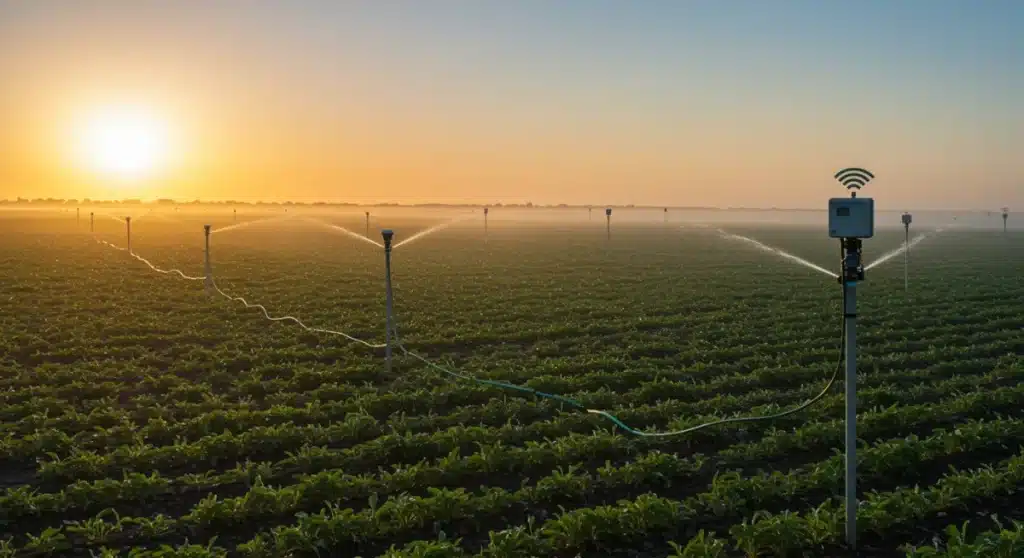
By 2026, precision irrigation systems, integrating advanced sensor technology and AI, are poised to deliver a significant 15% water saving in agricultural practices, revolutionizing resource management and boosting farm efficiency.
The future of farming is here, and at its heart are precision irrigation systems. In 2026, these advanced technologies are not just buzzwords but essential tools, promising and delivering unprecedented efficiency. Farmers are increasingly adopting these intelligent solutions to optimize water use, a critical resource, achieving remarkable savings and enhancing crop yields across the United States.
The imperative for precision: why 2026 demands smart irrigation
The agricultural landscape of 2026 faces multifaceted challenges, from escalating climate volatility to increasing demands for food production with fewer resources. Traditional irrigation methods, often characterized by their broad-stroke application, are no longer sustainable. They lead to significant water waste, nutrient runoff, and diminished crop health due to over or under-watering. This inefficiency directly impacts profitability and environmental stewardship, making the shift to precision irrigation an economic and ecological necessity.
The drive towards more sustainable farming practices is not merely a trend but a fundamental transformation. Regulatory pressures, consumer awareness, and the inherent desire of farmers to protect their land for future generations are all contributing factors. In this context, precision irrigation emerges as a cornerstone technology, allowing for the judicious application of water precisely where and when it is needed. This approach minimizes waste and maximizes the effectiveness of every drop, aligning perfectly with the overarching goals of modern agriculture.
Addressing water scarcity and resource optimization
- Climate resilience: Precision systems help farmers adapt to unpredictable weather patterns, including droughts and erratic rainfall.
- Cost reduction: Significant savings on water, energy for pumping, and labor due to automated processes.
- Environmental impact: Reduced runoff minimizes pollution of waterways and conserves groundwater resources.
The adoption of these systems is not just about technology; it’s about a paradigm shift in how we view and manage water in agriculture. By focusing on data-driven decisions and real-time adjustments, farmers can achieve a level of control and efficiency previously unimaginable. This holistic approach ensures that farming remains productive and profitable while simultaneously safeguarding precious natural resources for the long term.
Sensor technology: the eyes and ears of modern irrigation
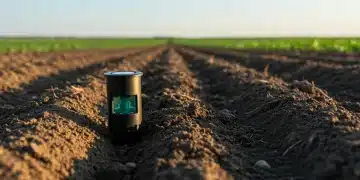
At the core of every effective precision irrigation system in 2026 is an intricate network of advanced sensor technology. These sensors act as the critical data collectors, providing real-time insights into soil conditions, plant health, and environmental factors. Without accurate and timely data, even the most sophisticated irrigation system would be operating in the dark, unable to make informed decisions about water application. The evolution of these sensors has been rapid, moving from basic soil moisture probes to highly sophisticated, multi-functional units that can assess a wide array of parameters.
These technological marvels are deployed strategically throughout fields, continuously monitoring variables that impact water demand. The data they collect is then transmitted wirelessly to central processing units, where it is analyzed by intelligent algorithms. This seamless flow of information ensures that irrigation schedules are dynamic and responsive, adapting to the ever-changing needs of crops and weather conditions. The precision achieved through this data-driven approach is what enables the remarkable water savings and improved crop outcomes.
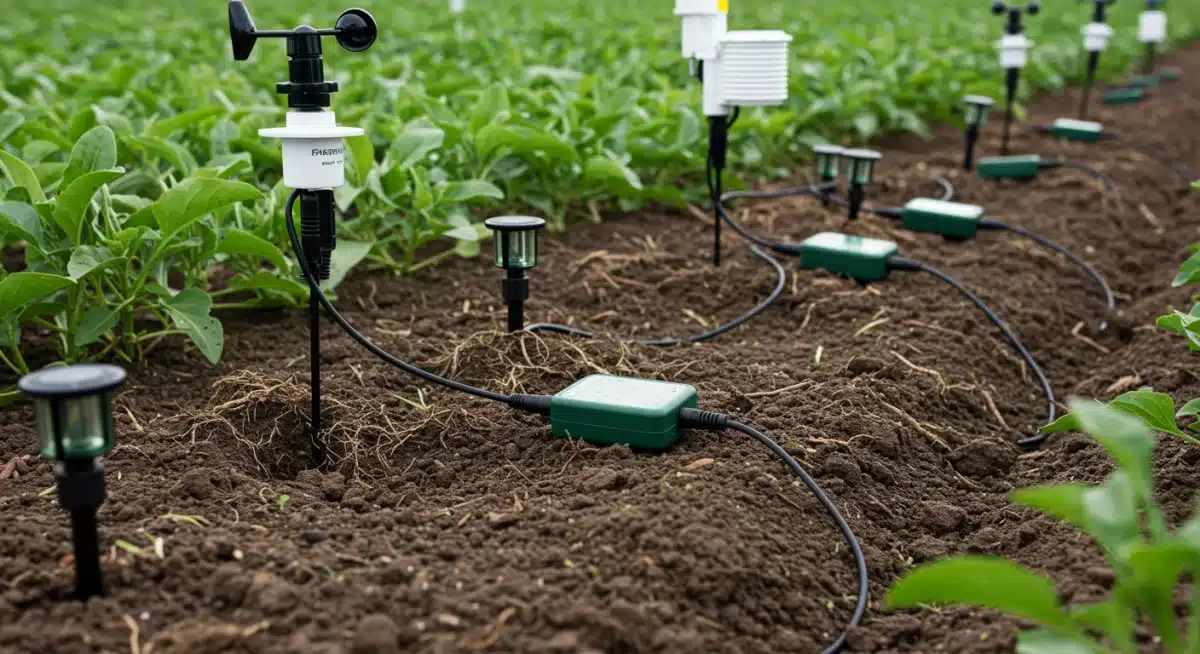
The integration of different sensor types provides a comprehensive picture, allowing for highly granular control over water delivery. This multi-sensor approach reduces reliance on guesswork and provides farmers with actionable intelligence.
Key sensor innovations driving efficiency
- Soil moisture sensors: From tensiometers to capacitance and time-domain reflectometry (TDR) sensors, these provide exact moisture levels at various soil depths.
- Weather stations: Monitoring rainfall, temperature, humidity, wind speed, and solar radiation to calculate evapotranspiration rates.
- Plant-based sensors: Assessing plant physiological stress indicators, such as stem diameter or leaf temperature, to directly measure water needs.
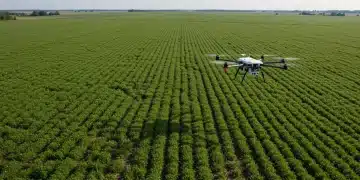
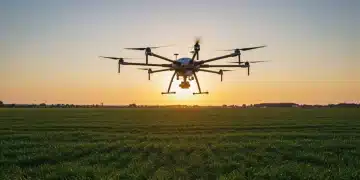
- Remote sensing (drones and satellites): Providing aerial views of crop health, identifying areas of stress, and informing irrigation zones.
The synergistic operation of these diverse sensors creates a robust data ecosystem. This ecosystem allows farmers to transition from reactive irrigation, based on predefined schedules, to proactive, needs-based irrigation. The ability to pinpoint specific areas requiring water, and to deliver it precisely, is the bedrock of achieving significant water savings and maximizing yield potential.
Artificial intelligence and machine learning in irrigation management
The raw data collected by myriad sensors becomes truly powerful when processed and interpreted by artificial intelligence (AI) and machine learning (ML) algorithms. In 2026, these intelligent systems are not just analyzing data; they are predicting, optimizing, and even automating irrigation decisions. AI models learn from historical data, current sensor readings, and weather forecasts to create highly accurate predictive models for crop water demand. This predictive capability allows for proactive irrigation scheduling, preventing water stress before it impacts crop health.
Machine learning algorithms continuously refine these models, improving their accuracy over time as they ingest more data. This constant learning ensures that the system remains adaptive and responsive to changing field conditions, crop growth stages, and even microclimates within a single field. The result is an irrigation strategy that is not only efficient but also highly dynamic and customized to the unique requirements of each agricultural parcel. Farmers benefit from automated recommendations and, in many cases, fully autonomous irrigation control, freeing up valuable time and resources.
Predictive analytics for optimal water delivery
- Yield optimization: AI helps balance water application to prevent both waterlogging and drought stress, leading to higher quality and quantity of crops.
- Nutrient management: Precise irrigation reduces leaching of fertilizers, ensuring nutrients remain available to plants.
- Disease prevention: Avoiding overwatering in specific zones can reduce the incidence of fungal diseases and other moisture-related ailments.
The integration of AI and ML transforms irrigation from a labor-intensive task into a sophisticated, data-driven science. By leveraging these advanced computational capabilities, farmers can achieve unparalleled levels of precision, ensuring that water is utilized with maximum efficiency and minimal waste. This intelligent approach is key to securing agricultural productivity in a world with finite resources.
Achieving 15% water savings: case studies and impact
The promise of 15% water savings with precision irrigation systems in 2026 is not merely theoretical; it is being realized in fields across the United States. Early adopters and ongoing research projects consistently demonstrate these significant reductions in water consumption without compromising, and often enhancing, crop yields. These savings translate directly into economic benefits for farmers, reducing operational costs associated with water acquisition, pumping energy, and labor. Moreover, the environmental benefits are profound, contributing to aquifer replenishment and reduced strain on freshwater sources.
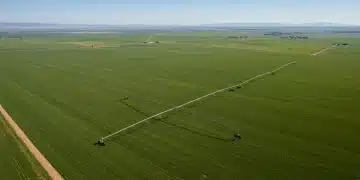
Numerous case studies highlight this impact. For instance, large-scale corn and soybean operations in the Midwest have reported between 12-18% water savings by transitioning from traditional center-pivot systems to smart, sensor-driven variable rate irrigation. Similarly, specialty crop growers in California, facing severe water restrictions, have achieved even higher savings, sometimes exceeding 20%, through hyper-localized drip irrigation managed by AI. These real-world examples underscore the transformative potential of these technologies.
Quantifiable benefits for modern farms
- Reduced operational costs: Lower water bills, decreased energy consumption for pumps, and optimized labor allocation.
- Enhanced crop quality: Consistent moisture levels lead to healthier plants, better fruit development, and improved market value.
- Increased yield stability: Mitigation of water stress helps ensure more predictable and resilient harvests, even in challenging conditions.
The cumulative effect of these individual farm-level savings adds up to substantial regional and national water conservation efforts. As more farms adopt these systems, the collective impact on water security and sustainable agriculture will become increasingly significant. The 15% water saving target is not just an arbitrary number; it represents a tangible and achievable goal that is reshaping the future of farming.
Integration with other farm technologies: a holistic eco-system
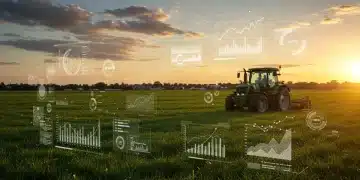
The true power of precision irrigation systems in 2026 lies in their seamless integration with the broader ecosystem of farm technology. These systems do not operate in isolation; rather, they form a crucial component of a larger, interconnected smart farm. Data from irrigation sensors and control units can be combined with information from other agricultural technologies, such as drone imagery, GPS-guided machinery, nutrient management platforms, and even market trend analytics. This holistic approach creates a comprehensive picture of farm operations, enabling more informed and strategic decision-making.
For example, yield maps generated by combine harvesters can inform future irrigation zones, while real-time pest and disease detection from drone imagery might trigger localized irrigation adjustments to either promote or inhibit certain conditions. Furthermore, integration with financial planning software allows farmers to directly link water usage efficiency to profitability metrics, providing a clear return on investment for their technology adoption. This interoperability maximizes the value derived from each individual technology, creating synergies that lead to greater overall farm efficiency and sustainability.
Synergistic technologies enhancing irrigation
- Farm management software (FMS): Centralized platforms integrating all farm data for comprehensive analysis and decision support.
- IoT devices: Beyond irrigation, various connected devices providing data on livestock, storage conditions, and equipment performance.
- Robotics and automation: Automated machinery can prepare fields, plant, and harvest, all while benefiting from optimized water resources.
The move towards a fully integrated agricultural ecosystem is accelerating. Precision irrigation plays a pivotal role in this transformation, acting as a vital artery in the flow of data and resources across the farm. By fostering this interconnectedness, farmers are not just managing water; they are cultivating a more resilient, productive, and intelligent agricultural enterprise for the future.
The future outlook: evolving precision irrigation in 2026 and beyond
Looking beyond 2026, the evolution of precision irrigation systems promises even greater levels of efficiency and sophistication. Research and development are continuously pushing the boundaries, exploring new sensor technologies, more powerful AI algorithms, and innovative water delivery methods. The trend towards hyper-localization will intensify, perhaps leading to individual plant-level irrigation controlled by micro-sensors and targeted delivery systems. This extreme precision could unlock even greater water savings and tailor nutrient delivery with unprecedented accuracy, minimizing waste to near-zero levels.
Furthermore, the integration of quantum computing and advanced predictive modeling could allow for even more accurate long-range weather forecasting and climate adaptation strategies, enabling irrigation systems to anticipate future conditions with remarkable foresight. The development of self-healing sensor networks and AI-driven maintenance protocols will also enhance the reliability and longevity of these systems, reducing downtime and operational costs. The future of precision irrigation is one of continuous innovation, driven by the imperative to feed a growing global population sustainably.
Emerging trends and advancements
- Bio-sensors: Direct measurement of plant sap flow and internal water status for ultimate precision.
- Edge computing: Processing data closer to the source (in the field) for faster responses and reduced reliance on cloud connectivity.
- Advanced drone-based irrigation: Drones equipped with micro-sprayers for highly targeted application in challenging terrains.
- Blockchain for water rights and usage: Secure and transparent tracking of water resources to ensure equitable and sustainable distribution.
The trajectory of precision irrigation is clear: increasingly intelligent, integrated, and autonomous. These advancements will empower farmers with tools that not only conserve water but also optimize every aspect of crop production, ensuring agricultural resilience in the face of future environmental and economic challenges. The journey toward fully sustainable and highly productive agriculture is being paved, one precise drop at a time.
| Key Point | Brief Description |
|---|---|
| Water Savings Goal | Precision irrigation systems aim for at least 15% water savings by 2026 through optimized delivery. |
| Sensor Technology | Advanced soil moisture, weather, and plant sensors provide real-time data for informed irrigation decisions. |
| AI and Machine Learning | AI/ML algorithms analyze sensor data to predict water needs, optimize schedules, and automate irrigation. |
| Holistic Integration | Seamless integration with other farm technologies creates a comprehensive, efficient smart farm ecosystem. |
Frequently asked questions about precision irrigation in 2026
Precision irrigation systems are advanced farming technologies that apply water precisely when and where crops need it. They use sensors, data analytics, and automation to optimize water usage, reduce waste, and enhance crop health and yields, moving away from traditional, less efficient broad-acre watering methods.
Sensors, including soil moisture, weather, and plant-based types, provide real-time data on environmental and crop conditions. This data allows the system to determine exact water requirements, preventing over-irrigation and ensuring water is delivered only when necessary, directly contributing to significant water conservation.
Yes, modern precision irrigation systems are designed for interoperability. They can often integrate with existing farm management software, GPS-guided machinery, and other IoT devices, creating a more comprehensive and efficient smart farm ecosystem that leverages all available data for better decision-making.
The ROI for precision irrigation can vary but is generally favorable due to significant water and energy savings, reduced labor costs, and improved crop yields and quality. Many farmers report seeing a return within 2-5 years, making it a sound long-term investment for sustainable agriculture.
Precision irrigation systems are highly adaptable. While often associated with large-scale operations, scalable solutions exist for farms of all sizes and various crop types, from row crops to specialty agriculture. The key is selecting the right system and sensor configuration for specific needs and conditions.
Conclusion
The journey toward achieving 15% water savings with precision irrigation systems in 2026 is a testament to agricultural innovation and the commitment to sustainable practices. By harnessing the power of advanced sensor technology, artificial intelligence, and seamless integration with other farm technologies, farmers are not only conserving a vital resource but also enhancing productivity and ensuring the long-term viability of their operations. This technological paradigm shift underscores a future where agriculture is both highly efficient and environmentally responsible, setting a new standard for resource management in farming across the United States and beyond.