GPS Steering for Tractors: Optimize Fields, Save Fuel by 2026
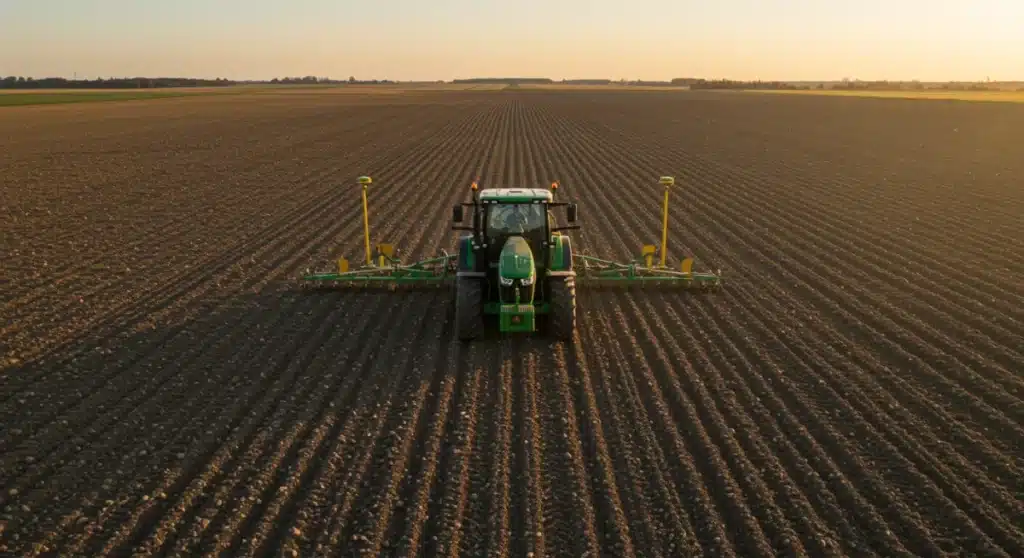
Next-gen GPS steering for tractors is fundamentally transforming agricultural practices, enabling unparalleled field operation optimization and projected to yield a significant 5% reduction in fuel costs for farmers by 2026, marking a new era of efficiency and sustainability.
Imagine a future where every pass a tractor makes is perfectly aligned, every seed perfectly spaced, and every drop of fuel maximized. This isn’t a distant dream; it’s the present and near future with Next-Gen GPS Steering for Tractors: Optimizing Field Operations and Saving 5% on Fuel Costs in 2026. This revolutionary technology is not just an upgrade; it’s a paradigm shift in how we approach farming efficiency and sustainability.
The Dawn of Precision: Understanding GPS Steering Technology
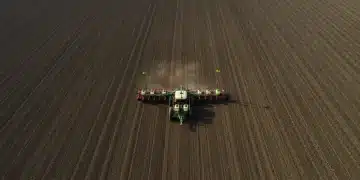
The agricultural landscape is undergoing a profound transformation, driven largely by advancements in precision farming. At the heart of this revolution lies GPS steering technology, which has evolved from basic guidance systems to sophisticated, highly accurate steering solutions. These systems leverage satellite signals and advanced algorithms to ensure tractors follow predetermined paths with centimeter-level accuracy, minimizing overlap and skips in the field.
Early GPS steering systems offered significant improvements over manual steering, but the latest generation takes precision to an entirely new level. These systems integrate multiple data sources, including RTK (Real-Time Kinematic) correction signals, inertial measurement units (IMUs), and advanced vehicle control software. This integration allows for unprecedented accuracy, even in challenging terrain or conditions where satellite signals might be momentarily interrupted.
Evolution of GPS in Agriculture
The journey of GPS in agriculture began with simple mapping and field boundary identification. Over time, the technology matured, enabling parallel tracking and, eventually, automatic steering. The current iteration focuses not just on steering, but on optimizing the entire operational workflow, from planning to execution and analysis. This holistic approach is what truly sets next-gen systems apart.
- Initial Guidance: Basic GPS for field mapping and manual guidance lines.
- Automated Steering: Hands-free operation along straight or curved paths.
- RTK Accuracy: Centimeter-level precision for critical operations like planting and spraying.
- Integrated Systems: Combining GPS with implements, variable rate applications, and data analytics.
The ability to maintain consistent and accurate passes across fields has a ripple effect on various aspects of farm management. It directly impacts input usage, machinery wear, and, most notably, fuel consumption. By eliminating unnecessary passes and overlaps, farmers can significantly reduce the amount of time and fuel spent in the field, leading to substantial cost savings and environmental benefits.
Optimizing Field Operations: Maximizing Efficiency and Yield
The core promise of advanced GPS steering technology is the optimization of field operations. This means doing more with less, achieving higher quality results, and ultimately boosting profitability. Precision steering ensures that every inch of the field is utilized effectively, preventing waste and maximizing the potential of each cultivated area.
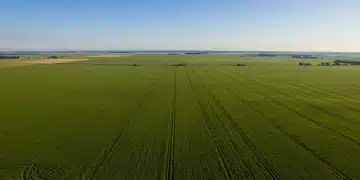
One of the most immediate benefits is the reduction of overlap during tillage, planting, spraying, and harvesting. Even a small percentage of overlap across hundreds or thousands of acres can lead to significant waste in fuel, fertilizer, pesticides, and seeds. Next-gen GPS systems virtually eliminate this overlap, ensuring resources are applied exactly where needed and at the correct rates.
Enhanced Planting and Application Accuracy
For planting, accurate GPS steering means consistent row spacing and precise seed placement, which are critical for uniform crop emergence and optimal plant growth. In spraying operations, it prevents over-application in some areas and under-application in others, leading to better pest and disease control, and reduced chemical costs. This level of precision directly translates to healthier crops and higher yields.
The technology also allows for better planning and execution of complex field patterns, such as headland management and boundary turns. Automated turn functions reduce operator fatigue and ensure consistent, efficient maneuvering at the end of each pass. This not only saves time but also minimizes soil compaction in turn areas.
- Reduced Overlap: Minimizes wasted inputs (fuel, seed, fertilizer, chemicals).
- Improved Seed Placement: Ensures uniform emergence and optimal plant density.
- Precise Spraying: Prevents over/under application, enhancing efficacy and reducing costs.
- Automated Turns: Reduces operator fatigue and optimizes headland efficiency.
Beyond the immediate operational gains, optimized field operations contribute to long-term soil health. By reducing unnecessary passes and ensuring uniform coverage, farmers can minimize soil compaction and disturbance, promoting better soil structure and microbial activity. This holistic approach to efficiency benefits both the farm’s bottom line and the environment.
The Road to 5% Fuel Savings by 2026: A Tangible Goal
The projection of a 5% fuel cost saving by 2026 due to next-gen GPS steering is not an arbitrary figure; it’s a realistic target driven by continuous technological advancements and widespread adoption. This saving stems from multiple factors, all contributing to a more efficient use of tractor power and time.
The most direct impact on fuel consumption comes from the elimination of overlap. When a tractor covers the same ground twice, it’s not just wasting inputs; it’s burning fuel unnecessarily. By ensuring single, precise passes, GPS steering directly reduces the total distance traveled by machinery in the field. This reduction in mileage translates directly into less fuel consumed per acre.
Beyond Overlap: Other Fuel Efficiency Factors
Furthermore, consistent speed management and optimized path planning contribute significantly. Manual steering often involves minor speed adjustments and steering corrections that, while seemingly small, add up over a workday to increased engine load and fuel usage. Automated steering maintains a steady, optimal speed, allowing the engine to operate more efficiently.
The ability to work more efficiently means tasks are completed in less time. This reduces the overall operating hours of the tractor, extending its lifespan and lowering maintenance costs, in addition to the direct fuel savings. For large-scale operations, these savings can amount to tens of thousands of dollars annually, making the investment in GPS steering highly attractive.
- Elimination of Overlap: Direct reduction in distance traveled and fuel burned.
- Consistent Speed: Optimizes engine efficiency and reduces unnecessary acceleration/deceleration.
- Reduced Idling: Faster completion of tasks means less idle time between operations.
- Optimized Route Planning: Minimizes unproductive travel within and between fields.
The combination of these factors paints a clear picture: next-gen GPS steering is a powerful tool for combating rising fuel costs and enhancing the economic viability of farming. As the technology becomes even more refined and integrated, the 5% saving by 2026 might even prove to be a conservative estimate, paving the way for even greater efficiencies.
Advanced Features of Next-Gen GPS Steering Systems
The latest iteration of GPS steering systems offers a suite of advanced features that go far beyond simple line-following. These innovations are designed to provide farmers with unprecedented control, data insights, and operational flexibility, making precision agriculture more accessible and powerful than ever before.
One key advancement is the integration of cloud-based data management. This allows for seamless transfer of field data, operational logs, and machine performance metrics to a central platform. Farmers can monitor their fleet remotely, analyze efficiency trends, and make data-driven decisions that impact future operations. This connectivity also facilitates easier software updates and diagnostics.
Enhanced Sensor Integration and Data Analytics
Next-gen systems are also characterized by their ability to integrate with a wider array of sensors and implements. This includes sensors for soil moisture, crop health, and yield mapping. By combining GPS data with these environmental and performance metrics, farmers can create highly detailed prescription maps for variable rate applications, ensuring inputs are applied precisely according to specific field needs.
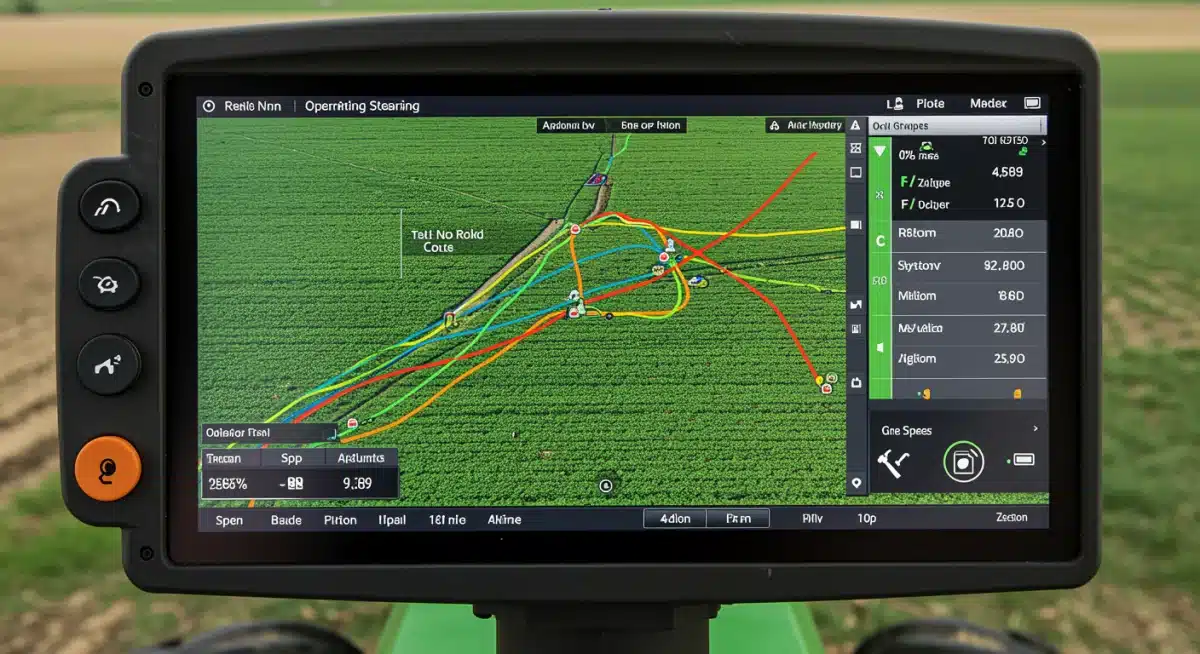
The user interfaces have also become significantly more intuitive and user-friendly. High-resolution touchscreens provide real-time visual feedback on machine position, coverage, and system status. This reduces the learning curve for operators and allows for quick adjustments, further enhancing efficiency and reducing potential errors.
- Cloud Data Management: Remote monitoring, data analysis, and seamless updates.
- Multi-Sensor Integration: Combines GPS with soil, crop, and yield data for precision.
- Intuitive Interfaces: User-friendly touchscreens for real-time control and feedback.
- Predictive Maintenance: AI-powered diagnostics based on operational data to anticipate issues.
These advanced features collectively empower farmers to move beyond basic automation towards truly intelligent farming. The ability to collect, analyze, and act upon vast amounts of field data in real-time is a game-changer, enabling a level of operational sophistication that was unimaginable just a few years ago.
Challenges and Adoption: Paving the Way for Widespread Use
While the benefits of next-gen GPS steering are clear, the path to widespread adoption is not without its challenges. Farmers, like any other industry professionals, weigh the costs and benefits of new technologies carefully. Initial investment, technical complexity, and the need for reliable infrastructure are key considerations that influence adoption rates.
The upfront cost of advanced GPS steering systems can be substantial, especially for smaller farms. However, manufacturers are increasingly offering more modular and scalable solutions, allowing farmers to upgrade their systems incrementally. Financing options and government incentives for precision agriculture technologies also play a crucial role in making these systems more accessible.
Overcoming Technical Hurdles and Training
Technical complexity is another hurdle. While user interfaces are improving, operators still require training to fully utilize the capabilities of these sophisticated systems. Dealerships and agricultural technology providers are stepping up to offer comprehensive training programs, ensuring farmers and their teams can confidently operate and troubleshoot the equipment.
- Investment Costs: High initial outlay, but increasingly flexible solutions available.
- Technical Training: Requires skilled operators; training programs are vital.
- Infrastructure Needs: Reliable RTK signal coverage and internet access are crucial.
- Data Security: Concerns about data ownership and cybersecurity are being addressed by providers.
Reliable infrastructure, particularly for RTK correction signals and robust internet connectivity in rural areas, is essential for optimal performance. Continuous investment in rural broadband and expansion of RTK networks are critical for maximizing the potential of these technologies across all farming regions. Addressing these challenges will accelerate the integration of next-gen GPS steering into mainstream agricultural practices, ensuring more farms can reap its significant benefits.
The Future Outlook: Beyond 2026 with Autonomous Operations
Looking beyond 2026, the trajectory of GPS steering for tractors points towards increasingly autonomous operations. The current advancements in precision, data integration, and connectivity are laying the groundwork for a future where tractors can perform a wide range of tasks with minimal human intervention, further revolutionizing farm efficiency and productivity.
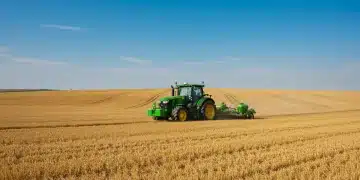
The development of fully autonomous tractors is already underway, with several prototypes and limited commercial deployments demonstrating their capabilities. These machines will not only steer themselves but also manage implements, adjust settings based on real-time conditions, and communicate with other farm machinery to optimize entire field operations. This will free up farmers to focus on higher-level management and decision-making.
Integrating AI and Machine Learning
Artificial intelligence (AI) and machine learning (ML) will play a pivotal role in this evolution. AI algorithms will analyze vast datasets from past operations, weather patterns, soil conditions, and crop performance to predict optimal planting times, fertilizer rates, and harvesting schedules. This predictive capability will unlock new levels of efficiency and risk management for farmers.
The concept of ‘swarm farming,’ where multiple smaller autonomous units work collaboratively across a field, is also gaining traction. This approach offers advantages in terms of reduced soil compaction, increased operational flexibility, and redundancy. GPS steering is the foundational technology that enables such complex coordinated movements.
- Full Autonomy: Tractors operate with minimal human oversight for various tasks.
- AI-Driven Decision Making: Predictive analytics for optimized farm management.
- Swarm Farming: Coordinated operation of multiple autonomous units.
- Robotics Integration: Collaboration with other agricultural robots for specialized tasks.
The future of agriculture, powered by next-gen GPS steering and its subsequent autonomous developments, promises a significant leap in productivity, sustainability, and profitability. As technology continues to advance, the role of the farmer will evolve, becoming more strategic and data-driven, further solidifying the importance of precision agriculture in feeding a growing global population.
| Key Aspect | Brief Description |
|---|---|
| Fuel Savings by 2026 | Projected 5% reduction in fuel costs due to precision and reduced overlap. |
| Operational Optimization | Minimizes overlap, improves planting/spraying accuracy, and reduces operator fatigue. |
| Advanced Features | Cloud data integration, multi-sensor support, intuitive interfaces, and AI analytics. |
| Future Autonomy | Lays groundwork for fully autonomous tractors and AI-driven farm management. |
Frequently Asked Questions About GPS Steering for Tractors
GPS steering reduces fuel consumption primarily by eliminating overlap during field operations. By ensuring precise, single passes, tractors travel less distance per acre, minimizing unnecessary engine run time and fuel burn. Consistent speeds and optimized path planning also contribute to greater engine efficiency and less idling.
RTK (Real-Time Kinematic) is a GPS correction technology that provides centimeter-level accuracy. It’s crucial for precision agriculture tasks like planting and spraying, where even slight deviations can impact yield and input efficiency. RTK uses a base station or network to correct satellite signal errors in real time.
Yes, many existing tractors can be retrofitted with GPS steering systems. The extent of integration depends on the tractor’s age and existing technology, but various aftermarket solutions are available. These systems typically include a display, GPS receiver, and an auto-steer controller that integrates with the tractor’s hydraulic or electric steering.
Optimizing field operations with GPS steering leads to numerous benefits, including reduced input costs (fuel, seed, fertilizer, chemicals), increased yields due to precise placement, reduced operator fatigue, and improved overall farm efficiency. It also contributes to better soil health by minimizing unnecessary compaction and disturbance.
Beyond 2026, advancements are expected to include full tractor autonomy, integration with AI and machine learning for predictive farm management, and the development of ‘swarm farming’ with multiple coordinated autonomous units. These innovations will further enhance efficiency, sustainability, and productivity in agriculture.
Conclusion
The integration of next-gen GPS steering for tractors is not merely an incremental improvement; it represents a fundamental shift in agricultural practices. By providing unparalleled precision, optimizing field operations, and delivering tangible benefits like a projected 5% reduction in fuel costs by 2026, this technology is empowering farmers to achieve higher efficiency and greater sustainability. As we move towards a future of increasingly autonomous and data-driven farming, GPS steering will remain the cornerstone, driving innovation and ensuring a more productive and resilient agricultural sector.