Drone-Based Crop Monitoring: 3-Month ROI for US Farms 2026
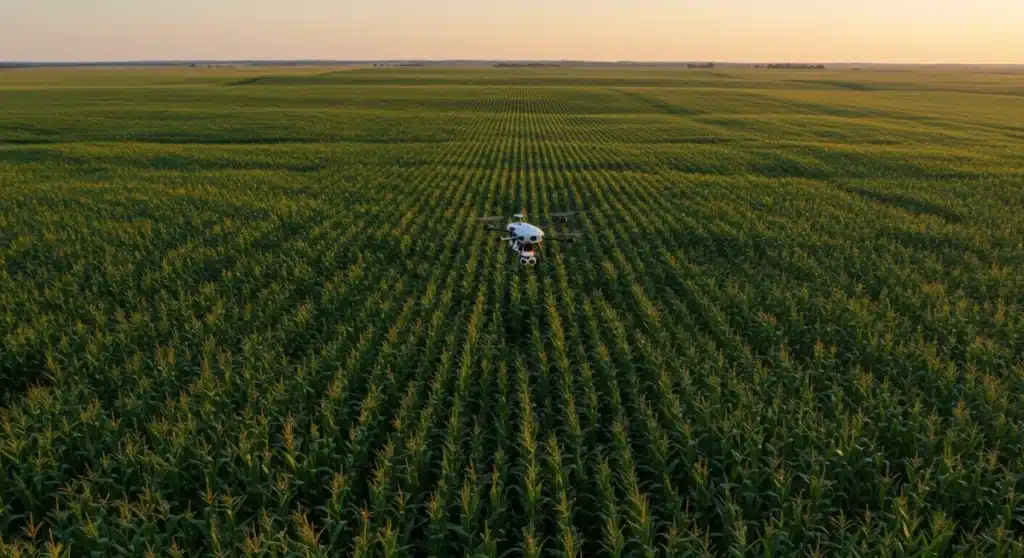
Analyzing the 3-month return on investment for drone crop monitoring ROI on US farms in 2026 reveals significant gains in efficiency, resource optimization, and overall profitability for agricultural operations.
As US agriculture steps further into the future, the integration of advanced technologies becomes not just an advantage, but a necessity. This article delves into the critical subject of Implementing Drone-Based Crop Monitoring: A 3-Month ROI Analysis for US Farms in 2026, offering a comprehensive look at the financial and operational benefits modern farmers can expect within a short timeframe. Prepare to explore how these aerial innovators are reshaping the landscape of farm profitability.
The Dawn of Drone Agriculture: A New Era for US Farms
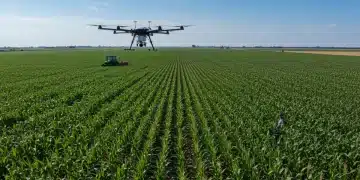
The agricultural sector in the United States is continuously evolving, driven by the need for increased efficiency, reduced costs, and sustainable practices. In 2026, drone technology stands out as a pivotal innovation, offering unprecedented capabilities for crop monitoring. This shift from traditional ground-based inspections to aerial surveillance is transforming how farmers manage their fields, providing granular data that was once unimaginable.
Drones equipped with a variety of sensors, including multispectral, hyperspectral, and thermal cameras, gather critical information about crop health, soil conditions, and irrigation efficacy. This data is then processed and translated into actionable insights, allowing farmers to make informed decisions rapidly. The initial investment in drone technology might seem substantial, but the long-term benefits, particularly within a short ROI window, are increasingly compelling for forward-thinking agricultural operations.
Beyond Visual Inspection: The Power of Multispectral Data
- Early Disease Detection: Multispectral sensors can identify plant stress before it becomes visible to the human eye, enabling proactive treatment.
- Nutrient Deficiency Mapping: Precise mapping of nutrient levels helps optimize fertilizer application, reducing waste and environmental impact.
- Irrigation Optimization: Thermal imaging identifies areas of water stress, allowing for targeted irrigation and significant water savings.
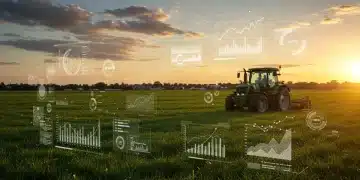
The integration of drone data into existing farm management systems creates a powerful ecosystem for precision agriculture. This systematic approach not only enhances productivity but also contributes to the resilience and sustainability of farming practices. Understanding the immediate financial returns of such an investment is crucial for widespread adoption.
Understanding the Initial Investment in Drone Crop Monitoring
Before delving into the return on investment, it’s essential to understand the typical upfront costs associated with implementing drone-based crop monitoring in 2026. These costs can vary widely depending on the scale of the farm, the specific drone models chosen, and the sophistication of the accompanying software and sensor packages. However, a general framework helps farmers budget effectively.
The primary components of an initial investment include the drone hardware itself, advanced sensor payloads, data processing software, and training for operators. While entry-level drones are available, serious agricultural applications often require more robust, specialized equipment capable of enduring varied weather conditions and covering large acreages efficiently. The quality of data directly correlates with the sensor technology, making this a critical area of expenditure.
Key Investment Components for Drone Systems
- Drone Platform: Agricultural-grade drones with extended flight times and payload capacity.
- Sensor Packages: Multispectral, thermal, and high-resolution RGB cameras for diverse data collection.
- Software Solutions: Data stitching, analysis, and interpretation software, often cloud-based, with AI capabilities.
- Operator Training: Essential for safe and effective drone operation, compliance with FAA regulations, and data acquisition best practices.
Beyond the direct purchase costs, farmers must also consider ongoing operational expenses such as battery replacements, maintenance, software subscriptions, and potential insurance. These factors, while not part of the initial capital outlay, are crucial for long-term successful integration and must be factored into any comprehensive financial analysis. A clear understanding of these costs sets the stage for accurately assessing ROI.
Month 1: Immediate Efficiency Gains and Cost Reductions
The first month of implementing drone-based crop monitoring often brings immediate and tangible benefits, primarily in the form of efficiency gains and direct cost reductions. Farmers typically observe a rapid improvement in their ability to scout fields, identify problem areas, and optimize resource allocation. This swift impact is a cornerstone of a strong drone crop monitoring ROI.
Traditional field scouting can be time-consuming and labor-intensive, often missing localised issues until they become widespread. Drones, however, can survey vast areas in a fraction of the time, pinpointing anomalies with high precision. This allows for a significant reduction in manual labor hours dedicated to scouting, freeing up valuable personnel for other critical tasks. Moreover, the early detection of issues prevents them from escalating, thereby avoiding more costly interventions later.
Optimizing Resource Application
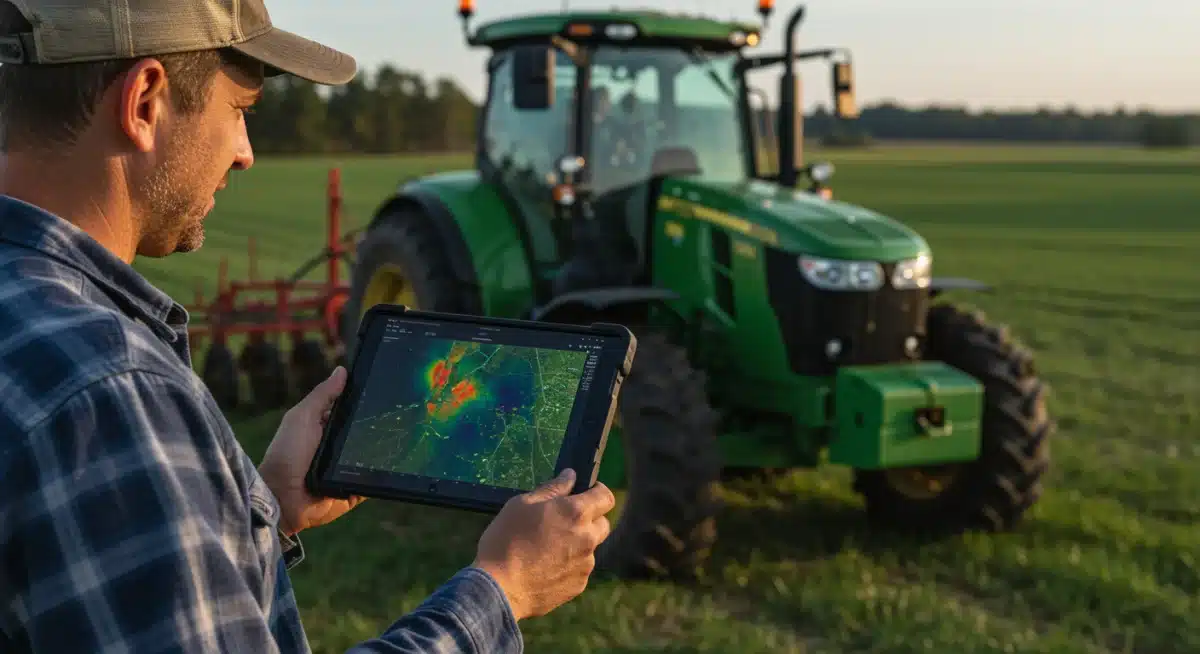
One of the most significant immediate benefits is the optimization of input resources. Drone data enables variable rate application of fertilizers, pesticides, and water. Instead of uniform application across an entire field, which can lead to waste and environmental concerns, farmers can target specific areas that require attention. This precision leads to:
- Reduced Fertilizer Usage: Applying nutrients only where needed can lead to substantial savings on fertilizer costs.
- Lower Pesticide Expenditure: Identifying localized pest or disease outbreaks allows for spot treatments, minimizing the use of chemicals.
- Water Conservation: Precise irrigation based on moisture stress maps can dramatically cut water consumption, a critical factor in arid regions.
These initial savings, coupled with the enhanced speed of data collection, start to offset the initial investment almost immediately. The ability to react quickly to emerging crop issues within the first month can prevent significant yield losses, further contributing to the early positive financial impact.
Month 2: Enhanced Decision-Making and Early Yield Protection
By the second month of drone integration, farmers begin to leverage the collected data for more sophisticated decision-making, moving beyond immediate problem identification to proactive management strategies. This phase is crucial for protecting potential yields and solidifying the drone crop monitoring ROI through informed agricultural practices.
With a month’s worth of data under their belt, farmers and agronomists can start to observe trends, compare current conditions to historical data, and predict potential issues. The consistent flow of high-resolution aerial imagery and sensor data provides a clearer picture of field variability than ever before. This continuous monitoring allows for timely adjustments to irrigation schedules, nutrient management plans, and pest control strategies, all aimed at fostering optimal crop growth.
Proactive Problem Solving
- Refine Irrigation Schedules: Adjusting water delivery based on real-time soil moisture and plant stress indicators prevents over or under-watering.
- Targeted Reseeding or Replanting: Identifying areas of poor germination early allows for timely intervention to maximize stand count.
- Forecasting Yields: More accurate predictions of harvest volumes assist in better market planning and logistics.
This proactive approach minimizes risks associated with crop failure or reduced quality, ensuring that the crop reaches its full potential. The ability to intervene before problems become widespread mitigates significant financial losses that would otherwise occur. The second month showcases the power of data-driven agriculture in safeguarding and enhancing productivity.
Month 3: Quantifying ROI Through Yield Improvement and Resource Optimization
By the end of the third month, the cumulative benefits of drone-based crop monitoring become distinctly quantifiable, allowing for a clear assessment of the return on investment. This period typically reveals measurable improvements in crop yields, further reductions in operational costs, and an overall optimization of farm resources. The drone crop monitoring ROI starts to become undeniably positive.
The consistent application of precision agriculture principles, guided by drone data, translates directly into healthier, more productive crops. Farmers often report higher yields per acre, attributed to optimized nutrient delivery, effective pest and disease management, and efficient water use throughout the growing season. These yield increases, even if marginal per acre, can represent substantial financial gains across large farming operations.
Calculating the Return on Investment
To quantify ROI, farmers typically look at several metrics:
- Increased Yield Revenue: Calculate the additional revenue generated from higher crop yields compared to previous seasons or control plots.
- Reduced Input Costs: Sum the savings from optimized use of fertilizers, pesticides, and water.
- Labor Savings: Estimate the monetary value of reduced manual scouting and more efficient field operations.
- Mitigated Losses: Quantify the financial impact of prevented crop damage or failure due to early detection and intervention.
When these gains are weighed against the initial investment and ongoing operational costs, many US farms find that drone systems have paid for themselves, or are well on their way to doing so, within this three-month window. The long-term benefits extend beyond financial metrics, encompassing environmental stewardship and improved farm sustainability, making the investment even more attractive.
Challenges and Considerations for Long-Term Success
While the 3-month ROI for drone-based crop monitoring is often compelling, ensuring long-term success requires addressing several challenges and considerations. The dynamic nature of agriculture, coupled with evolving technology, demands continuous adaptation and strategic planning. Acknowledging these factors is crucial for maximizing the sustained benefits of drone integration.
One primary challenge is the rapid pace of technological advancement. Drone hardware and software improve constantly, meaning farmers need to consider upgrade cycles and the potential for new, more efficient systems. Furthermore, data management can become complex as the volume of collected information grows, necessitating robust storage solutions and analytical capabilities. Regulatory landscapes also evolve, requiring farmers to stay informed about drone operation guidelines and compliance.
Overcoming Obstacles for Sustainable Integration
- Continuous Training: Investing in ongoing education for operators to keep pace with new features and best practices.
- Scalable Data Infrastructure: Implementing cloud-based solutions for data storage and processing that can handle increasing volumes.
- Integration with Existing Systems: Ensuring seamless compatibility with other farm management software and equipment.
Moreover, the interpretation of complex drone data often requires expertise. While AI-driven software is becoming more sophisticated, human agronomic knowledge remains invaluable for translating data into optimal field actions. Building a team with the necessary skills or partnering with expert service providers can significantly enhance the effectiveness of drone programs. Addressing these challenges proactively ensures that the initial positive drone crop monitoring ROI continues to grow over the years.
| Key Point | Brief Description |
|---|---|
| Initial Efficiency Gains | Within the first month, drones significantly reduce scouting time and labor, leading to immediate cost savings. |
| Resource Optimization | Precision application of water, fertilizers, and pesticides driven by drone data minimizes waste and expenses. |
| Yield Protection & Improvement | Early detection of crop stress and proactive management lead to higher yields and reduced losses by month three. |
| Quantifiable ROI | Tangible financial returns from savings and increased revenue are often observed within a three-month period. |
Frequently Asked Questions About Drone Crop Monitoring
The initial investment can range from $5,000 to $25,000+ for professional agricultural drone systems in 2026. This includes the drone, specialized sensors (multispectral, thermal), data processing software, and essential operator training. Costs vary based on farm size and desired technological sophistication, impacting the overall drone crop monitoring ROI.
Many US farms can begin to see a tangible return on their investment within 3 to 6 months. This rapid ROI is primarily driven by immediate cost savings from optimized input usage (fertilizer, water, pesticides) and early detection of crop issues that prevent significant yield losses, directly improving farm profitability.
Agricultural drones collect a variety of data, including high-resolution RGB imagery for visual inspection, multispectral data for crop health and nutrient levels, and thermal data for irrigation efficiency and plant stress. This comprehensive data suite enables precise, data-driven decision-making for farmers, enhancing their drone crop monitoring ROI.
While most crops can benefit, large-acreage row crops like corn, soybeans, and wheat, along with high-value specialty crops such as grapes and orchards, often see the most significant benefits. The ability to efficiently monitor vast fields or intensively manage specific zones makes drone technology particularly valuable for these agricultural segments.
Key challenges include navigating FAA regulations for commercial drone operation, the learning curve for operating advanced equipment and software, managing large volumes of data, and ensuring seamless integration with existing farm management systems. Overcoming these requires training, scalable infrastructure, and potentially expert support.
Conclusion
The Implementing Drone-Based Crop Monitoring: A 3-Month ROI Analysis for US Farms in 2026 reveals a compelling narrative of technological advancement meeting agricultural necessity. Within a mere quarter, US farms adopting this technology can expect to see tangible returns through enhanced efficiency, significant cost reductions in inputs, and protected, often improved, crop yields. While initial investment and ongoing management require careful consideration, the benefits of precision agriculture powered by drones are proving to be a game-changer. As farming continues to evolve, integrating such smart technologies will be paramount for sustained profitability and environmental stewardship, solidifying drones as an indispensable tool in the modern agricultural landscape.