Vertical Farming 2026: Doubling Urban US Agri Output
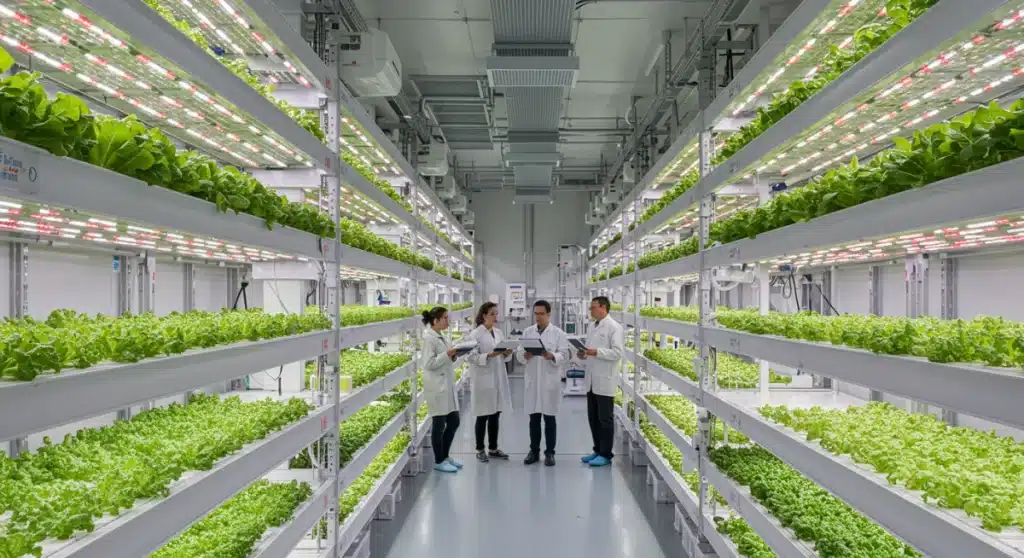
By 2026, vertical farming technology is poised to revolutionize urban US agriculture, specifically aiming to double crop output per square foot through advanced automation, AI, and optimized environmental controls, addressing critical food security and sustainability challenges.
The landscape of urban agriculture in the United States is on the brink of a profound transformation, with vertical farming 2026 technologies leading the charge. This innovative approach promises to redefine how food is grown, offering a sustainable and highly efficient solution to meet the increasing demand for fresh produce in urban centers.
The evolution of vertical farming technology
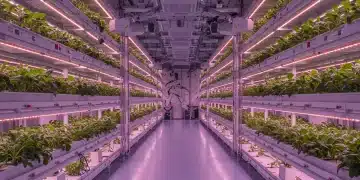
Vertical farming has progressed significantly from its early conceptual stages, moving beyond simple stacked racks to sophisticated, climate-controlled ecosystems. The push for greater efficiency and yield has driven continuous innovation, making it a cornerstone of future urban food systems.
Initial vertical farms often relied on basic hydroponic or aeroponic systems with manual oversight. While a step forward, these early iterations faced limitations in scalability and operational cost. Today, the focus has shifted dramatically towards integrating advanced technologies that promise not just incremental improvements, but exponential gains in productivity.
Key technological advancements driving growth
- Precision environmental controls: Sophisticated sensors and AI now manage light, temperature, humidity, and CO2 levels with unprecedented accuracy.
- Advanced LED lighting: Dynamic spectrum LEDs tailor light recipes to specific plant needs, optimizing growth cycles and nutrient profiles.
- Automated nutrient delivery: Hydroponic and aeroponic systems are fully automated, ensuring plants receive the exact nutrients required for optimal health and rapid growth.
These advancements collectively contribute to creating ideal growing conditions, accelerating plant development, and significantly reducing resource consumption. The ability to precisely control every environmental variable allows for year-round production, independent of external climate conditions, a critical advantage for urban settings.
Looking towards 2026, the integration of these technologies is set to become even more seamless and intelligent. The goal is to create fully autonomous farms that require minimal human intervention, further driving down operational costs and increasing accessibility. This continuous evolution underpins the ambitious target of doubling output per square foot.
Doubling output: innovations in plant science and genetics
Achieving a significant increase in output per square foot isn’t solely about engineering; it’s also deeply rooted in advancements in plant science and genetics tailored for controlled environments. Researchers are actively developing crop varieties specifically optimized for vertical farm conditions.
Traditional crops are often bred for open-field conditions, prioritizing traits like disease resistance and resilience to varying weather. For vertical farms, different characteristics are paramount, such as compact growth, rapid maturation, and efficient nutrient uptake. This specialized breeding effort is critical to unlocking the full potential of vertical agriculture.
Optimizing crop varieties for vertical environments
- High-density growth: Developing plants that thrive in close proximity without compromising yield or quality.
- Faster growth cycles: Breeding for accelerated maturation, allowing for more harvests per year.
- Enhanced nutrient efficiency: Crops that can efficiently utilize targeted nutrient solutions, reducing waste and maximizing growth.
Beyond traditional breeding, genetic editing technologies are beginning to play a role. CRISPR and other gene-editing tools offer the potential to precisely modify plant genomes to enhance desired traits, such as increased biomass, improved taste, or even resistance to specific pathogens that might emerge in controlled environments. This level of precision accelerates the development of superior crop varieties.
Furthermore, the continuous monitoring capabilities within vertical farms provide an unprecedented amount of data on plant performance. This data, when analyzed with AI, informs breeding programs, identifying successful genetic lines and environmental parameters that drive optimal growth. This symbiotic relationship between technology and biology is propelling the industry towards its ambitious output goals.
AI and automation: the brain and brawn of modern vertical farms
The quest to double output per square foot by 2026 heavily relies on the sophisticated integration of artificial intelligence (AI) and advanced automation. These technologies are transforming vertical farms from labor-intensive operations into highly efficient, data-driven production centers.
AI acts as the central intelligence, processing vast amounts of data collected from sensors, cameras, and historical growth cycles. It learns optimal conditions for each crop variety, predicts growth patterns, and even identifies potential issues like nutrient deficiencies or disease outbreaks before they become widespread. This predictive capability significantly reduces crop loss and maximizes yield.
Robotics and automated systems in action
- Automated planting and harvesting: Robotic arms handle delicate seedlings and precisely harvest mature crops, reducing manual labor and increasing speed.
- Environmental monitoring and adjustment: AI-driven systems continuously monitor and adjust climate parameters, ensuring perfect growing conditions 24/7.
- Pest and disease detection: AI-powered vision systems scan plants for early signs of stress, pests, or disease, enabling immediate, targeted interventions.
The physical tasks within vertical farms are increasingly being taken over by robotics. From planting seeds and transplanting seedlings to monitoring individual plant health and harvesting, robots perform these actions with precision and consistency far surpassing human capabilities. This not only boosts efficiency but also minimizes contamination risks, leading to healthier crops.
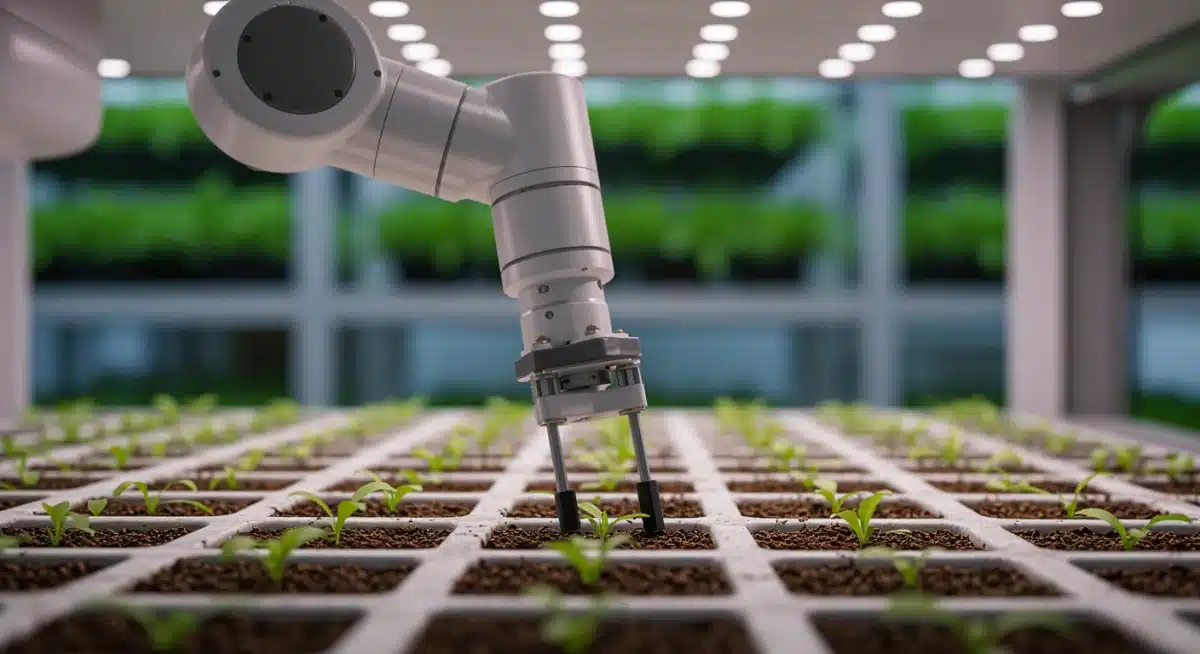
The synergy between AI and automation creates a self-optimizing system. AI determines the ‘what’ and ‘when,’ while automation executes the ‘how.’ This combination is critical for achieving the high throughput and consistent quality necessary for doubling output and making vertical farming a truly scalable solution for urban food production.
Resource efficiency: water, energy, and nutrient recycling
A core advantage and a driving force behind the growth of vertical farming 2026 is its unparalleled resource efficiency, particularly concerning water, energy, and nutrients. These systems are designed to minimize waste and maximize the utilization of every input, contributing significantly to sustainability goals.
Vertical farms typically use significantly less water than traditional field farming, often as much as 90-95% less. This is primarily due to closed-loop hydroponic and aeroponic systems that recirculate water and nutrient solutions. Evaporation is minimized, and runoff is virtually eliminated, making vertical farming ideal for water-stressed regions and urban environments where water is a precious resource.
Sustainable resource management strategies
- Closed-loop water systems: Recirculating nutrient-rich water, drastically reducing overall water consumption.
- Optimized LED energy use: Advancements in LED technology mean more light per watt, coupled with AI-driven scheduling to only provide light when necessary.
- Nutrient recapture and recycling: Unused nutrients are filtered and re-introduced into the system, minimizing waste and maximizing efficiency.
Energy consumption, historically a challenge for vertical farms due to lighting and climate control, is being addressed through several innovations. Highly efficient LED lights, smart energy management systems, and the potential integration of renewable energy sources are making vertical farms more energy-sustainable. AI plays a crucial role in optimizing lighting schedules and climate control to reduce energy expenditure without compromising plant growth.
Furthermore, the ability to precisely control nutrient delivery not only optimizes plant health but also prevents nutrient leaching into the environment, a common issue in traditional agriculture. The recycling of nutrient solutions within the closed systems ensures that costly inputs are used to their fullest potential. This holistic approach to resource management is fundamental to the economic and environmental viability of vertical farming as it scales up.
Economic viability and market penetration in urban US
The expansion of vertical farming 2026 in urban US agriculture is not just a technological marvel; it’s an economic imperative. For these systems to truly double output and integrate into the mainstream food supply, they must demonstrate clear economic viability and achieve significant market penetration.
The initial capital investment for vertical farms can be substantial, but advancements in modular design, automation, and energy efficiency are steadily driving down operational costs. As technology matures and economies of scale are realized, the cost per pound of produce becomes increasingly competitive with traditional agriculture, especially when considering factors like transportation and seasonality.
Factors influencing market growth
- Reduced transportation costs: Locating farms directly in urban centers eliminates long-haul shipping, reducing fuel costs and environmental impact.
- Year-round local produce: Consistent supply of fresh, high-quality produce regardless of season or climate fluctuations.
- Premium pricing for freshness: Consumers are often willing to pay more for locally grown, pesticide-free produce with a longer shelf life.
Consumer demand for fresh, locally sourced, and sustainably grown food is a powerful market driver. Vertical farms capitalize on this trend by providing produce that is harvested at peak freshness and delivered to consumers within hours, not days. This ‘farm-to-fork’ proximity resonates strongly with urban populations increasingly concerned about food quality and origin.
Government incentives, private investment, and partnerships with retailers are also accelerating market penetration. As more large-scale vertical farms come online, they create a robust supply chain that can reliably meet the demands of supermarkets, restaurants, and direct-to-consumer models. The economic model is shifting, demonstrating that high-tech agriculture can be both profitable and sustainable in urban environments.
Regulatory landscape and policy support for urban vertical farms
The rapid growth and ambitious goals of vertical farming 2026 necessitate a supportive regulatory landscape and proactive policy measures, particularly within the urban US context. As these innovative farms integrate into cityscapes, clear guidelines and incentives are crucial for their successful expansion.
Currently, regulations regarding urban agriculture can vary significantly by municipality, often requiring adaptation for vertical farm specificities such as zoning laws, building codes, and water usage policies. Streamlining these regulations at state and federal levels could significantly reduce barriers to entry and accelerate development.
Key policy areas for vertical farming growth
- Zoning and land use: Adapting urban zoning to accommodate vertical farm structures, potentially repurposing unused industrial spaces.
- Tax incentives and grants: Providing financial support for initial capital investments and R&D in sustainable agricultural technologies.
- Water and energy policies: Creating frameworks that recognize and reward the high efficiency of vertical farms in resource utilization.
Beyond direct regulation, government support can foster innovation and market adoption through research grants, educational programs, and public-private partnerships. Promoting the benefits of urban vertical farming in terms of food security, job creation, and environmental sustainability can build public acceptance and political will.
The development of standardized certifications for vertically farmed produce could also enhance consumer trust and market differentiation. Policies that encourage local food procurement by institutions (schools, hospitals) could further solidify the market for urban vertical farms. A coherent and forward-thinking policy framework is essential to ensure that the technological promise of doubling output translates into widespread, tangible benefits for urban communities.
Future outlook: integrating vertical farms into smart city ecosystems
The 2026 horizon for vertical farming 2026 extends beyond individual facilities; it envisions these farms as integral components of broader smart city ecosystems. This integration promises to unlock even greater efficiencies and contribute to a more resilient urban infrastructure.
Imagine vertical farms not just as food producers, but as active participants in a city’s energy grid, water management system, and waste recycling initiatives. For instance, farms could utilize excess heat or CO2 from adjacent buildings, or contribute to renewable energy microgrids. This interconnectedness transforms them into multi-functional urban assets.
Synergies within smart city frameworks
- Waste-to-resource conversion: Utilizing organic waste from the city as compost or energy for vertical farm operations.
- Distributed energy systems: Integrating vertical farms with rooftop solar or local grid solutions for energy independence and resilience.
- Water reclamation and reuse: Partnering with urban water treatment facilities for purified water inputs and managing greywater outputs.
Data sharing will be a critical element of this integration. Information on crop yields, resource consumption, and environmental impact from vertical farms can feed into smart city dashboards, providing real-time insights for urban planners and policymakers. This data-driven approach fosters optimized resource allocation and better urban design.
Moreover, vertical farms can serve as educational hubs, community centers, and green spaces within dense urban environments, enhancing quality of life. Their ability to provide fresh, healthy food locally contributes directly to public health and reduces the carbon footprint associated with food transportation. The vision for 2026 and beyond sees vertical farms not just as agricultural facilities, but as vital, interconnected elements of sustainable, intelligent urban living.
| Key Aspect | 2026 Horizon Impact |
|---|---|
| Output Doubling | Advanced tech and genetics target 2x yield per square foot in urban farms. |
| AI & Automation | AI optimizes growth, robots handle planting/harvesting, boosting efficiency. |
| Resource Efficiency | 90-95% less water, optimized energy, and nutrient recycling for sustainability. |
| Economic Viability | Reduced costs, local demand, and policy support drive market penetration. |
Frequently asked questions about vertical farming in 2026
By 2026, the doubling of output in vertical farms is primarily driven by advanced AI for environmental control, dynamic spectrum LED lighting, sophisticated automation including robotics for planting and harvesting, and genetically optimized crop varieties developed specifically for indoor conditions to maximize yield.
Vertical farming will significantly enhance urban food security by providing a consistent, local supply of fresh produce, reducing reliance on long supply chains, and mitigating the impacts of climate change on traditional agriculture. This ensures greater access to nutritious food for city dwellers.
The primary environmental benefits include drastically reduced water usage (up to 95% less), minimal land footprint, elimination of pesticide use, and significant reduction in transportation emissions. These advancements contribute to more sustainable and eco-friendly food production systems within urban areas.
As technology advances and economies of scale improve, the operational costs of vertical farms are decreasing. While initial produce might be premium-priced, increased efficiency and localized production are expected to make fresh, high-quality produce more competitive and accessible to a wider consumer base over time.
Government policies are crucial for growth, including supportive zoning laws, tax incentives, and research grants. Streamlined regulations and public-private partnerships will accelerate the integration of vertical farms into urban infrastructure, fostering innovation and ensuring their long-term success and widespread adoption.
Conclusion
The journey towards vertical farming 2026 and its promise of doubling output per square foot in urban US agriculture is well underway, driven by a convergence of technological breakthroughs, scientific ingenuity, and strategic policy development. This isn’t merely an incremental improvement; it represents a fundamental shift in our approach to food production, addressing critical challenges related to food security, environmental sustainability, and urban resilience. As these advanced systems become more prevalent, integrated, and economically viable, they are set to redefine the agricultural landscape, bringing fresh, healthy produce closer to consumers and fostering a more sustainable future for cities across the United States. The horizon for urban agriculture is brighter and greener than ever before, signaling a new era of localized, high-tech food systems.