Precision Irrigation Systems 2025: 15% Water Savings for U.S. Farms
Precision irrigation systems in 2025 are revolutionizing U.S. farming by offering practical solutions to achieve significant water savings, typically around 15%, enhancing both environmental stewardship and economic viability for agricultural operations.
As we advance into 2025, the imperative for sustainable agriculture becomes increasingly critical, especially concerning water resources. Precision irrigation systems represent a pivotal advancement, offering U.S. farms practical solutions to achieve substantial water savings, often exceeding 15%, while simultaneously optimizing crop yield and promoting environmental responsibility. This article explores the innovative technologies and strategies driving this transformation.
The evolving landscape of water scarcity and agricultural demand
Water scarcity continues to be a pressing global issue, and U.S. agriculture, a major consumer of freshwater, faces increasing pressure to adopt more efficient practices. Traditional irrigation methods, while effective in their time, often lead to significant water waste through evaporation, runoff, and over-application. The changing climate patterns, including prolonged droughts and unpredictable rainfall, further exacerbate this challenge, making efficient water management not just an option, but a necessity for the longevity and profitability of farming operations.
Farmers are increasingly aware that water is a finite resource, and its judicious use directly impacts their bottom line and the sustainability of their land. The demand for food production continues to rise, yet the available water resources are dwindling. This creates a critical intersection where technological innovation must step in to bridge the gap between demand and supply. Embracing advanced irrigation techniques is no longer a luxury but a fundamental component of modern agricultural strategy.
Understanding the intricate balance between water supply, crop needs, and environmental impact is crucial. The agricultural sector is actively seeking solutions that can provide tangible results in water conservation without compromising productivity. This drive for efficiency is fueling the rapid adoption and development of precision irrigation technologies, setting the stage for a more resilient and sustainable agricultural future.
Core technologies driving precision irrigation in 2025
The foundation of effective precision irrigation lies in integrating diverse technologies that provide real-time data and automated control. These systems move beyond simple timers, offering dynamic responses to environmental conditions and crop requirements. The synergy between hardware and software is what truly unlocks their potential for significant water savings.
Sensor networks and real-time data acquisition
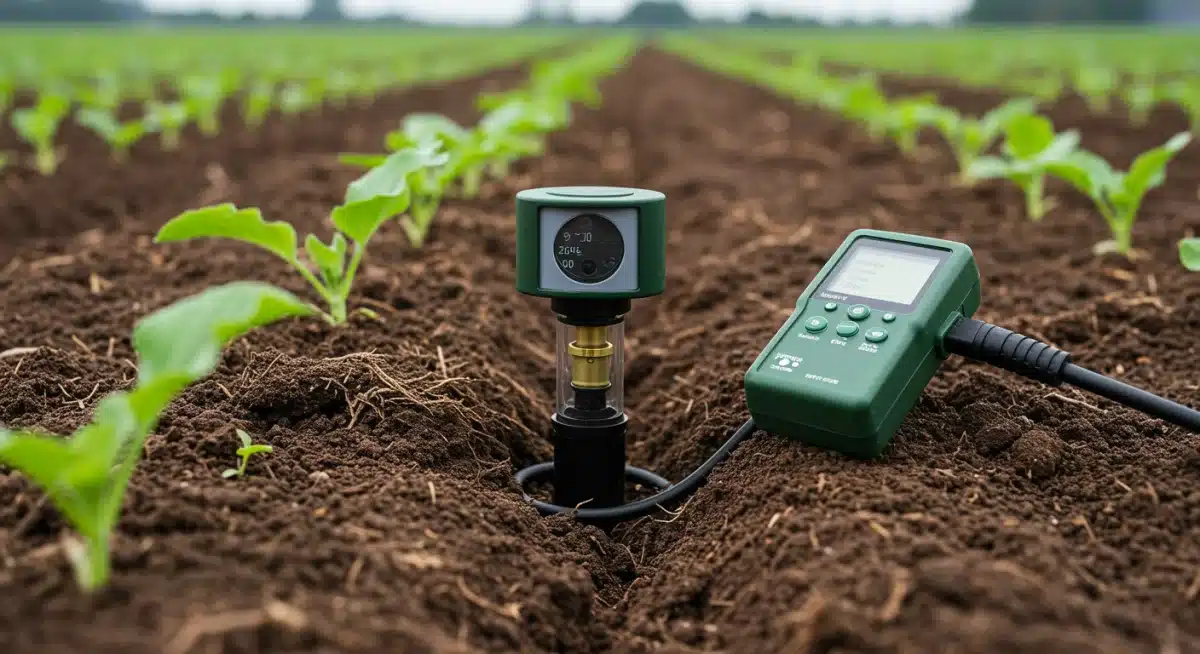
At the heart of precision irrigation are sophisticated sensor networks. These devices collect critical information directly from the field, providing a granular understanding of the soil and plant environment. This data is then used to make informed irrigation decisions, ensuring water is applied only when and where it is needed.
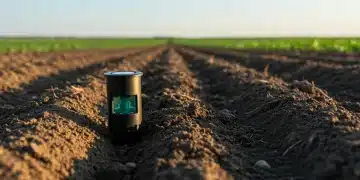
- Soil moisture sensors: These sensors measure the volumetric water content in the soil at various depths, informing farmers precisely when and how much to irrigate.
- Weather stations: On-site weather stations provide data on temperature, humidity, wind speed, and rainfall, which are crucial for calculating evapotranspiration rates and predicting future irrigation needs.
- Plant physiological sensors: Emerging technologies include sensors that monitor plant stress levels directly, offering a direct indicator of water demand.
These sensor networks create a continuous flow of data, enabling a dynamic approach to water management. Farmers can move away from fixed schedules, instead responding to the actual needs of their crops and the prevailing environmental conditions, leading to more efficient water use.
Advanced control systems and automation
Beyond data collection, the ability to act upon that information automatically is what makes precision irrigation truly transformative. Modern control systems integrate sensor data with predictive models to manage irrigation schedules with minimal human intervention. This automation ensures optimal water delivery, even in large and complex farming operations.
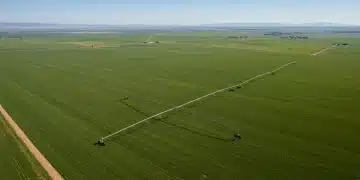
- Variable rate irrigation (VRI): VRI systems allow for different rates of water application within a single field, adapting to variations in soil type, topography, and crop needs.
- Cloud-based platforms: These platforms aggregate data from all sensors, provide analytical insights, and allow farmers to monitor and control their systems remotely via smartphones or computers.
- Artificial intelligence and machine learning: AI algorithms are increasingly being used to analyze vast datasets, predict irrigation requirements, and optimize water application strategies over time, learning from past performance.
The combination of intelligent sensors and automated control systems ensures that water is not only delivered precisely but also adaptively. This dynamic approach significantly reduces waste and maximizes the effectiveness of every drop of water, contributing directly to the targeted 15% water savings.
Practical solutions for achieving 15% water savings
Achieving a 15% water saving is an ambitious yet attainable goal for U.S. farms implementing precision irrigation. This involves a combination of technology adoption, strategic planning, and continuous optimization. The solutions are not one-size-fits-all but are tailored to the specific needs of each farm and crop type.
One of the most impactful strategies is the shift from traditional flood or furrow irrigation to drip or micro-sprinkler systems. These methods deliver water directly to the plant’s root zone, minimizing evaporation and runoff. When combined with sensor-based scheduling, the efficiency gains are substantial. Farmers who have made this transition often report immediate and measurable reductions in water consumption.
Implementing drip and micro-irrigation systems
Drip irrigation, in particular, offers unparalleled precision. Water is slowly delivered from emitters placed near the plants, ensuring that moisture penetrates the soil directly where it is most needed. This method is highly effective for many row crops, orchards, and vineyards, significantly reducing water loss compared to overhead irrigation.
- Reduced evaporation: Water is applied at ground level, minimizing exposure to sun and wind.
- Targeted delivery: Only the plant’s root zone receives water, avoiding irrigation of inter-row spaces.
- Nutrient efficiency: Fertilizers can be delivered directly with the water (fertigation), improving nutrient uptake and reducing waste.
Micro-sprinklers, while delivering water over a slightly larger area than drip emitters, also offer high efficiency. They are often used in orchards or for specific row crops where a fine spray is beneficial, providing more uniform coverage than traditional sprinklers with less waste.
Optimizing irrigation scheduling with data analytics
Beyond the hardware, the intelligence behind when and how much to irrigate is paramount. Data analytics platforms process information from sensors, weather forecasts, and historical crop data to generate optimized irrigation schedules. This allows for proactive decision-making rather than reactive responses to visible plant stress.
- Evapotranspiration (ET) modeling: Using weather data to calculate how much water crops are losing through transpiration and evaporation, allowing for precise replenishment.
- Predictive analytics: AI-driven systems can forecast future water needs based on environmental conditions and crop growth stages, enabling farmers to plan irrigation events more effectively.
- Zone-specific management: Large fields can be divided into smaller management zones based on soil type, topography, or crop variety, each receiving a customized irrigation plan.
By leveraging these data-driven insights, farmers can move beyond guesswork and implement highly efficient irrigation programs. This precision minimizes over-watering, prevents nutrient leaching, and ensures that every drop of water contributes directly to healthy crop growth, ultimately achieving the desired water savings.
Economic benefits and return on investment for U.S. farms
While the environmental benefits of precision irrigation are clear, the economic advantages are equally compelling for U.S. farms. Investing in these systems can lead to significant cost savings and improved profitability, providing a strong incentive for adoption. The initial outlay for technology is often recouped through reduced operational expenses and enhanced yields.
Firstly, the most direct economic benefit comes from the reduction in water consumption. With water costs steadily rising in many regions, saving 15% or more on irrigation water translates directly into lower utility bills. For farms relying on pumped groundwater, reduced pumping hours also mean lower energy consumption, further cutting operational costs. This dual saving on water and energy creates a powerful financial incentive.
Furthermore, precision irrigation often leads to higher and more consistent crop yields. By ensuring plants receive the optimal amount of water and nutrients at the right time, stress is minimized, and growth is maximized. This results in better quality produce and, consequently, higher market prices. Reduced disease pressure, often associated with over-watering, also contributes to healthier crops and less product loss. The cumulative effect of these factors significantly enhances the farm’s overall profitability and resilience against market fluctuations.
Environmental impact and sustainability gains
Beyond the immediate economic advantages, precision irrigation systems play a crucial role in advancing environmental sustainability in agriculture. Water conservation is a cornerstone of sustainable farming, but the benefits extend far beyond simply using less water. These systems contribute to healthier ecosystems and a reduced environmental footprint.
Minimizing water runoff and nutrient leaching
Traditional irrigation methods can often lead to significant water runoff, carrying valuable topsoil and applied fertilizers into waterways. This not only represents a loss of resources for the farm but also contributes to water pollution, harming aquatic ecosystems. Precision irrigation, by delivering water directly to the root zone and in controlled amounts, drastically reduces runoff.
- Reduced erosion: Less surface runoff means less soil erosion, preserving valuable topsoil.
- Cleaner waterways: Minimizing the discharge of nutrient-rich runoff helps prevent eutrophication in rivers and lakes.
- Groundwater protection: Precise application reduces the risk of excess water carrying pesticides and nitrates deep into the soil, potentially contaminating groundwater sources.
The ability to precisely apply water and nutrients through fertigation means that chemicals are used more efficiently and are less likely to leach into deeper soil layers or escape into the environment. This targeted approach is a win-win for both the farm and the surrounding ecosystem.
Reducing energy consumption and carbon footprint
Pumping water for irrigation is an energy-intensive process, especially for large-scale operations. By reducing the overall volume of water needed, precision irrigation systems inherently lower the energy demand for pumping. This reduction in energy consumption directly translates to a smaller carbon footprint for the farm.
- Lower electricity bills: Less pumping means lower energy costs, contributing to economic savings.
- Reduced greenhouse gas emissions: Decreased energy use, particularly from fossil fuel-based electricity, lowers the farm’s contribution to greenhouse gases.
- Sustainable resource management: Optimizing water and energy use aligns with broader sustainability goals, enhancing the farm’s reputation and long-term viability.
The holistic approach of precision irrigation, addressing water, nutrient, and energy efficiency, positions U.S. farms as leaders in sustainable agriculture. These systems are not just about saving water; they are about fostering a more environmentally responsible and economically sound farming future.
Challenges and future outlook for wider adoption
Despite the clear benefits, the widespread adoption of precision irrigation systems in the U.S. faces certain challenges. Understanding these hurdles and anticipating future developments is crucial for accelerating their implementation across the agricultural sector. Overcoming these obstacles will unlock even greater potential for water savings and sustainability.
Initial investment and technological literacy
One of the primary barriers is the upfront cost associated with installing sophisticated precision irrigation equipment. While the long-term return on investment is often significant, the initial capital expenditure can be prohibitive for some smaller farms. Access to financing, grants, and cost-sharing programs will be vital in mitigating this challenge.
- Financing options: Government subsidies and low-interest loans can make these technologies more accessible.
- Demonstration projects: Showcasing successful implementations can build confidence among hesitant farmers.
- Scalability: Developing modular systems that can be gradually expanded can help manage initial costs.
Another challenge is the need for technological literacy. Operating and maintaining these advanced systems requires a certain level of technical understanding. Educational initiatives and accessible support services are essential to empower farmers with the knowledge and skills needed to effectively utilize these tools.
Integration with broader farm management systems
The future of precision irrigation lies in its seamless integration with other farm management systems, creating a truly holistic approach to agricultural operations. This means connecting irrigation data with planting schedules, fertilization plans, pest management, and yield mapping. Such integration will unlock new levels of efficiency and insight.
- Unified data platforms: Developing interoperable software that can consolidate data from various farm technologies.
- AI-driven decision support: Leveraging artificial intelligence to provide comprehensive recommendations across all aspects of farm management.
- Robotics and autonomous systems: Integrating irrigation with robotic planters and harvesters for fully automated field operations.
Looking ahead, the evolution of precision irrigation will likely involve more sophisticated predictive modeling, enhanced sensor capabilities, and greater autonomy. The goal is to create systems that are not only highly efficient but also intuitive and easy to manage, further solidifying their role in achieving substantial water savings and fostering sustainable agriculture across the U.S.
Case studies: real-world success in water conservation
Examining real-world examples helps illustrate the tangible benefits of precision irrigation. Numerous U.S. farms have successfully implemented these systems, demonstrating significant water savings and improved operational efficiency. These case studies provide valuable insights and inspiration for others considering adoption.
For instance, a large corn farm in Nebraska transitioned from center pivot irrigation to a variable rate irrigation (VRI) system equipped with soil moisture sensors. Before implementation, the farm used a uniform watering schedule across all fields. After installing the VRI, they observed that different soil types and topographical variations within their fields required vastly different water amounts. By customizing water delivery to each zone, they achieved an average of 18% water savings over two growing seasons, while maintaining or even slightly increasing their yields. This not only reduced their water bill but also significantly decreased energy consumption from pumping.
Another compelling example comes from a specialty crop grower in California, cultivating high-value vegetables. Facing severe drought conditions and stringent water regulations, this farmer invested in a drip irrigation system coupled with a cloud-based monitoring platform. The system integrated data from soil moisture sensors, weather forecasts, and plant health monitors. This allowed for precise, daily adjustments to irrigation schedules, preventing both under and over-watering. The result was a consistent 20% reduction in water usage compared to their previous micro-sprinkler system, along with a noticeable improvement in crop quality and reduced instances of fungal diseases directly attributable to optimized moisture levels. These real-world successes underscore the practical and impactful nature of precision irrigation.
| Key Point | Brief Description |
|---|---|
| Water Scarcity & Demand | U.S. agriculture faces increasing pressure for efficient water use due to scarcity and climate change. |
| Core Technologies | Sensor networks, AI, and automated control systems provide real-time data for precise water delivery. |
| Practical Solutions | Drip irrigation, VRI, and data analytics enable 15%+ water savings and optimized crop yields. |
| Economic & Environmental Benefits | Reduced costs, higher yields, less runoff, lower energy use, and a smaller carbon footprint. |
Frequently asked questions about precision irrigation
Precision irrigation is an advanced farming method that uses technology like sensors and automation to deliver the exact amount of water needed by crops, precisely when and where it’s required. This minimizes waste and maximizes efficiency, moving beyond traditional, less targeted watering methods.
U.S. farms can realistically achieve water savings of 15% or more by implementing precision irrigation systems. This percentage can vary based on factors such as crop type, soil conditions, and the specific technologies adopted, but significant reductions are consistently observed across diverse operations.
Key technologies include soil moisture sensors, weather stations, variable rate irrigation (VRI) systems, cloud-based data platforms, and artificial intelligence for predictive scheduling. These components work together to provide real-time monitoring and automated, optimized water delivery.
While precision irrigation systems require an initial investment, they are highly cost-effective in the long run. Savings come from reduced water bills, lower energy consumption for pumping, increased crop yields, and improved quality, leading to a strong return on investment over time.
Environmental benefits include significant water conservation, reduced nutrient runoff into waterways, decreased soil erosion, and lower energy consumption, which contributes to a smaller carbon footprint. These systems promote more sustainable and ecologically responsible farming practices across the U.S.
Conclusion
The journey towards sustainable agriculture in the U.S. is undeniably linked to the adoption of advanced water management practices. Precision irrigation systems, with their integration of cutting-edge sensors, data analytics, and automation, offer a powerful pathway for farms to achieve significant water savings, often exceeding the 15% benchmark. Beyond conservation, these technologies enhance crop yields, reduce operational costs, and minimize environmental impact, positioning U.S. agriculture for a more resilient and prosperous future. As we move further into 2025, continued investment and innovation in precision irrigation will be paramount in addressing global food demands while safeguarding our most precious resource: water.