Data Analytics in Agriculture: Boost Farm Profitability 2025

Data analytics in agriculture is crucial for maximizing farm profitability by providing actionable insights into crop performance, resource optimization, and financial forecasting, driving substantial economic benefits for farmers by 2025.
The agricultural landscape is undergoing a profound transformation, driven by an unprecedented influx of data. For farmers striving to enhance their bottom line, understanding and leveraging farm profitability data analytics is no longer an option but a necessity. This article explores how advanced data analytics, with a focus on 2025 insights, is revolutionizing agricultural practices and directly impacting financial success.
Understanding the Data Revolution in Agriculture
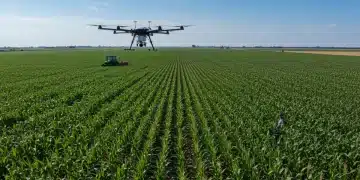
The agricultural sector, traditionally reliant on experience and intuition, is now embracing a data-driven paradigm. This shift is powered by myriad technologies, from sensors and drones to advanced meteorological stations, all generating vast amounts of information. The true value, however, lies not in the data itself, but in its analysis and interpretation to derive meaningful insights that directly influence farm profitability.
This revolution is fundamentally changing how farmers make decisions. Instead of broad generalizations, decisions are becoming hyper-localized and precise, tailored to specific field conditions and crop needs. This precision minimizes waste, optimizes input use, and ultimately boosts financial returns.
Sources of Agricultural Data
Modern farming operations collect data from diverse sources, creating a comprehensive digital footprint of the farm. This rich dataset forms the foundation for powerful analytical tools.
- Sensor Networks: Soil moisture, nutrient levels, pH, and temperature data from in-field sensors.
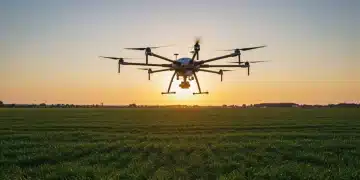
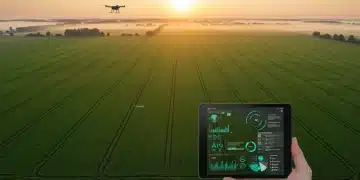
- Remote Sensing: Satellite imagery and drone-based multispectral cameras providing insights into crop health, growth stages, and stress detection.
- Farm Equipment Telematics: Data from tractors, harvesters, and planters on fuel consumption, operational efficiency, and application rates.
- Weather Stations: Localized weather patterns, historical data, and future forecasts influencing planting, irrigation, and harvesting schedules.
By integrating these disparate data streams, farmers gain a holistic view of their operations, enabling them to identify patterns and anomalies that would otherwise remain hidden. This integrated approach is critical for maximizing farm profitability data analytics.
The ability to collect, process, and interpret this data is what sets leading agricultural enterprises apart. As we move towards 2025, the sophistication of these data collection methods and analytical platforms will only continue to grow, offering even greater opportunities for financial optimization.
Optimizing Resource Allocation Through Data Insights
One of the most immediate and impactful benefits of data analytics in agriculture is the optimization of resource allocation. Traditional farming often involves uniform application of inputs across entire fields, leading to inefficiencies and increased costs. Data analytics enables precision, ensuring that resources are applied exactly where and when they are needed.
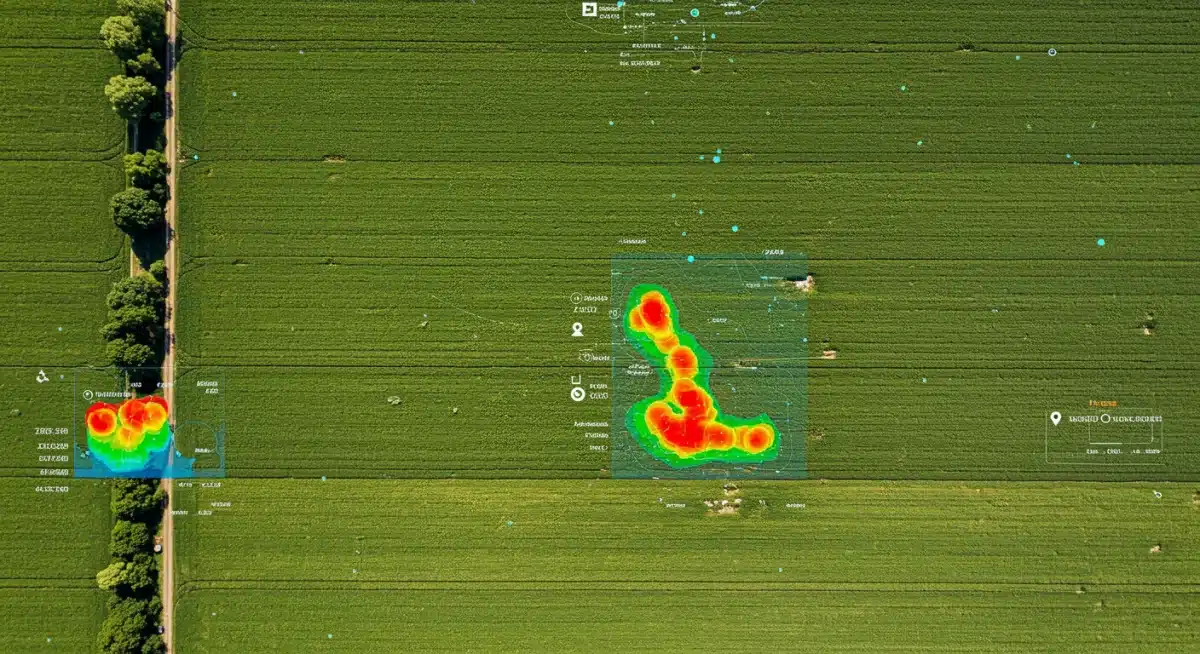
By analyzing soil maps, yield data, and remote sensing imagery, farmers can create variable-rate application prescriptions for fertilizers, water, and pesticides. This targeted approach not only reduces input costs but also minimizes environmental impact, aligning with sustainable agriculture practices.
Precision in Irrigation and Fertilization
Water and nutrients are two of the most significant cost factors in agriculture. Mismanagement can lead to substantial financial losses and reduced yields. Data analytics provides the tools to manage these resources with unparalleled precision.
- Irrigation Scheduling: Soil moisture sensors and weather forecasts inform precise irrigation schedules, preventing over-watering or under-watering, saving water, and reducing energy costs.
- Nutrient Management: Soil testing data combined with satellite imagery helps identify areas of nutrient deficiency or excess, allowing for variable-rate fertilization that maximizes nutrient uptake and minimizes runoff.
- Pest and Disease Management: Early detection through remote sensing and predictive models allows for targeted application of pesticides, reducing chemical use and associated costs.
The financial impact of optimizing resource allocation is profound. Reduced input costs directly translate to higher profit margins. Moreover, healthier crops, resulting from precise care, lead to increased yields and better quality produce, further boosting revenue. This strategic use of data is fundamental to enhancing farm profitability data analytics.
Predictive Analytics for Enhanced Yield and Risk Management
Beyond optimizing current operations, data analytics empowers farmers with predictive capabilities. By analyzing historical data alongside real-time inputs, farmers can forecast yields, anticipate potential risks, and make proactive decisions that safeguard and enhance profitability.
Predictive models can simulate various scenarios, helping farmers understand the potential impact of different planting dates, crop varieties, or irrigation strategies. This foresight allows for better planning and reduces the uncertainty inherent in agriculture.
Forecasting Crop Yields
Accurate yield forecasting is invaluable for market planning and resource management. Data analytics leverages machine learning algorithms to predict yields with increasing accuracy.
- Historical Yield Data: Analyzing past performance under various conditions.
- Weather Patterns: Integrating long-term and short-term weather forecasts.
- Crop Health Metrics: Using indices from remote sensing to assess plant vigor and stress.
- Soil Conditions: Incorporating real-time and historical soil data.
These forecasts allow farmers to make informed decisions about harvesting schedules, storage requirements, and sales strategies, potentially securing better prices by timing market entry effectively. The ability to predict yield also aids in managing supply chain logistics more efficiently.
Market Insights and Financial Planning with Data
Maximizing farm profitability extends beyond field operations to include strategic market positioning and robust financial planning. Data analytics provides farmers with crucial market insights, enabling them to make informed decisions about what to grow, when to sell, and how to manage their finances effectively.
By analyzing market trends, commodity prices, and consumer demand, farmers can diversify their crops, identify niche markets, and negotiate better deals. This proactive approach to market engagement is a significant driver of financial success in modern agriculture.
Leveraging Market Trends
Understanding market dynamics is key to long-term profitability. Data analytics tools can process vast amounts of market data to identify opportunities and mitigate risks.
- Commodity Price Forecasting: Predicting future prices for various crops to optimize sales timing.
- Consumer Demand Analysis: Identifying high-demand crops or specific attributes (e.g., organic, non-GMO) that command premium prices.
- Supply Chain Optimization: Analyzing logistics data to reduce transportation costs and improve delivery efficiency.
Furthermore, integrating financial data with operational data provides a comprehensive view of the farm’s economic health. Farmers can track expenses, revenue, and profitability margins for each crop or field, allowing for precise financial adjustments and strategic investments. This holistic view is essential for sustainable farm profitability data analytics.
Implementing Data Analytics on Your Farm by 2025
For farmers looking to embrace data analytics, the journey begins with understanding current capabilities and identifying areas for improvement. By 2025, the tools and platforms available will be more integrated and user-friendly, making adoption easier for operations of all sizes.
Starting small, perhaps with a single field or crop, can provide valuable experience before scaling up. The key is to choose solutions that align with specific farm needs and offer clear pathways to financial returns.
Key Steps for Adoption
Successfully integrating data analytics into farm operations requires a structured approach. It’s not just about acquiring technology, but about developing a data-driven mindset.
- Assess Current Operations: Identify data sources already available and pinpoint areas where data could provide the most significant impact.
- Invest in Technology: Acquire sensors, drones, and telematics-enabled equipment that generate relevant data.
- Choose a Platform: Select a data analytics platform that can integrate various data streams and provide actionable insights.
- Train Personnel: Ensure that farm staff are proficient in using the new tools and interpreting data reports.
- Start Small and Scale: Implement data analytics in a manageable segment of the farm before expanding across the entire operation.
The initial investment in technology and training will quickly be offset by the financial gains realized through optimized resource use, improved yields, and better market decisions. The strategic implementation of farm profitability data analytics is a continuous process of learning and adaptation, promising significant returns in the coming years.
Case Studies: Real-World Financial Success with Data
The theoretical benefits of data analytics in agriculture are increasingly being validated by real-world successes. Farmers across the globe are reporting significant financial improvements after adopting data-driven strategies. These case studies highlight the tangible impact on revenue, cost reduction, and overall operational efficiency.
From large-scale operations to smaller, specialized farms, the principles of data analytics apply universally, tailoring solutions to unique challenges and opportunities. These examples serve as powerful motivators for wider adoption.
Examples of Financial Impact
Examining specific instances reveals how data analytics translates into measurable financial gains:
- Midwestern Corn Farm: Implemented variable-rate fertilization based on soil data, reducing fertilizer costs by 15% and increasing yields by 7% in targeted zones, leading to a net profit increase of $50 per acre.
- California Vineyard: Used drone imagery and soil moisture sensors to optimize irrigation, cutting water usage by 20% and improving grape quality, resulting in higher prices per ton.
- Florida Citrus Grower: Employed predictive analytics for pest management, reducing pesticide applications by 30% and preventing major crop losses, saving over $100,000 annually in chemical costs and lost revenue.
- Pacific Northwest Wheat Producer: Utilized yield mapping and historical data to identify underperforming areas, adjusting planting density and nutrient application, boosting overall farm yield by 5%.
These examples underscore that data analytics provides a clear return on investment. The financial benefits are not merely theoretical but are being realized by farmers who embrace these technologies. As data analytics platforms become more sophisticated and accessible, the potential for similar success stories will only multiply, cementing the role of farm profitability data analytics as a cornerstone of modern agriculture.
| Key Point | Brief Description |
|---|---|
| Data Revolution | Leveraging diverse data sources (sensors, drones, telematics) for precise, data-driven farm decision-making. |
| Resource Optimization | Using analytics for variable-rate application of water, fertilizers, and pesticides, reducing costs and waste. |
| Predictive Capabilities | Forecasting yields and mitigating risks through machine learning for proactive planning and better market timing. |
| Financial Impact | Direct correlation between data adoption and increased revenue, reduced operational costs, and improved profit margins. |
Frequently Asked Questions About Data Analytics in Agriculture
Data analytics in agriculture involves collecting, processing, and interpreting vast amounts of farm-related data from various sources like sensors, drones, and farm equipment. The goal is to derive actionable insights that help farmers make more informed decisions to optimize operations and improve financial outcomes.
It improves profitability by enabling optimized resource allocation (e.g., precise water and fertilizer use), enhanced yield forecasting, proactive risk management, and better market timing. This leads to reduced input costs, increased yields, and higher revenue, directly impacting the farm’s bottom line.
A wide range of data is utilized, including soil conditions (moisture, nutrients), weather patterns, crop health metrics (from remote sensing), farm equipment telematics (fuel, efficiency), historical yield data, and market prices. Integrating these diverse datasets provides a comprehensive view for analysis.
No, data analytics is beneficial for farms of all sizes. While large operations might have more resources for advanced systems, smaller farms can also adopt cost-effective solutions to gain valuable insights. Scalable tools and platforms are increasingly available, making precision agriculture accessible to a broader range of farmers.
Common challenges include the initial investment in technology, the complexity of integrating disparate data sources, ensuring data quality, and the need for training farm personnel in new skills. However, the long-term financial benefits typically outweigh these initial hurdles, leading to a strong return on investment.
The Future of Farm Profitability with Data Analytics
As we look towards 2025 and beyond, the integration of data analytics into agricultural practices will only deepen. The continuous evolution of sensor technology, artificial intelligence, and machine learning will provide even more sophisticated tools for farmers. This trajectory points to a future where every decision on the farm is informed by precise, actionable data, leading to unprecedented levels of efficiency and profitability.
The financial impact of this data-driven approach will be transformative, enabling farmers to not only navigate the increasing complexities of climate change and market volatility but also to thrive. By embracing farm profitability data analytics, agricultural enterprises are securing a sustainable and prosperous future, ensuring food security while optimizing their economic returns.