Blockchain in Agri-Food: Boosting Traceability, Cutting Waste by 10%
Anúncios
Blockchain in Agri-Food Supply Chains: Enhancing Traceability and Reducing Waste by 10% in 3 Years
The global agri-food sector stands at a critical juncture. Faced with increasing consumer demands for transparency, stringent regulatory requirements, and the urgent need to address food waste, traditional supply chain models are proving inadequate. Enter blockchain technology – a decentralized, immutable ledger system that promises to revolutionize how food is produced, processed, distributed, and consumed. Our focus today is on how this transformative technology can enhance blockchain agri-food traceability and contribute to an ambitious 10% reduction in food waste within the next three years.
Food waste is a monumental problem, with an estimated one-third of all food produced globally for human consumption lost or wasted each year. This not only represents a significant economic loss but also carries immense environmental and social costs. Simultaneously, consumers are more conscious than ever about the origin, safety, and ethical production of their food. They want to know where their food comes from, how it was grown, and every step it took to reach their plate. This is where the power of blockchain in agri-food traceability becomes undeniably apparent.
Anúncios
The Current State of Agri-Food Supply Chains: Challenges and Inefficiencies
Before diving into the solutions offered by blockchain, it’s crucial to understand the inherent complexities and challenges within traditional agri-food supply chains. These systems are often characterized by:
- Lack of Transparency: Information is fragmented, siloed, and often opaque. It’s difficult to track a product’s journey from farm to fork, leading to distrust and uncertainty.
- Inefficient Data Management: Paper-based records or disparate digital systems make data sharing cumbersome and prone to errors. This hinders quick decision-making and rapid response to issues.
- Food Safety Concerns: In the event of a foodborne illness outbreak, tracing the source of contamination can take weeks, leading to widespread recalls, significant financial losses, and damage to consumer confidence.
- High Levels of Waste: Spoilage due to inefficient logistics, improper storage, or overstocking is common. The lack of real-time data on product freshness and demand exacerbates this problem.
- Fraud and Adulteration: The complex nature of supply chains makes them vulnerable to fraudulent activities, such as mislabeling origin or substituting ingredients.
- Limited Producer-Consumer Connection: Farmers often receive a small fraction of the final retail price, while consumers remain disconnected from the origin story of their food.
These challenges collectively underscore the urgent need for a more robust, transparent, and efficient system. The promise of blockchain agri-food traceability offers a compelling path forward.
Anúncios
Understanding Blockchain Fundamentals for Agri-Food
At its core, blockchain is a distributed ledger technology (DLT) that records transactions across a network of computers. Each ‘block’ contains a timestamped batch of valid transactions, and once recorded, this data cannot be altered without altering all subsequent blocks and the consensus of the network. This creates an immutable and verifiable record. Key characteristics relevant to the agri-food sector include:
- Decentralization: No single entity controls the network, reducing points of failure and increasing resilience.
- Immutability: Once data is recorded, it cannot be changed, ensuring the integrity and trustworthiness of information.
- Transparency: All authorized participants can view the same ledger, fostering trust and accountability.
- Security: Cryptographic principles protect the data from tampering and unauthorized access.
- Smart Contracts: Self-executing contracts with the terms of the agreement directly written into code, automating processes and reducing intermediaries.
When applied to the agri-food supply chain, these characteristics translate into unprecedented levels of blockchain agri-food traceability and efficiency.
How Blockchain Enhances Agri-Food Traceability
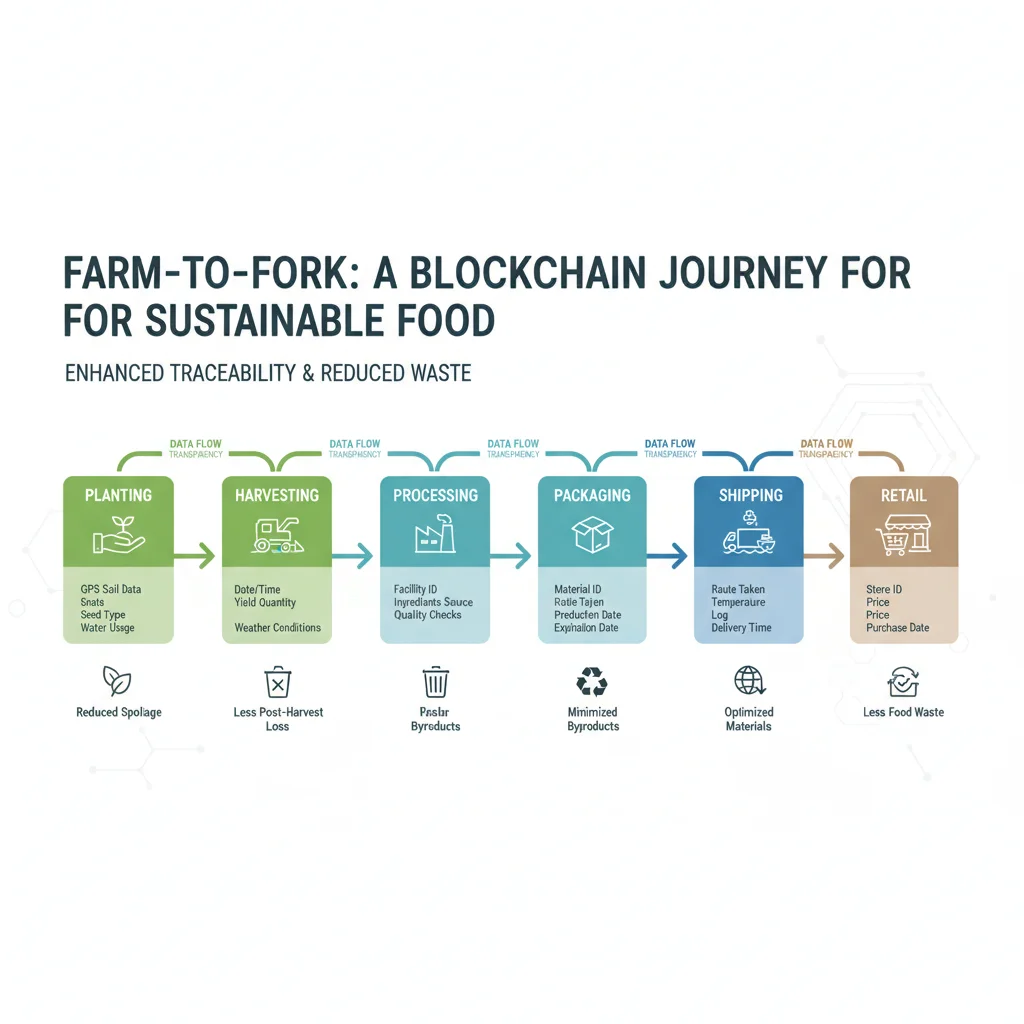
The primary benefit of integrating blockchain into the agri-food sector is the creation of an end-to-end, transparent, and verifiable traceability system. Imagine a scenario where every step of a food product’s journey is recorded on a blockchain:
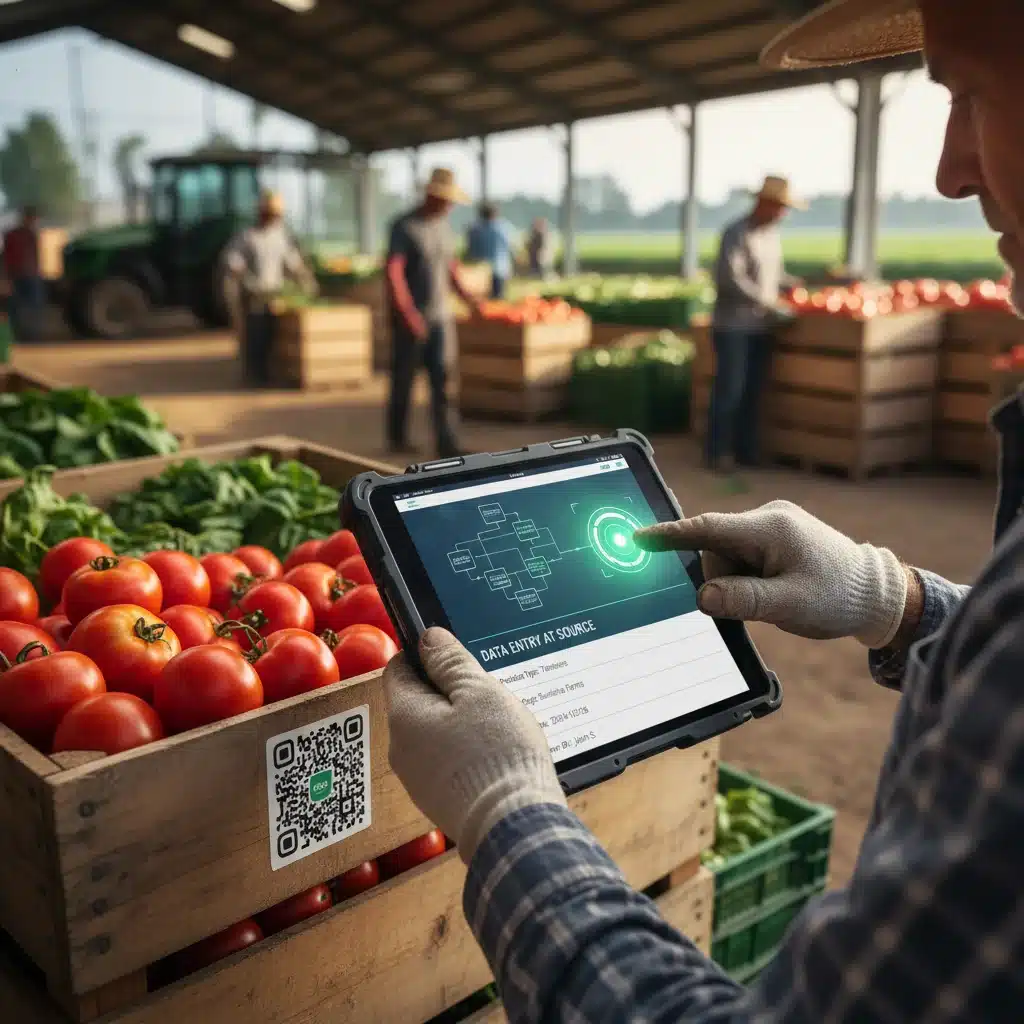
- Farm Level: Data such as planting dates, seed type, fertilizer use, pesticide application, harvest dates, and even environmental conditions (temperature, humidity) can be logged. Each batch of produce can be assigned a unique digital identity.
- Processing and Packaging: As produce moves to processing plants, information about washing, cutting, packaging, and ingredients added (for processed foods) is recorded. This includes details about the origin of each ingredient.
- Transportation: Logistics data, including shipping dates, routes, temperature logs during transit, and delivery times, are added to the blockchain.
- Distribution and Retail: Arrival times at distribution centers and retail stores, storage conditions, and shelf life information become part of the immutable record.
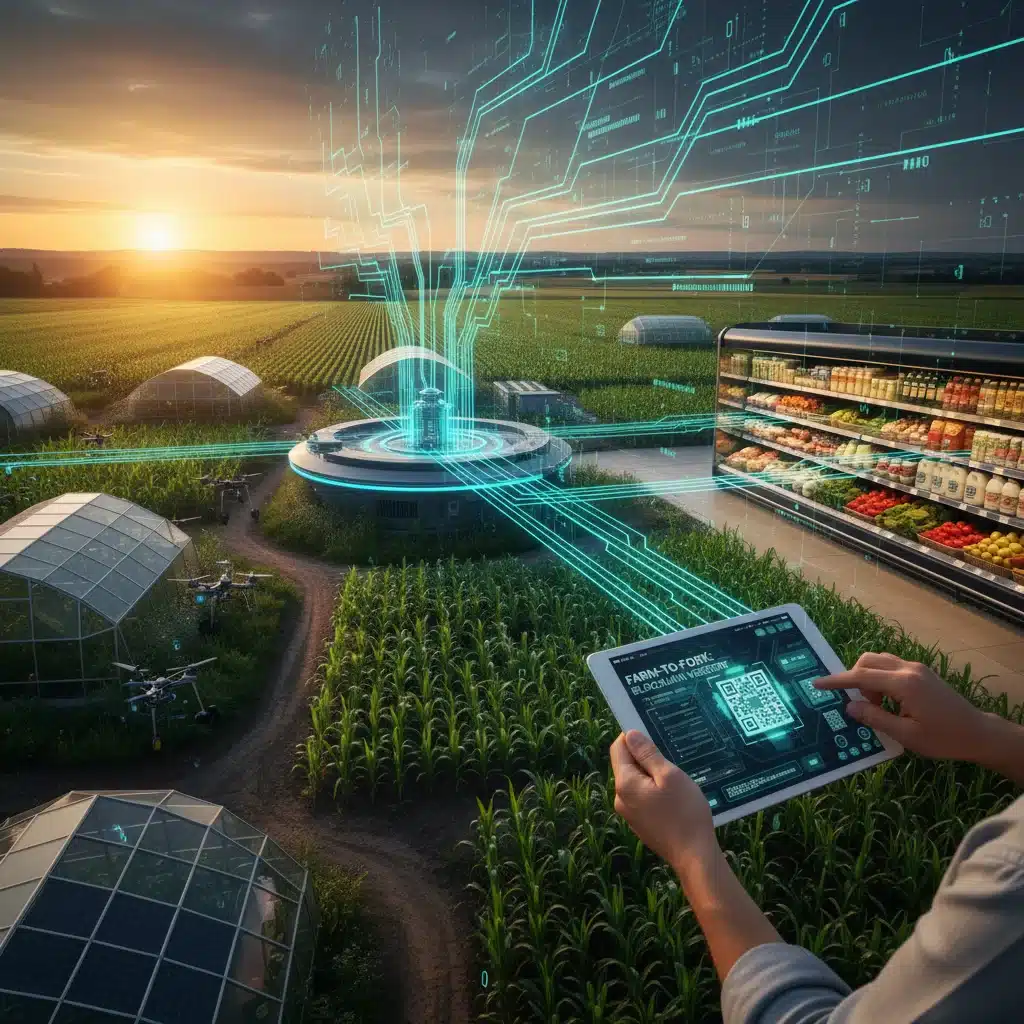
This comprehensive data trail allows any authorized participant – from a regulator to a consumer – to access detailed information about a product with a simple scan of a QR code. This real-time, granular data enhances blockchain agri-food traceability significantly.
Targeting a 10% Reduction in Food Waste Within 3 Years
The ambitious goal of reducing food waste by 10% within three years is entirely achievable with the strategic implementation of blockchain technology. Here’s how blockchain agri-food traceability directly contributes to this objective:
1. Improved Inventory Management and Demand Forecasting
With real-time data on product location, quantity, and freshness, businesses can significantly optimize inventory. Blockchain provides a shared, single source of truth for inventory levels across the entire supply chain. This means:
- Reduced Overstocking: Retailers can order more precisely, avoiding excess inventory that often leads to spoilage.
- Better Allocation: Products nearing their expiration date can be quickly identified and rerouted to outlets where they can be sold or utilized before going to waste (e.g., discounted sales, food banks).
- Enhanced Demand Prediction: By analyzing historical data recorded on the blockchain, supply chain participants can make more accurate predictions about consumer demand, leading to more efficient production and distribution.
2. Faster and More Precise Recalls
One of the largest contributors to food waste is widespread recalls due to contamination. Traditional recall processes are slow and often lead to entire product lines being removed from shelves, even if only a small batch is affected. Blockchain changes this:
- Pinpoint Contamination Sources: In the event of a food safety incident, blockchain’s immutable ledger allows for instantaneous identification of the specific batch, farm, or processing facility involved.
- Targeted Recalls: Instead of recalling all products, only the contaminated batch needs to be removed, significantly reducing waste and economic impact.
- Rapid Response: The speed of identification enables faster removal of unsafe products from the market, protecting consumers and minimizing the duration of potential harm.
3. Optimized Logistics and Cold Chain Management
Maintaining optimal conditions during transport and storage is crucial for perishable goods. Breakdowns in the cold chain are a major cause of spoilage. Blockchain, especially when integrated with IoT sensors, offers a powerful solution:
- Real-time Monitoring: IoT sensors can continuously record temperature, humidity, and other environmental factors, with this data immediately logged onto the blockchain.
- Automated Alerts: If conditions deviate from acceptable parameters, smart contracts can trigger alerts to relevant parties, allowing for immediate corrective action.
- Accountability: The immutable record holds all parties accountable for maintaining proper conditions, incentivizing better practices and reducing negligence-induced spoilage.
4. Enhanced Shelf-Life Management
Precise knowledge of a product’s journey, including harvest dates, processing dates, and transit times, allows for more accurate shelf-life estimations and management. Retailers can implement ‘first-expired, first-out’ (FEFO) strategies with greater confidence, ensuring older products are sold before they spoil. This granular data, enabled by blockchain agri-food traceability, directly combats waste.
5. Empowering Consumers and Reducing Household Waste
While much of the waste occurs upstream, household waste is also significant. Blockchain can empower consumers with information:
- Clearer Expiration Dates: Access to detailed origin and journey data can help consumers understand the true freshness of products, rather than relying solely on often conservative ‘best by’ dates.
- Informed Purchasing Decisions: Consumers can make more informed choices about what to buy and how much, potentially reducing over-purchasing and subsequent waste.
Key Benefits Beyond Waste Reduction
While waste reduction is a critical outcome, the implementation of blockchain agri-food traceability brings a host of other significant advantages:
1. Increased Food Safety and Consumer Trust
Knowing the complete history of a product, from farm to table, builds immense consumer confidence. The immutable nature of blockchain records means that consumers can trust the information they receive, leading to greater peace of mind regarding food safety and authenticity.
2. Improved Supply Chain Efficiency and Cost Savings
By streamlining data flow and automating processes through smart contracts, blockchain can reduce administrative overheads, improve operational efficiency, and lower overall supply chain costs. Faster dispute resolution and reduced fraud also contribute to savings.
3. Enhanced Brand Reputation and Market Access
Companies that adopt blockchain for transparency and sustainability can differentiate themselves in the market, building a stronger brand reputation among increasingly conscious consumers. This can also open doors to premium markets that value certified ethical and sustainable practices.
4. Fairer Practices for Farmers
Blockchain can create more transparent payment systems, ensuring that farmers receive fair compensation for their produce. Smart contracts can automatically execute payments upon delivery and verification, reducing delays and potential exploitation.
5. Regulatory Compliance and Certification
Meeting complex regulatory requirements and obtaining certifications (e.g., organic, fair trade) often involves extensive paperwork and audits. Blockchain can automate much of this process by providing an easily auditable, tamper-proof record of compliance, simplifying audits and reducing administrative burdens.
Implementation Challenges and Considerations
While the benefits are compelling, deploying blockchain agri-food traceability is not without its challenges:
- Interoperability: Ensuring different blockchain platforms and existing legacy systems can communicate effectively is crucial.
- Scalability: The agri-food sector generates vast amounts of data. Blockchain solutions must be able to handle this volume without compromising speed or efficiency.
- Cost of Implementation: Initial investment in technology, infrastructure, and training can be substantial, particularly for smaller players in the supply chain.
- Data Standardization: Agreement on common data standards and protocols across diverse stakeholders is essential for consistent and meaningful data entry.
- Participation and Adoption: The success of a blockchain network depends on widespread participation from all supply chain actors. Incentivizing adoption and overcoming resistance to change are key.
- Privacy Concerns: While transparency is a benefit, businesses also need to protect proprietary information. Private or permissioned blockchains can address this by controlling who has access to what data.
Real-World Examples and Future Outlook
Several pioneering companies and consortia are already demonstrating the power of blockchain agri-food traceability:
- IBM Food Trust: One of the most prominent examples, connecting growers, processors, wholesalers, distributors, and retailers through a permissioned blockchain network. Participants report significantly reduced time to trace food products from weeks to seconds.
- Walmart: Famously used IBM Food Trust to trace mangoes from farm to store in seconds, drastically improving food safety response times.
- Nestlé: Piloting blockchain for various products, including baby food and coffee, to provide consumers with greater transparency.
- Carrefour: Utilizing blockchain to track chicken, oranges, and other products, offering customers verified information on their origin and journey.
These early successes indicate a strong future for blockchain in the agri-food sector. Over the next three years, as technology matures, costs decrease, and industry standards emerge, we can expect to see wider adoption. The goal of a 10% reduction in food waste is not just aspirational but a tangible, measurable outcome that blockchain is uniquely positioned to deliver.
Strategies for Achieving a 10% Waste Reduction Goal
To meet the ambitious target of reducing food waste by 10% within three years using blockchain agri-food traceability, a multi-faceted approach is required:
- Pilot Programs and Phased Rollouts: Start with specific product lines or regions to test and refine blockchain solutions before scaling up. This allows for learning and adaptation.
- Stakeholder Collaboration: Foster strong partnerships among all participants in the supply chain – from farmers to consumers, including technology providers and logistics companies. Shared commitment is vital.
- Investment in IoT and AI Integration: Combine blockchain with Internet of Things (IoT) sensors for real-time data collection (e.g., temperature, humidity) and Artificial Intelligence (AI) for predictive analytics (e.g., demand forecasting, shelf-life prediction). This creates a powerful data ecosystem.
- Standardization of Data Inputs: Develop and adopt common data standards and protocols to ensure consistency and interoperability across different systems and participants.
- Education and Training: Provide comprehensive training to all users, from farm workers entering data to retailers interpreting analytics, to ensure effective utilization of the blockchain platform.
- Regulatory Support and Incentives: Governments and regulatory bodies can play a crucial role by supporting blockchain initiatives, perhaps through subsidies or by integrating blockchain data into compliance frameworks.
- Focus on High-Waste Areas: Prioritize implementing blockchain in segments of the supply chain or for products known to have high levels of waste (e.g., highly perishable goods, complex logistics).
By systematically addressing these areas, the agri-food industry can harness the full potential of blockchain to not only achieve but potentially exceed the 10% waste reduction target, paving the way for a more sustainable and resilient food system.
Conclusion: A More Transparent, Efficient, and Sustainable Food Future
The integration of blockchain technology into agri-food supply chains represents a paradigm shift. It moves us away from opaque, fragmented systems towards a future defined by unparalleled transparency, efficiency, and trust. By enabling granular, real-time blockchain agri-food traceability, the industry gains the tools necessary to combat food waste effectively. The goal of reducing food waste by 10% within three years is ambitious but entirely within reach, driven by the data integrity, automation, and accountability that blockchain provides.
Beyond waste reduction, blockchain fosters greater food safety, bolsters consumer confidence, empowers producers, and creates more resilient supply chains capable of adapting to future challenges. As more stakeholders recognize these profound benefits, the adoption of blockchain in agri-food will accelerate, leading to a more sustainable, equitable, and secure global food system for generations to come. The journey towards a fully transparent and waste-efficient agri-food sector has begun, and blockchain is undeniably leading the way.