Augmented Reality for Farm Maintenance: Boost Equipment Uptime by 10%
Augmented Reality for Farm Maintenance: Improving Equipment Uptime by 10% in the Next 12 Months
The agricultural landscape is undergoing a profound transformation, driven by technological innovations aimed at enhancing efficiency, productivity, and sustainability. Among these advancements, Augmented Reality (AR) in farm maintenance stands out as a game-changer, poised to revolutionize how farmers and technicians approach equipment care. In an industry where machinery downtime can lead to significant financial losses and missed operational windows, the promise of AR to improve equipment uptime by a tangible 10% within the next 12 months is not just ambitious; it’s increasingly attainable.
Modern farming relies heavily on sophisticated machinery, from tractors and combines to irrigation systems and drones. The complexity of these machines means that maintenance and repair are no longer simple tasks. They require specialized knowledge, often leading to delays while waiting for expert technicians or searching through cumbersome manuals. This is where AR steps in, offering a powerful visual and interactive solution that brings expert knowledge directly to the point of need.
This comprehensive guide will delve into the multifaceted ways AR is impacting farm maintenance, exploring its mechanisms, benefits, challenges, and future potential. We will specifically focus on how implementing AR solutions can realistically lead to a 10% increase in equipment uptime, a critical metric for any agricultural operation aiming for sustained growth and profitability.
The Critical Need for Enhanced Farm Equipment Uptime
Before diving into AR, it’s crucial to understand why equipment uptime is such a pivotal factor in agriculture. Farming is inherently time-sensitive. Planting, harvesting, and other seasonal tasks operate within narrow windows dictated by weather, crop cycles, and market demands. A breakdown during these critical periods can have cascading negative effects:
- Financial Losses: Delayed planting can reduce yields, while harvesting delays can lead to crop spoilage or lower quality. Every hour of downtime for a critical piece of machinery can translate into thousands of dollars in lost revenue.
- Operational Inefficiency: Downtime disrupts carefully planned schedules, forcing farmers to reallocate resources, work longer hours, or even hire additional equipment, all of which incur extra costs and stress.
- Increased Repair Costs: Emergency repairs often come with higher labor rates and expedited parts shipping, further eating into profits.
- Reduced Productivity: A single malfunctioning machine can slow down an entire operation, affecting the overall productivity of the farm.
Traditional maintenance approaches, relying on paper manuals, phone calls, or waiting for an on-site expert, are often too slow and inefficient for the demands of modern agriculture. This inefficiency highlights a significant gap that AR farm maintenance technologies are uniquely positioned to fill.
What is Augmented Reality and How Does it Apply to Farm Maintenance?
Augmented Reality (AR) superimposes computer-generated images and information onto a user’s view of the real world, typically through smart glasses, tablets, or smartphones. Unlike Virtual Reality (VR), which creates an entirely immersive digital environment, AR enhances the real world with digital content, allowing users to interact with both simultaneously.
In the context of farm maintenance, AR provides a powerful toolkit:
- Interactive Overlays: AR devices can overlay digital information directly onto physical components of machinery. This could include schematics, real-time sensor data, step-by-step repair instructions, or safety warnings.
- Remote Expert Guidance: A remote expert can see exactly what an on-site technician or farmer sees through the AR device’s camera. The expert can then draw, point, or place digital annotations in the user’s field of view, guiding them through complex procedures in real time.
- 3D Model Visualization: AR can project 3D models of parts or entire assemblies onto the real machine, helping with identification, assembly, or understanding complex internal structures.
- Training and Simulation: AR offers immersive, hands-on training experiences without needing to dismantle actual machinery, allowing farmers and technicians to practice repairs and diagnostics in a safe, controlled environment.
The core value proposition of AR farm maintenance is its ability to democratize expertise, making complex information accessible and actionable for anyone on the farm, regardless of their prior experience with a specific piece of equipment.
Key Ways AR Boosts Equipment Uptime by 10%
Achieving a 10% increase in equipment uptime requires a multi-pronged approach, and AR contributes significantly to several critical areas:
1. Faster and More Accurate Diagnostics
One of the biggest time sinks in maintenance is correctly identifying the problem. AR streamlines this process significantly:
- Real-time Data Visualization: AR headsets can display live sensor data (temperature, pressure, vibration, fluid levels) directly on the machine’s components. This instant feedback helps technicians quickly pinpoint anomalies.
- Guided Troubleshooting: AR applications can provide interactive troubleshooting trees. As a technician inspects a component, the AR system can prompt them with questions or direct them to check specific areas based on symptoms.
- Component Identification: For complex engines or hydraulic systems, AR can identify individual parts, display their specifications, and highlight their function, preventing errors and speeding up part ordering.
By shortening the diagnostic phase, machines spend less time idle, directly contributing to higher uptime.
2. Empowering On-Site Personnel with Remote Expert Assistance
The ability to connect with an off-site expert in real-time is perhaps the most impactful feature of AR farm maintenance for improving uptime. Instead of waiting hours or days for a specialist to travel to the farm, an on-site worker can:
- Share Their View: Through an AR headset or tablet, the local worker can share their exact field of vision with a remote expert.
- Receive Visual Guidance: The expert can then overlay digital instructions, arrows, circles, or text onto the shared view, guiding the local worker step-by-step through a repair or inspection. This eliminates miscommunication and ensures accuracy.
- Access to Knowledge Base: The remote expert can also push relevant documents, videos, or schematics directly into the local worker’s AR display.
This capability dramatically reduces Mean Time To Repair (MTTR), transforming a multi-day waiting period into a potentially hour-long guided fix. This immediate access to expertise is a cornerstone for the 10% uptime improvement.
3. Interactive and Self-Guided Repair Procedures
Even without direct remote assistance, AR can guide farmers and technicians through repairs independently:
- Step-by-Step Instructions: Digital work instructions, complete with animations and 3D models, can be overlaid directly onto the machine. This ensures correct procedure adherence, even for less familiar tasks.
- Error Prevention: AR systems can be programmed to detect if a step is skipped or performed incorrectly, alerting the user and preventing further damage or rework.
- Tool and Part Identification: AR can highlight the correct tool for a specific step or identify the exact replacement part needed, reducing search time and errors.
This self-service capability empowers farm personnel to perform more complex maintenance tasks, reducing reliance on external technicians and improving the speed of repairs.
4. Enhanced Training and Skill Development
A well-trained workforce is less prone to errors and more efficient at maintenance. AR offers unparalleled training opportunities:
- Realistic Simulations: Trainees can practice complex repairs on virtual models of machinery, gaining hands-on experience without risking damage to actual equipment.
- On-the-Job Learning: AR can provide contextual learning, offering information or guidance as a worker performs a task, reinforcing knowledge in real-time.
- Standardized Procedures: AR ensures that all personnel are trained on and follow the same best practices, reducing variability in maintenance quality.
By elevating the skill level of the entire farm team, AR directly contributes to fewer breakdowns, faster fixes, and ultimately, higher equipment uptime. This proactive approach to skill development is vital for achieving sustainable improvements in maintenance efficiency.
5. Facilitating Predictive and Proactive Maintenance
While AR excels at reactive repairs, its integration with IoT sensors and predictive analytics takes AR farm maintenance to the next level of proactive care:
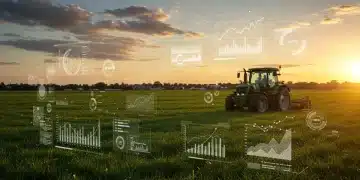
- Visualizing Sensor Data: AR can display real-time performance data from IoT sensors (e.g., engine temperature, fuel consumption, vibration levels) directly on the machine. This allows technicians to visualize potential issues before they escalate.
- Pre-emptive Action: If predictive analytics indicate a component is likely to fail, AR can guide a technician through a pre-emptive inspection or replacement, preventing unexpected downtime.
- Optimized Maintenance Schedules: By understanding the real-time health of equipment, AR can help optimize maintenance schedules, ensuring that servicing occurs exactly when needed, not too early (wasting resources) or too late (risking breakdown).
Moving from reactive to proactive maintenance is a significant step towards achieving and exceeding the 10% uptime goal. AR provides the visual interface to make predictive insights actionable.
Implementing AR in Your Farm Maintenance Strategy: A Roadmap to 10% Uptime
Achieving a 10% increase in equipment uptime with AR isn’t magic; it requires a strategic implementation plan. Here’s a roadmap:
Step 1: Identify Critical Equipment and Pain Points
Start by analyzing your maintenance records. Which machines experience the most downtime? What are the most common causes of breakdowns? Are there specific repairs that consistently require external expertise or take too long? Focusing AR implementation on these high-impact areas will yield the quickest and most significant returns.
Step 2: Pilot Program with Key Stakeholders
Begin with a small-scale pilot project. Select a few pieces of critical equipment and a dedicated team of farmers or technicians. Provide them with AR devices (e.g., smart glasses, rugged tablets) and train them on the basic functionalities. Gather feedback rigorously, understanding what works well and what needs improvement in your specific operational context.
Step 3: Content Creation and Digitalization
AR systems are only as good as the content they display. This involves:
- Digitalizing Manuals: Convert existing paper manuals, schematics, and repair guides into digital, AR-compatible formats.
- Creating 3D Models: Develop 3D models of key components or entire machines for interactive overlays and training.
- Developing Step-by-Step Workflows: Create guided workflows for common diagnostic and repair tasks, complete with visual cues and instructions.
- Integrating with Existing Systems: Connect AR platforms with your existing Enterprise Asset Management (EAM) or Computerized Maintenance Management System (CMMS) for seamless data flow.
Step 4: Training and Adoption
Successful AR adoption hinges on user acceptance. Provide comprehensive training that goes beyond just operating the device. Focus on how AR solves their specific problems and makes their jobs easier. Emphasize the benefits, such as reduced frustration, quicker fixes, and enhanced safety. Foster an environment where users feel comfortable experimenting and providing feedback.
Step 5: Measure and Iterate
Establishing clear metrics is crucial for tracking progress towards the 10% uptime goal. Monitor:
- Mean Time To Repair (MTTR): How quickly are issues being resolved with AR?
- First-Time Fix Rate: Are technicians able to fix problems correctly on the first attempt more often?
- Downtime Hours: Track the total hours of equipment downtime before and after AR implementation.
- Remote Assistance Usage: How often is remote expertise being leveraged?
- Training Effectiveness: Are AR-trained personnel performing better?
Use this data to refine your AR content, improve training, and expand the implementation to more equipment and personnel. Continuous iteration is key to maximizing the benefits of AR farm maintenance.
Overcoming Challenges in AR Implementation
While the benefits are clear, implementing AR isn’t without its challenges:
- Cost of Hardware and Software: Initial investment in AR headsets, software licenses, and content creation can be significant. However, the ROI from increased uptime often quickly justifies these costs.
- Connectivity in Rural Areas: Reliable internet access is crucial for remote assistance and cloud-based AR applications. This can be a hurdle in some rural farming areas, requiring solutions like edge computing or offline capabilities.
- Data Security and Privacy: Ensuring the security of operational data and protecting intellectual property when sharing information via AR platforms is paramount.
- User Acceptance and Training: Overcoming initial skepticism and ensuring adequate training for a diverse workforce is vital for successful adoption.
- Content Creation: Developing high-quality 3D models, digital overlays, and guided workflows can be time-consuming and requires specialized skills.
Addressing these challenges proactively through careful planning, vendor selection, and robust training programs will pave the way for a smooth and successful AR integration.
The Future of Farm Maintenance with AR
The journey of AR farm maintenance is just beginning. As the technology matures, we can expect even more sophisticated applications:
- AI-Powered Diagnostics: AR systems will increasingly integrate with AI to offer truly predictive diagnostics, identifying potential issues with even greater accuracy before they occur.
- Autonomous Maintenance: Imagine machines diagnosing and even performing minor self-repairs with AR guidance, further reducing human intervention.
- Enhanced Human-Robot Collaboration: AR could enable seamless collaboration between human technicians and robotic assistants, with AR providing visual cues and instructions to both.
- Hyper-Realistic Training Environments: Future AR training will offer even more immersive and personalized experiences, adapting to individual learning styles and skill levels.
These advancements promise to push equipment uptime well beyond the initial 10% gain, establishing a new paradigm for agricultural productivity and efficiency.
Conclusion: A Smarter, More Productive Farm with AR
The agricultural sector stands at the cusp of a technological revolution, and Augmented Reality for farm maintenance is a leading force in this change. By providing immediate access to expert knowledge, streamlining diagnostic processes, and empowering on-site personnel with interactive guidance, AR is not just improving maintenance; it’s transforming it.
The goal of increasing equipment uptime by 10% within the next 12 months is an achievable and conservative estimate of the potential impact. For farms that embrace AR, this means fewer costly breakdowns, faster repairs, more efficient operations, and ultimately, greater profitability and sustainability. As the technology becomes more accessible and robust, AR will undoubtedly become an indispensable tool in the modern farmer’s arsenal, ensuring that vital machinery remains operational when it matters most.
Investing in AR is an investment in the future resilience and productivity of your farm. It’s about working smarter, not just harder, and harnessing the power of digital innovation to cultivate success.