Precision Irrigation: AI-Driven Water Savings in Agriculture
The Future of Farming: Achieving 25% Water Savings with AI Precision Irrigation
In an era defined by increasing global population, climate change, and dwindling natural resources, the agricultural sector faces unprecedented challenges. Among these, water scarcity stands out as a critical concern, with agriculture accounting for approximately 70% of global freshwater withdrawals. The traditional methods of irrigation, often characterized by their inefficiency, are no longer sustainable. This is where the revolutionary concept of AI Precision Irrigation steps in, promising a paradigm shift in how we manage water in farming. By 2026, experts predict that the widespread adoption of AI-driven sensor networks will enable farmers to achieve an astounding 25% water savings, fundamentally transforming the landscape of sustainable agriculture.
This comprehensive guide delves into the intricate world of AI-powered irrigation, exploring its underlying technologies, benefits, implementation challenges, and the profound impact it will have on food security and environmental conservation. We will uncover how artificial intelligence, combined with sophisticated sensor networks, is not just optimizing water use but also enhancing crop yields, reducing operational costs, and fostering a more resilient agricultural ecosystem.
The Urgent Need for Precision Irrigation
The conventional irrigation practices prevalent across much of the globe are notoriously wasteful. Flood irrigation, furrow irrigation, and even some sprinkler systems often lead to significant water loss through evaporation, runoff, and deep percolation beyond the root zone. This inefficiency not only depletes precious freshwater reserves but also contributes to soil degradation, nutrient leaching, and increased energy consumption for pumping water. The consequences are dire: reduced crop productivity, increased operational expenses for farmers, and exacerbation of water stress in already vulnerable regions.
Climate change further complicates this picture, bringing unpredictable weather patterns, prolonged droughts, and intensified heatwaves. Farmers are increasingly struggling to make informed decisions about when and how much to irrigate, often relying on historical data, visual inspections, or fixed schedules that fail to account for real-time environmental variations. The need for a more intelligent, adaptive, and precise approach to water management in agriculture has never been more critical. This is precisely the void that AI Precision Irrigation aims to fill, offering a data-driven solution to a complex, multifaceted problem.
What is AI Precision Irrigation? Unpacking the Technology
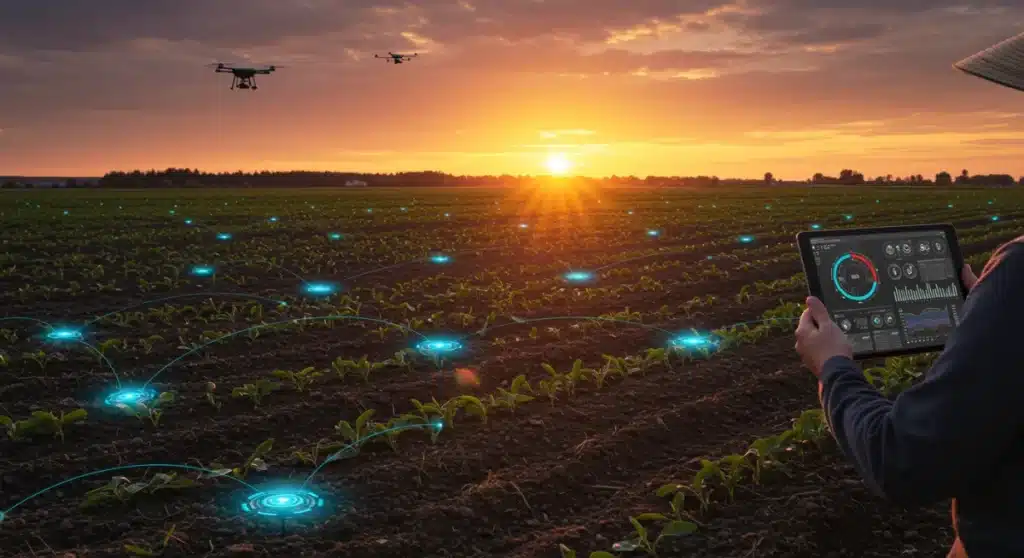
At its core, AI Precision Irrigation is an advanced water management system that utilizes artificial intelligence algorithms to analyze data collected from a network of sensors, weather forecasts, and other relevant sources. This analysis allows for highly localized and dynamic irrigation scheduling, ensuring that crops receive the optimal amount of water precisely when and where they need it. It moves beyond generalized watering schedules to a granular, plant-specific approach.
The Pillars of AI Precision Irrigation:
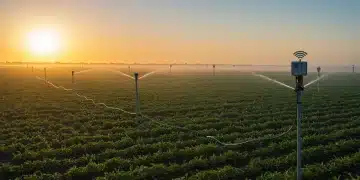
- Sensor Networks: These are the eyes and ears of the system. A variety of sensors are deployed across the farm, collecting real-time data on critical parameters.
- Data Collection and Transmission: Sensors continuously gather data and transmit it wirelessly (e.g., via LoRaWAN, cellular, or satellite networks) to a central platform.
- Artificial Intelligence and Machine Learning: This is the brain of the operation. AI algorithms process the vast amounts of incoming data, identify patterns, predict future needs, and make intelligent irrigation decisions.
- Actuation Systems: Smart irrigation controllers and automated valves receive commands from the AI system to precisely deliver water to specific zones or individual plants.
Key Sensor Technologies:
The effectiveness of AI Precision Irrigation hinges on the quality and variety of data collected by sensors. Here are some of the most crucial types:
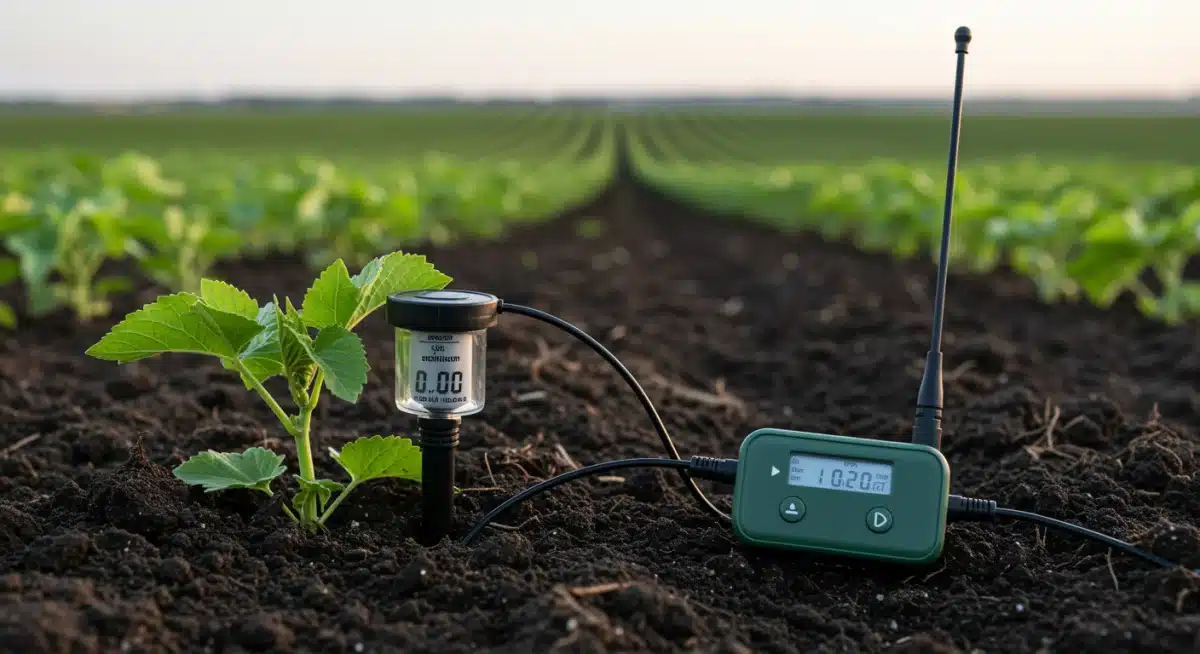
- Soil Moisture Sensors: These are fundamental, measuring the volumetric water content in the soil at various depths. Common types include TDR (Time Domain Reflectometry), FDR (Frequency Domain Reflectometry), and capacitance sensors. They provide direct insight into how much water is available to plant roots.
- Weather Stations: On-site weather stations provide real-time data on air temperature, humidity, wind speed and direction, solar radiation, and rainfall. This information is crucial for calculating evapotranspiration (ET), which is the amount of water lost from the soil and plants to the atmosphere.
- Plant-Based Sensors: Emerging technologies include dendrometers (measuring stem diameter changes as an indicator of plant water stress), sap flow sensors, and thermal cameras (detecting plant canopy temperature, which correlates with water stress).
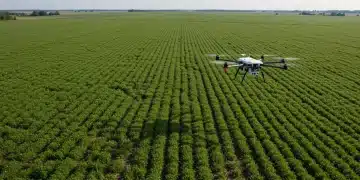
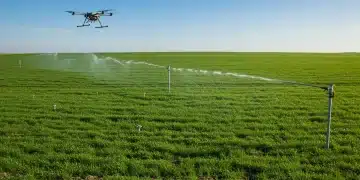
- Remote Sensing (Satellite & Drone Imagery): Satellites and drones equipped with multispectral or hyperspectral cameras can capture images of vast agricultural areas. These images are processed to generate vegetation indices (e.g., NDVI, NDRE), which provide insights into plant health, growth, and stress levels across the field.
- pH and EC Sensors: These measure soil pH and electrical conductivity, providing insights into nutrient availability and salinity, which can indirectly affect water uptake.
How AI Enhances Irrigation Decisions
The true power of AI Precision Irrigation lies in its ability to synthesize and interpret complex data far beyond human capabilities. Here’s how AI algorithms make irrigation smarter:
- Predictive Analytics: AI models analyze historical weather data, current forecasts, soil moisture trends, and crop growth stages to predict future water needs. This allows for proactive irrigation scheduling, preventing water stress before it occurs.
- Pattern Recognition: AI identifies subtle patterns in sensor data that might indicate specific plant needs or anomalies. For example, a sudden drop in soil moisture coupled with high evapotranspiration rates would trigger an immediate irrigation recommendation.
- Dynamic Scheduling: Unlike fixed schedules, AI systems continuously adjust irrigation timing and volume based on real-time conditions. If it rains unexpectedly, the system pauses or reduces scheduled irrigation. If a specific zone experiences higher evaporation due to wind, it can increase water delivery to that area.
- Optimization: AI algorithms can optimize water distribution across different zones or crop types, considering factors like soil type variability, topography, and the specific water requirements of each crop variety. This ensures each plant receives exactly what it needs, minimizing waste.
- Learning and Adaptation: Machine learning models continuously learn from new data, improving their accuracy and decision-making over time. The system adapts to changing environmental conditions, crop growth cycles, and even learns from the outcomes of previous irrigation events.
The Promise of 25% Water Savings and Beyond
The projected 25% water savings by 2026 through AI Precision Irrigation is not merely an optimistic forecast; it’s a conservative estimate based on current advancements and pilot programs. Many early adopters have already reported even higher savings. These savings are achieved through several mechanisms:
- Eliminating Over-irrigation: By providing water only when and where it’s needed, AI systems prevent the common practice of over-watering, which leads to runoff and deep percolation.
- Reducing Evaporation and Runoff: Optimized timing (e.g., irrigating during cooler parts of the day) and precise application methods significantly reduce water loss due to evaporation and surface runoff.
- Targeted Application: The ability to irrigate specific zones or even individual plants means water is not wasted on areas that don’t need it or on weeds.
- Improved Water Use Efficiency (WUE): When plants receive optimal water, they are healthier and more efficient at converting water into biomass, leading to higher yields per unit of water consumed.
Beyond direct water savings, the benefits of AI Precision Irrigation ripple across the entire agricultural operation:
- Increased Crop Yields and Quality: Consistently optimal water availability reduces plant stress, leading to healthier growth, higher yields, and improved crop quality.
- Reduced Input Costs: Less water used means lower pumping costs (energy). Furthermore, reduced runoff and leaching mean fewer nutrients are washed away, potentially lowering fertilizer expenses.
- Environmental Sustainability: Conserving water, reducing chemical runoff, and minimizing energy consumption contribute significantly to environmental protection and soil health.
- Disease and Pest Reduction: Preventing over-watering can reduce conditions favorable for certain fungal diseases and pests.
- Enhanced Farm Management: Farmers gain unprecedented insights into their fields, allowing for better decision-making and more proactive management.
Implementing AI Precision Irrigation: Challenges and Solutions
While the benefits are clear, the widespread adoption of AI Precision Irrigation is not without its hurdles. Farmers face several challenges in integrating these advanced systems into their operations:
Initial Investment Costs:
The upfront cost of purchasing and installing sensors, communication infrastructure, AI software, and automated irrigation equipment can be substantial. This is often a significant barrier for small and medium-sized farms.
- Solutions: Government subsidies, grants, and low-interest loans specifically for smart agriculture technologies can help offset initial costs. Lease-to-own options and ‘as-a-service’ models (where the technology provider manages the system for a fee) are also emerging.
Technical Complexity and Data Literacy:
Operating and understanding sophisticated AI systems requires a certain level of technical proficiency and data literacy, which may be new to many farmers.
- Solutions: User-friendly interfaces, comprehensive training programs, and ongoing technical support from technology providers are crucial. Educational initiatives by agricultural extension services can also play a vital role in upskilling farmers.
Connectivity and Infrastructure:
Reliable internet connectivity, especially in remote rural areas, is essential for transmitting sensor data to cloud-based AI platforms. Lack of robust infrastructure can hinder implementation.
- Solutions: Advancements in low-power wide-area networks (LPWAN) like LoRaWAN, cellular IoT, and satellite internet are expanding connectivity options. Public-private partnerships to improve rural broadband infrastructure are also key.
Data Security and Privacy:
Farmers are increasingly concerned about the security of their data and who owns it. Ensuring data privacy and preventing unauthorized access is paramount.
- Solutions: Robust cybersecurity measures, clear data ownership policies, and transparent agreements with technology providers are necessary to build trust. Industry standards for data handling can also help.
Integration with Existing Systems:
Many farms already have existing irrigation infrastructure. Integrating new AI systems seamlessly with older equipment can be challenging.
- Solutions: Developing open standards and interoperable platforms can facilitate easier integration. Modular systems that can be added incrementally to existing setups also offer flexibility.
Case Studies and Real-World Impact
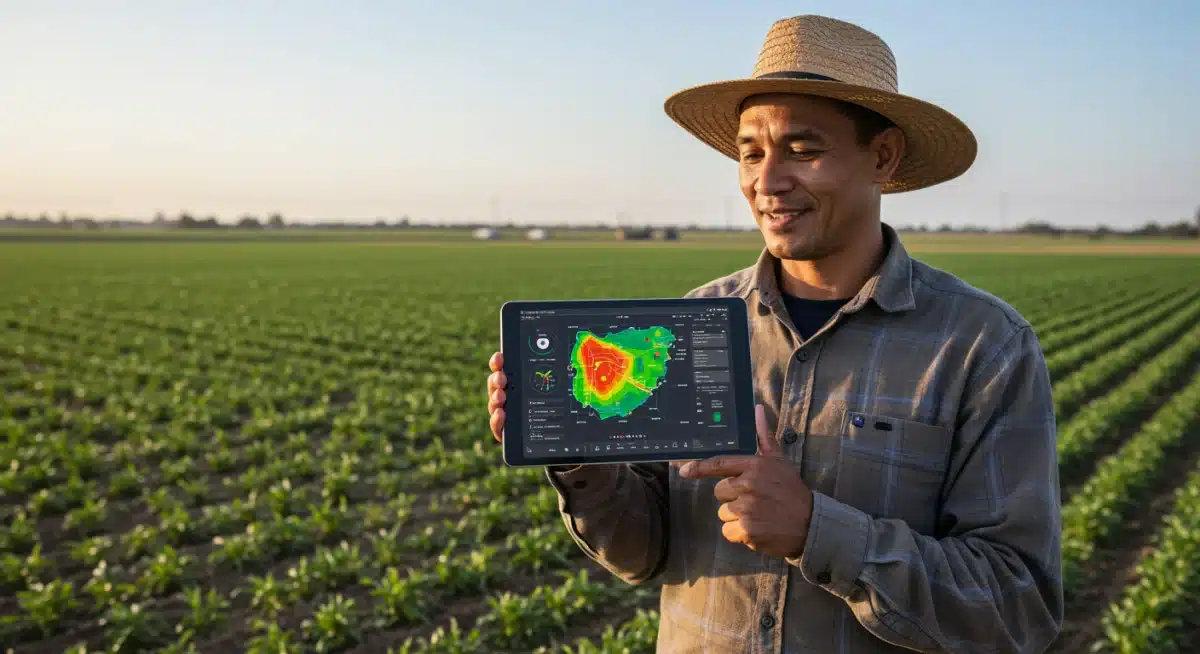
The theoretical benefits of AI Precision Irrigation are already being validated by numerous real-world applications across the globe. From large-scale industrial farms to smaller family-owned operations, the impact is tangible:
- California Almond Orchards: In drought-prone California, almond growers are deploying AI-driven systems that combine soil moisture sensors, weather data, and plant stress indicators. One farm reported a 20-25% reduction in water usage while maintaining or even increasing yield, primarily by avoiding over-irrigation during critical growth stages.
- Australian Wheat Farms: Farmers in arid regions of Australia are using satellite imagery and AI to create highly detailed irrigation zones within their vast wheat fields. This allows them to apply water precisely where it’s needed, optimizing yield in areas that previously received uniform, often insufficient, or excessive, watering. Water savings of up to 30% have been observed in some trials.
- Spanish Vegetable Growers: Greenhouse vegetable producers in Spain are utilizing AI to manage drip irrigation systems. By monitoring plant transpiration rates and nutrient uptake in real-time, the AI system dynamically adjusts nutrient-rich water delivery, leading to significant water savings and a reduction in fertilizer runoff, alongside improved produce quality.
- Israeli Vineyards: Advanced sensor networks in Israeli vineyards are helping vintners optimize water stress for specific grape varietals, a crucial factor in wine quality. The AI analyzes microclimates and plant physiological data to deliver ‘just-in-time’ irrigation, resulting in both water efficiency and superior grape characteristics.
These examples underscore the versatility and effectiveness of AI Precision Irrigation across diverse crops, climates, and farming scales. The common thread is the ability of AI to provide actionable insights that empower farmers to make more efficient and sustainable water management decisions.
The Road Ahead: Innovations and Future Outlook for AI Precision Irrigation
The field of AI Precision Irrigation is rapidly evolving, with continuous innovations pushing the boundaries of what’s possible. The future promises even greater efficiencies and integration:
- Hyper-localization: Future systems will likely move towards even more granular control, potentially irrigating individual plants based on their unique needs, using robotic platforms or micro-drones for targeted delivery.
- Integration with Robotics and Automation: Expect to see AI irrigation systems seamlessly integrated with autonomous farm machinery, such as robotic planters and harvesters, creating fully automated and optimized farming ecosystems.
- Advanced Predictive Modeling: AI models will become even more sophisticated, incorporating a wider array of environmental data, genetic information of crops, and even market demand to optimize not just water use but overall farm profitability and sustainability.
- Edge Computing: Processing data closer to the source (on the farm, rather than solely in the cloud) will reduce latency and improve the responsiveness of irrigation systems, especially in areas with limited connectivity.
- Blockchain for Data Integrity: Blockchain technology could be used to ensure the integrity and transparency of agricultural data, building trust among stakeholders regarding sustainable practices and water usage claims.
- AI-driven Disease and Pest Management Integration: As AI systems become more comprehensive, they will integrate irrigation decisions with pest and disease management strategies, using water application as a tool to mitigate biological threats.
By 2026, the goal of 25% water savings through AI Precision Irrigation is not just achievable but likely to be surpassed as these technologies mature and become more accessible. This adoption will be critical in securing global food supplies, mitigating the effects of climate change, and ensuring the long-term viability of agriculture.
Conclusion: A Sustainable Revolution in Agriculture
The transition to AI Precision Irrigation represents more than just a technological upgrade; it’s a fundamental shift towards a more sustainable, efficient, and resilient agricultural future. By harnessing the power of artificial intelligence and sophisticated sensor networks, farmers are no longer bound by guesswork or inefficient traditional methods. Instead, they are empowered with real-time data and intelligent recommendations, enabling them to make precise irrigation decisions that conserve water, enhance crop health, and boost productivity.
The journey towards widespread adoption involves addressing challenges related to cost, technical literacy, and infrastructure. However, with ongoing innovation, supportive policies, and collaborative efforts, these hurdles are surmountable. The promise of 25% water savings by 2026 is a powerful testament to the transformative potential of AI Precision Irrigation. It signifies a future where agriculture can meet the demands of a growing population without compromising our planet’s most vital resource. Embracing this technology is not just an option; it’s an imperative for the future of food and the health of our environment.