AI Crop Monitoring: 10% Yield Boost by 2025
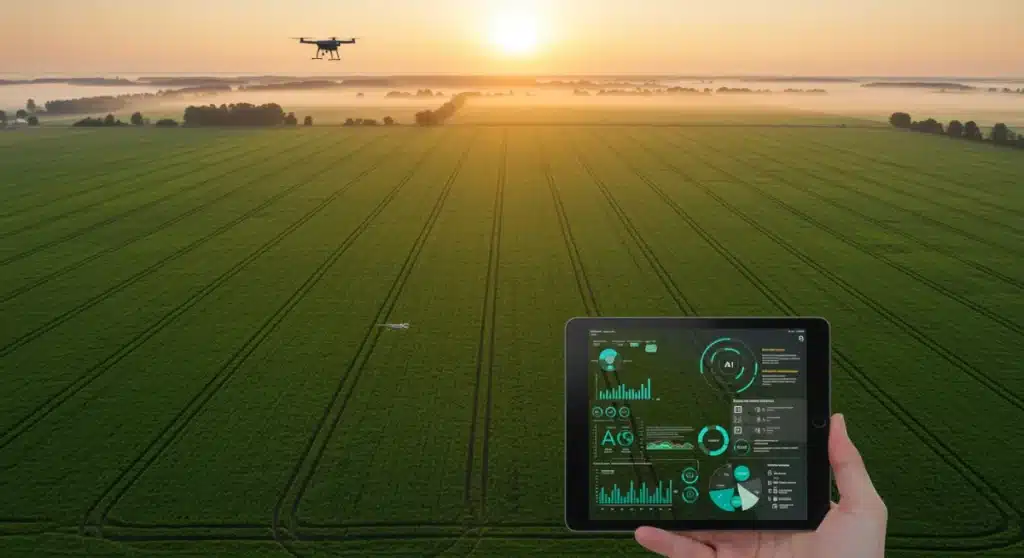
Implementing AI-powered crop monitoring offers a direct path to achieving a 10% yield increase by mid-2025 through optimized resource management and proactive problem detection in agriculture.
The agricultural landscape is undergoing a profound transformation, with technology at its core. Implementing AI-powered crop monitoring is no longer a futuristic concept but a tangible strategy for farmers aiming to significantly boost productivity and ensure sustainability. This approach promises not just incremental gains but a targeted 10% yield increase by mid-2025, representing a crucial competitive edge.
The foundation of AI-powered crop monitoring
AI-powered crop monitoring represents a pivotal shift from traditional farming methods to data-driven agriculture. This technology integrates various data sources, from satellite imagery to ground-based sensors, processing them through sophisticated artificial intelligence algorithms to provide actionable insights. Understanding its core components is the first step toward successful implementation.
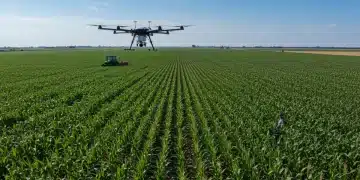
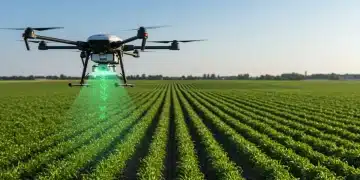
At its heart, AI crop monitoring relies on robust data collection. This involves deploying a network of sensors across fields, utilizing drones equipped with multispectral cameras, and integrating weather station data. These diverse data streams provide a comprehensive picture of crop health, soil conditions, and environmental factors, creating a digital twin of the farm.
sensor integration and data collection
Effective sensor integration is critical for gathering accurate and timely information. Different types of sensors serve distinct purposes, contributing to a holistic monitoring system.
- Soil moisture sensors: Provide real-time data on water availability, optimizing irrigation schedules.
- Nutrient sensors: Measure levels of essential nutrients, guiding precise fertilization.
- Weather stations: Monitor local atmospheric conditions, aiding in disease prediction and frost warnings.
- Aerial imagery (drones/satellites): Offer broad-scale views of crop health, identifying anomalies like pest infestations or nutrient deficiencies.
The synergy between these sensors ensures that no critical aspect of crop health goes unobserved. Data is continuously fed into a central system, forming the backbone of the AI analysis. This constant flow of information allows for dynamic adjustments to farming practices, moving away from static, generalized approaches.
The collected data, vast and complex, is then funneled into AI models. These models are trained to recognize patterns, predict potential issues, and recommend optimal interventions. This predictive capability is what truly sets AI-powered monitoring apart, enabling farmers to act proactively rather than reactively, preventing problems before they escalate and impact yields.
Leveraging predictive analytics for early detection
Predictive analytics forms the cornerstone of proactive crop management, transforming raw data into foresight. By analyzing historical trends and real-time inputs, AI systems can anticipate challenges such as disease outbreaks, pest infestations, or nutrient deficiencies before they become visible to the human eye. This early detection capability is instrumental in preventing widespread damage and protecting yield potential.
The process begins with feeding vast datasets into machine learning models. These models learn to identify subtle indicators that precede major agricultural problems. For instance, changes in leaf coloration, temperature variations, or specific humidity levels might signal the onset of a fungal infection. AI can detect these patterns much faster and more accurately than traditional scouting methods.
AI models for disease and pest prediction
Specialized AI models are developed to target specific threats, offering a layered approach to protection:
- Disease forecasting models: Analyze weather patterns, humidity, and crop stage to predict the likelihood of common diseases like blight or powdery mildew.
- Pest infestation models: Identify environmental conditions favorable to pests and track their movement, providing early warnings for intervention.
- Nutrient deficiency models: Correlate soil data with plant spectral signatures to pinpoint nutrient imbalances before physical symptoms appear.
These models continuously refine their predictions as they receive new data, improving their accuracy over time. This iterative learning process ensures that the system becomes more intelligent and reliable with each passing season, adapting to local conditions and specific crop varieties. The ability to forecast issues allows farmers to apply targeted treatments, reducing the overall use of pesticides and fertilizers, which benefits both the environment and the farm’s bottom line.
The real power of predictive analytics lies in its ability to enable precision interventions. Instead of broad-spectrum applications, farmers can apply treatments only where and when they are needed, minimizing waste and maximizing effectiveness. This precision directly contributes to the goal of a 10% yield increase by ensuring optimal growing conditions are maintained throughout the crop cycle.
Optimizing resource allocation with AI
Efficient resource management is paramount in modern agriculture, and AI offers unprecedented capabilities for optimizing the use of water, fertilizers, and pesticides. By providing granular insights into field conditions, AI-powered systems enable farmers to allocate resources precisely where they are needed, reducing waste and enhancing crop health. This targeted approach is a key driver for improving yields and operational efficiency.
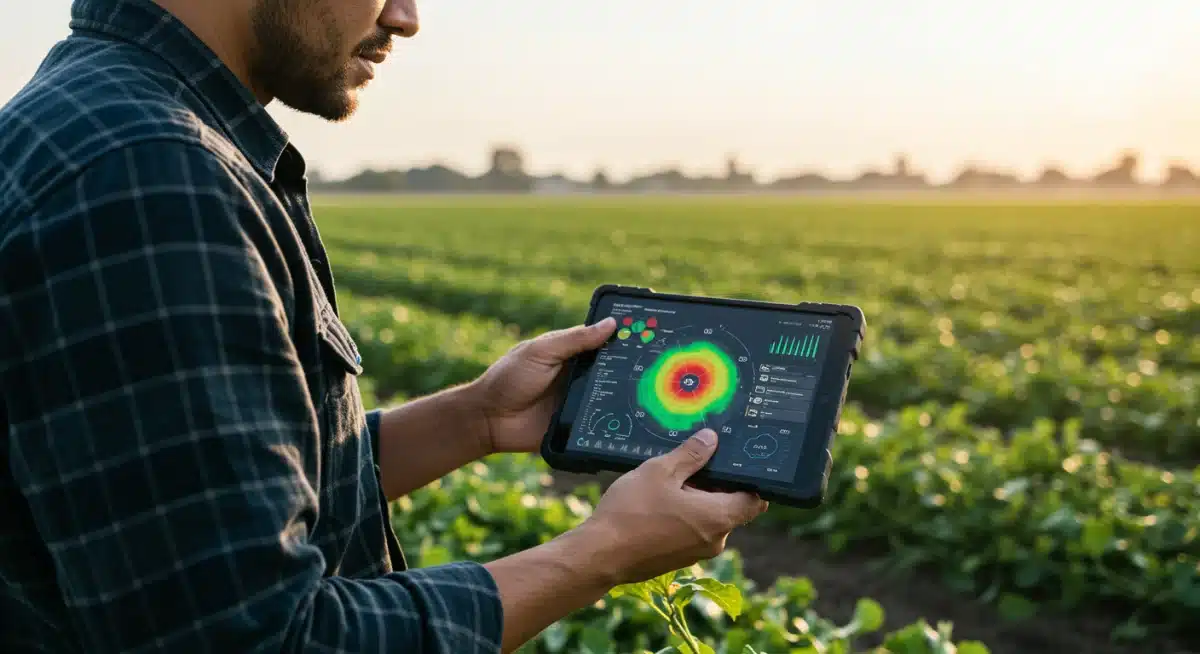
Traditional farming often involves uniform application of resources across an entire field, regardless of variations in soil type, topography, or crop health. AI disrupts this by creating detailed maps that highlight areas requiring more or less of a specific resource. This variable rate application ensures that every part of the field receives optimal treatment, preventing both over-application and under-application.
precision irrigation and fertilization
AI-driven precision irrigation and fertilization systems are at the forefront of this optimization:
- Variable rate irrigation: Based on soil moisture sensor data and predictive weather models, AI systems can control irrigation systems to deliver varying amounts of water to different zones within a field, preventing waterlogging or drought stress.
- Nutrient management: AI analyzes soil test results, plant tissue analysis, and satellite imagery to create precise fertilization plans, ensuring crops receive the right amount of nutrients at the right time, minimizing runoff and maximizing uptake.
The economic benefits of optimizing resource allocation are substantial. Reduced consumption of water, fertilizers, and pesticides translates directly into lower input costs. Furthermore, by ensuring crops receive exactly what they need, AI helps prevent nutrient deficiencies or excesses that could otherwise stunt growth or reduce yield quality. This level of control is virtually impossible to achieve with manual methods.
Beyond direct application, AI also helps in optimizing labor and equipment use. By identifying specific areas that need attention, farmers can deploy their workforce and machinery more effectively, saving time and fuel. This holistic approach to resource optimization underscores how AI contributes to both environmental sustainability and increased agricultural profitability, making the 10% yield increase a realistic target.
Integrating AI with existing farm infrastructure
Successfully implementing AI-powered crop monitoring doesn’t necessarily mean a complete overhaul of existing farm infrastructure. Instead, it often involves strategically integrating new AI tools and platforms with current equipment and practices. This approach minimizes initial investment and leverages existing assets, making the transition smoother and more cost-effective for farmers.
Many modern agricultural machines are already equipped with sensors and GPS capabilities, providing a foundation for AI integration. The challenge lies in connecting these disparate systems and ensuring data interoperability. AI platforms are designed to ingest data from various sources, normalize it, and present it in a unified, actionable format, bridging the gap between old and new technologies.
seamless data flow and interoperability
Key considerations for successful integration include:
- API compatibility: Ensuring that AI platforms can communicate with existing farm management software and equipment through Application Programming Interfaces (APIs).
- Data standardization: Implementing standards for data collection and formatting to ensure consistency and ease of analysis across different systems.
- Cloud integration: Utilizing cloud-based platforms for data storage and processing, allowing for remote access and scalability without significant on-site hardware upgrades.
The goal is to create a seamless data flow where information from sensors, drones, and machinery is automatically fed into the AI system. The AI then processes this data, generating insights and recommendations that can be directly fed back into automated farm equipment, such as variable rate sprayers or precision irrigation systems. This closed-loop system enhances efficiency and reduces manual intervention.
Furthermore, integrating AI with existing infrastructure allows farmers to gradually adopt new technologies. They can start with a specific aspect, like pest detection, and expand their AI capabilities over time. This phased approach reduces risk and allows farmers to become comfortable with the technology at their own pace, ensuring a more successful and sustainable adoption of AI in their operations.
Addressing challenges and ensuring data security
While the benefits of implementing AI-powered crop monitoring are substantial, several challenges must be addressed to ensure successful adoption and long-term sustainability. Data security, privacy concerns, and the initial investment in technology are critical aspects that farmers and technology providers must navigate carefully. Proactive strategies are essential to mitigate these risks and build trust in AI solutions.
One of the primary concerns is data security. Agricultural data, including crop yields, soil compositions, and operational practices, is highly sensitive and valuable. Protecting this information from cyber threats and unauthorized access is paramount. Farmers need assurances that their data will be handled securely and used only for its intended purpose, without compromising their competitive advantage or privacy.
mitigating data risks
Effective strategies for addressing data risks include:
- Robust encryption: Implementing strong encryption protocols for data in transit and at rest to protect against breaches.
- Access controls: Establishing strict access controls to ensure that only authorized personnel can view or manipulate sensitive data.
- Compliance with regulations: Adhering to data protection regulations and industry best practices to build trust and ensure legal compliance.
Another significant challenge is the initial cost of implementing AI solutions. While the long-term return on investment is clear, the upfront expenses for sensors, drones, software, and training can be a barrier for some farmers. Technology providers must offer flexible pricing models, pilot programs, and clear demonstrations of ROI to facilitate adoption.
Ensuring data privacy and ownership is also crucial. Farmers need to understand who owns their data, how it will be used, and whether it will be shared with third parties. Transparent policies and clear contractual agreements are vital for building a trustworthy relationship between farmers and AI service providers. Addressing these challenges head-on will pave the way for widespread and successful implementation of AI in agriculture.
Measuring impact and achieving the 10% yield increase
The ultimate goal of implementing AI-powered crop monitoring is to achieve tangible improvements, specifically a 10% yield increase by mid-2025. Measuring this impact requires a systematic approach to data analysis and continuous evaluation of AI system performance. Establishing clear benchmarks and tracking key performance indicators (KPIs) are essential for demonstrating the value of these advanced technologies.
Before implementing AI, farmers should establish a baseline of their current yields and resource consumption. This baseline serves as a reference point against which the improvements brought by AI can be measured. Continuous monitoring of yield data, alongside resource inputs like water, fertilizer, and pesticides, will provide a clear picture of the system’s effectiveness.
key metrics for success
To accurately measure the impact, focus on these metrics:
- Yield per acre: Direct comparison of yields in AI-monitored fields versus control fields or historical averages.
- Resource efficiency: Tracking reductions in water, fertilizer, and pesticide use per unit of yield.
- Crop quality: Assessing improvements in crop grade, size, and nutritional content.
- Return on investment (ROI): Calculating the financial benefits derived from increased yields and reduced input costs against the investment in AI technology.
Beyond quantitative metrics, qualitative feedback from farm managers and workers is also valuable. Their insights into the ease of use, accuracy of predictions, and overall impact on daily operations can highlight areas for improvement and further optimization. Regular reviews of AI recommendations and their outcomes will help fine-tune the system and maximize its benefits.
Achieving a 10% yield increase is an ambitious but attainable goal with AI crop monitoring. It requires a commitment to data-driven decision-making, continuous learning, and adaptation. By diligently measuring impact and making informed adjustments, farmers can not only meet but potentially exceed this target, securing a more productive and sustainable future for their operations.
| Key Aspect | Brief Description |
|---|---|
| Data Collection | Utilizing diverse sensors and aerial imagery for comprehensive crop and soil data. |
| Predictive Analytics | AI models forecast diseases, pests, and nutrient deficiencies for proactive intervention. |
| Resource Optimization | Precision irrigation and fertilization reduce waste and maximize input effectiveness. |
| Yield Measurement | Tracking KPIs and ROI to validate and refine AI’s impact on crop yields. |
Frequently asked questions about AI crop monitoring
AI-powered crop monitoring uses artificial intelligence to analyze data from various sources like sensors, drones, and satellites. It helps farmers make informed decisions about irrigation, fertilization, and pest control, ultimately boosting crop yields and efficiency.
AI increases yields by providing predictive insights into crop health, enabling early detection of diseases and pests, and optimizing resource allocation. This precision reduces waste, minimizes crop loss, and ensures plants receive optimal care throughout their growth cycle.
It utilizes a wide range of data, including soil moisture and nutrient levels from ground sensors, multispectral imagery from drones or satellites, hyper-local weather data, and historical yield records. This comprehensive data set feeds AI algorithms for analysis.
Initial implementation requires careful planning and investment in sensors and software. However, many systems are designed for integration with existing farm equipment. Phased adoption and vendor support can ease the transition, making it manageable for most agricultural operations.
Key challenges include ensuring data security and privacy, managing the initial investment costs, and achieving seamless integration with diverse farm technologies. Addressing these through robust protocols and flexible solutions is crucial for widespread adoption and success.
Conclusion
The journey towards a 10% yield increase by mid-2025 through AI-powered crop monitoring is a clear path to agricultural success. By embracing advanced data collection, predictive analytics, and optimized resource allocation, farmers can transform their operations into highly efficient, sustainable, and profitable ventures. While challenges exist, the strategic integration of AI with existing infrastructure and a strong focus on data security will pave the way for a new era of precision agriculture, ensuring food security and environmental stewardship for the future.