Vertical Farming Innovations: What’s New for CEA in 2025
Anúncios
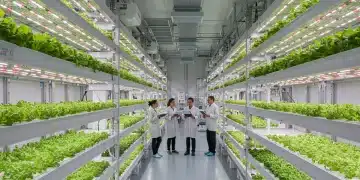
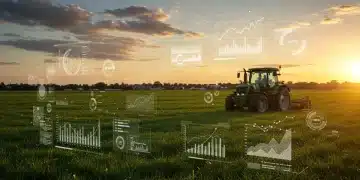
Vertical farming innovations are rapidly transforming controlled environment agriculture (CEA), with 2025 set to introduce significant advancements in AI, robotics, and resource efficiency, promising a more sustainable and productive future for food systems.
The landscape of agriculture is undergoing a profound transformation, and at its forefront are vertical farming innovations. These cutting-edge developments in controlled environment agriculture (CEA) are not just incremental changes; they represent a fundamental shift in how we grow food, particularly as we look towards 2025 and beyond. From urban centers to arid regions, vertical farms are offering compelling solutions to pressing global challenges like food security, land scarcity, and climate change, making it crucial to understand the latest advancements.
Anúncios
The rise of AI and machine learning in CEA
Artificial intelligence (AI) and machine learning (ML) are no longer futuristic concepts in vertical farming; they are becoming integral to optimizing every aspect of plant growth. These technologies enable unprecedented levels of precision and efficiency, moving farming beyond human intuition to data-driven decision-making.
By analyzing vast datasets on plant physiology, environmental conditions, and growth cycles, AI algorithms can predict optimal nutrient delivery, lighting schedules, and climate control parameters. This predictive capability minimizes waste and maximizes yield quality and quantity.
Anúncios
Predictive analytics for crop health
AI-powered predictive analytics are revolutionizing how vertical farms manage crop health. Instead of reacting to problems, growers can anticipate them.
- Early disease detection: AI analyzes subtle changes in plant appearance or growth patterns to identify potential diseases or pests before visible symptoms emerge.
- Nutrient deficiency forecasting: Machine learning models track nutrient uptake and warn operators of impending deficiencies, allowing for proactive adjustments to the hydroponic or aeroponic systems.
- Yield prediction: Algorithms can accurately forecast harvest yields, helping farms plan logistics, sales, and supply chain management more effectively.
These systems learn from every growth cycle, continuously refining their models to improve accuracy and efficiency over time. This iterative learning process is key to unlocking the full potential of controlled environment agriculture.
The integration of AI and ML ensures that every resource, from water to energy, is utilized with maximum effectiveness, leading to more sustainable and profitable operations. This level of optimization was previously unimaginable, marking a new era for indoor farming.
Robotics and automation: the hands of the future farm
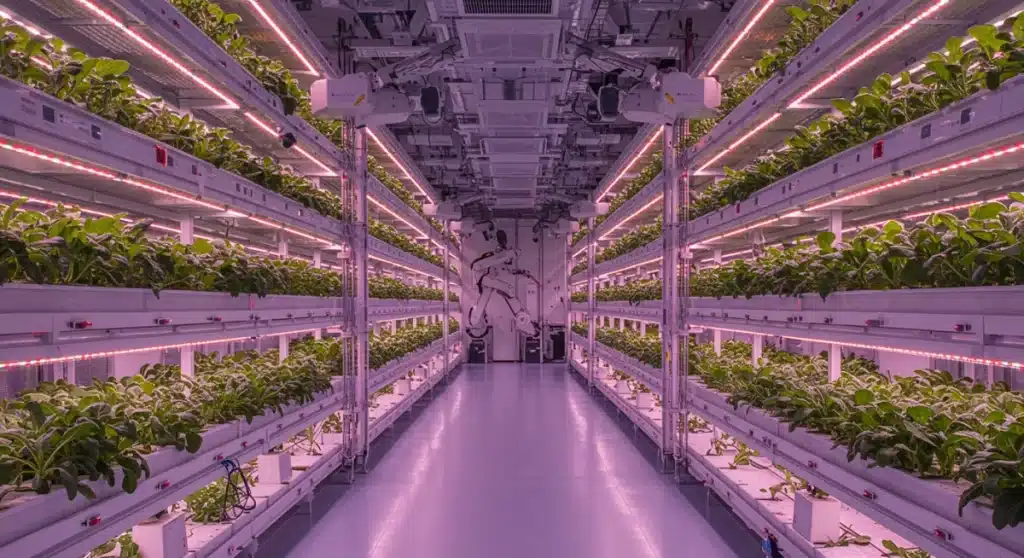
Robotics and automation are transforming labor-intensive tasks in vertical farms, addressing workforce challenges and increasing operational scales. These technologies are designed to perform repetitive, precise actions with unwavering consistency, freeing human workers for more complex management and strategic roles.
From planting seeds to harvesting mature crops, robotic systems are streamlining workflows and reducing the potential for human error. This not only boosts productivity but also enhances hygiene and reduces contamination risks within the controlled environment.
Automated planting and harvesting systems
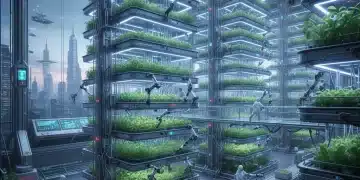
The automation of planting and harvesting processes is a significant leap forward for vertical farms. Robotic arms equipped with specialized grippers and vision systems can handle delicate seedlings and mature plants with precision.
- Seedling insertion: Robots can accurately place seedlings into growing mediums, ensuring optimal spacing and minimizing damage.
- Automated harvesting: Vision systems identify ripe produce, and robotic effectors carefully pick crops, reducing labor costs and increasing harvest speed.
- Environmental monitoring: Autonomous drones and mobile robots can traverse farm aisles, collecting data on individual plants and environmental conditions.
These automated systems operate 24/7, enabling continuous production cycles that are not limited by human working hours. This constant operation maximizes the utilization of vertical farm infrastructure and accelerates crop turnover.
The integration of these robotic solutions is making vertical farming more scalable and economically viable, paving the way for larger and more efficient indoor agricultural operations globally.
Advanced lighting and climate control systems
The heart of any successful vertical farm lies in its ability to precisely control the growing environment. Advanced lighting and climate control systems are continuously evolving, offering unprecedented customization and energy efficiency. These systems are crucial for mimicking and optimizing natural conditions indoors.
Innovations in LED technology and environmental sensors are allowing growers to fine-tune light spectrums, intensity, temperature, humidity, and CO2 levels to meet the exact needs of specific crops at different growth stages. This level of control directly impacts plant health, nutrient content, and yield.
Dynamic LED spectrum tuning
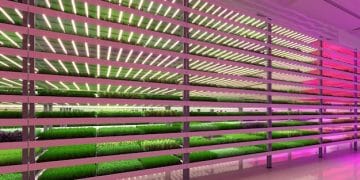
Traditional grow lights offered limited control, but dynamic LED systems are changing the game. These lights can be programmed to emit specific wavelengths and intensities.
- Tailored light recipes: Different crops and growth phases require distinct light spectra; dynamic LEDs allow for custom light recipes to optimize photosynthesis and plant development.
- Energy efficiency: LEDs consume significantly less energy than traditional grow lights and generate less heat, reducing cooling costs.
- Photomorphogenesis control: Specific light wavelengths can influence plant morphology, encouraging desired traits like leaf size or stem elongation.
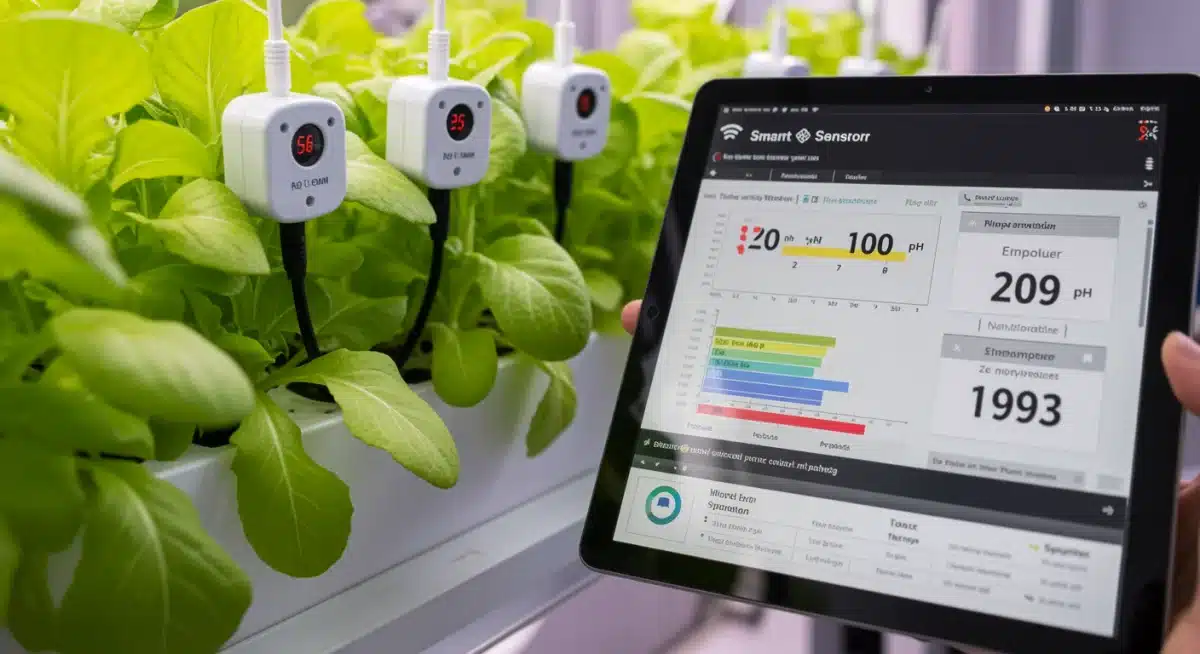
Coupled with intelligent climate control, these lighting systems create an ideal microclimate for each plant. Sophisticated sensors constantly monitor environmental parameters, feeding data back to central control units that make real-time adjustments.
This holistic approach to environmental management ensures that plants receive exactly what they need, when they need it, leading to healthier, faster-growing crops and higher quality produce with enhanced flavor and nutritional value.
Sustainable practices: water, energy, and waste management
Sustainability is a core tenet of vertical farming, and innovations in resource management are continually pushing the boundaries of efficiency. Vertical farms inherently use less land and water than traditional agriculture, but ongoing advancements are making them even greener.
The focus is on closed-loop systems that minimize waste and maximize the reuse of resources. This includes sophisticated water recycling, renewable energy integration, and novel approaches to waste byproduct utilization.
Closed-loop hydroponic and aeroponic systems
Water conservation is paramount in vertical farming, and closed-loop systems are key to achieving this. These systems recirculate water and nutrients, significantly reducing consumption.
- Hydroponics: Plants grow in nutrient-rich water solutions, with water continuously recycled and replenished.
- Aeroponics: Plant roots are suspended in air and misted with nutrient solution, using even less water than hydroponics.
- Water purification and reuse: Advanced filtration and UV sterilization ensure that recirculated water remains clean and free of pathogens.
Beyond water, vertical farms are increasingly integrating renewable energy sources like solar and wind power to reduce their carbon footprint. Efforts are also underway to convert plant waste into biogas or compost, creating a truly circular economy within the farm.
These sustainable practices not only benefit the environment but also contribute to the long-term economic viability of vertical farming operations by reducing input costs and enhancing brand reputation.
Novel crop varieties and genetic optimization
While traditional agriculture focuses on adapting crops to the environment, vertical farming allows the environment to be adapted to the crops. This unique advantage is driving innovation in developing novel crop varieties and genetically optimizing existing ones specifically for controlled environments.
Researchers are focusing on traits that thrive indoors, such as compact growth habits, resistance to common indoor pathogens, and enhanced nutritional profiles. Genetic tools are being employed to accelerate this process, leading to crops perfectly suited for vertical farm conditions.
CRISPR and gene editing for indoor crops
Gene editing technologies like CRISPR are playing a pivotal role in accelerating the development of ideal indoor crops. This precision tool allows scientists to make targeted changes to plant DNA.
- Optimized growth: Editing genes to enhance photosynthetic efficiency or alter plant architecture for better vertical stacking.
- Nutrient enrichment: Increasing the concentration of vitamins, minerals, or beneficial compounds in crops.
- Disease resistance: Developing crops with inherent resistance to fungal, bacterial, or viral diseases prevalent in indoor environments.
Beyond genetic modification, traditional breeding programs are also selecting for traits beneficial to vertical farming, such as faster growth rates, uniform size, and improved flavor. This dual approach ensures a diverse pipeline of crops optimized for CEA.
The ability to cultivate specialized crops with enhanced traits opens new markets and allows vertical farms to offer unique, high-value produce that might be difficult or impossible to grow in conventional settings.
Integration with urban planning and smart cities
Vertical farming is not just about growing food; it’s about integrating agriculture directly into the fabric of urban environments. As cities continue to expand, the concept of urban farms becoming part of smart city infrastructure is gaining significant traction.
This integration aims to reduce food miles, enhance food security for urban populations, and create more resilient, localized food systems. Vertical farms are being designed not only as production facilities but also as community hubs and educational centers.
Localizing food production
Bringing food production closer to consumers offers numerous benefits, from freshness to reduced transportation costs and environmental impact.
- Reduced food miles: Minimizing the distance food travels from farm to plate, decreasing carbon emissions and preserving freshness.
- Enhanced food security: Providing a consistent, local supply of fresh produce, less susceptible to external disruptions.
- Community engagement: Urban vertical farms can serve as educational resources, job creators, and sources of fresh food for local communities.
Architects and urban planners are increasingly incorporating vertical farms into new building designs and repurposing existing structures. These farms can be integrated into mixed-use developments, providing fresh produce directly to restaurants, grocery stores, and residents within the same building or neighborhood.
This holistic approach transforms urban landscapes, making cities more self-sufficient and sustainable, while offering citizens access to highly nutritious, locally grown food options.
Market trends and economic viability in 2025
The economic landscape for vertical farming is maturing rapidly, moving from nascent startups to established businesses with clearer pathways to profitability. Several market trends are converging to make vertical farming an increasingly attractive investment and a viable solution for food production in 2025.
Consumer demand for fresh, locally grown, and sustainably produced food continues to rise, creating a strong market pull for vertical farm products. Furthermore, technological advancements are steadily driving down operational costs, improving the economic equation.
Investment and scalability
Significant investment is flowing into the vertical farming sector, reflecting growing confidence in its future. This capital is fueling research, development, and the construction of larger, more efficient facilities.
- Venture capital and corporate partnerships: Increased funding from diverse sources, including traditional agricultural companies and tech investors.
- Economies of scale: As farms grow larger, the unit cost of production decreases, making produce more competitive with traditional agriculture.
- Modular and standardized designs: Development of scalable, replicable farm modules that can be rapidly deployed in various locations.
The focus is shifting towards achieving economies of scale and developing robust business models that can ensure long-term profitability. This includes diversifying crop portfolios to include high-value herbs, specialty greens, and even certain fruits, which command higher market prices.
As technology continues to advance and operational efficiencies improve, vertical farming is poised to capture a significant share of the fresh produce market, offering a stable and predictable supply chain in an increasingly unpredictable world.
| Key Innovation | Impact in 2025 |
|---|---|
| AI & Machine Learning | Enables predictive crop health, optimal resource use, and higher yields with less waste. |
| Robotics & Automation | Streamlines planting/harvesting, reduces labor costs, and ensures consistent quality and hygiene. |
| Dynamic LED Systems | Customizable light recipes for enhanced plant growth, energy efficiency, and nutrient optimization. |
| Sustainable Practices | Advanced closed-loop systems for water/nutrient recycling, renewable energy, and waste reduction. |
Frequently asked questions about vertical farming innovations
Vertical farming innovations offer numerous benefits, including significantly reduced land and water usage, year-round crop production regardless of climate, minimized transportation costs due to urban placement, and greater control over environmental factors, leading to higher yields and superior produce quality. They also reduce pesticide use.
AI enhances efficiency by enabling precise environmental control, predictive analytics for crop health and yield, and automated decision-making. It optimizes nutrient delivery, lighting schedules, and climate, minimizing waste and maximizing resource utilization, leading to more sustainable and cost-effective operations.
Robotics automate labor-intensive tasks such as planting, harvesting, and monitoring, reducing human error and labor costs. This increases operational speed, consistency, and hygiene, allowing vertical farms to scale production and operate continuously, addressing workforce challenges in agriculture.
While energy intensive, vertical farms are rapidly improving sustainability. Innovations in energy-efficient LED lighting, advanced climate control, and increasing integration with renewable energy sources like solar and wind power are significantly reducing their carbon footprint, making them progressively more sustainable.
By 2025, vertical farming is expected to significantly impact urban areas by localizing food production, reducing food miles, and enhancing food security. They will become integral parts of smart city infrastructure, providing fresh, healthy produce directly to consumers and fostering community engagement and educational opportunities.
Conclusion
The rapid pace of vertical farming innovations is reshaping the agricultural landscape, offering compelling solutions to the complex challenges of modern food production. From the precision of AI and the efficiency of robotics to advanced environmental controls and sustainable practices, these advancements are making controlled environment agriculture more productive, resilient, and environmentally friendly. As we move further into 2025, vertical farms are poised to become an indispensable component of our global food system, fostering localized food security, reducing ecological footprints, and delivering high-quality, nutritious produce to communities worldwide. The future of farming is undoubtedly vertical, intelligent, and sustainable.