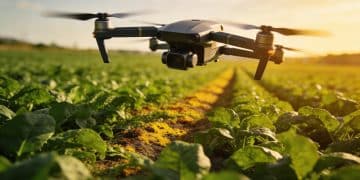
Real-time Soil Analysis: Boosting Fertilizer Efficiency by 10% with New Portable Devices
Anúncios
New portable devices for real-time soil analysis are poised to revolutionize fertilizer application, targeting a 10% efficiency increase by 2025, significantly enhancing agricultural productivity and environmental sustainability across the United States.
Imagine a future where every gram of fertilizer applied to your fields is precisely what your crops need, exactly when they need it. This isn’t a distant dream, but a rapidly approaching reality, thanks to advancements in real-time soil analysis. By 2025, new portable devices are set to dramatically improve fertilizer application efficiency by at least 10%, transforming agricultural practices across the United States.
Anúncios
The imperative for precision in modern agriculture
Modern agriculture faces a dual challenge: feeding a growing global population while minimizing its environmental footprint. Traditional soil testing methods, while foundational, often involve delays that can impact timely decision-making. This lag can lead to suboptimal fertilizer application, resulting in wasted resources and potential ecological harm.
Precision agriculture has emerged as a critical solution, advocating for site-specific management. Within this framework, understanding soil conditions at a granular level is paramount. Farmers are increasingly seeking tools that offer immediate insights, allowing them to react swiftly to changing field dynamics rather than waiting weeks for lab results.
Anúncios
Economic and environmental pressures
The rising cost of fertilizers directly impacts a farm’s bottom line. Any inefficiency in their use translates to higher operational expenses. Moreover, environmental regulations are becoming stricter, pushing farmers to adopt more sustainable practices. Excess fertilizer runoff can lead to:
- Water contamination in nearby streams and rivers.
- Greenhouse gas emissions, particularly nitrous oxide.
- Soil degradation over time, reducing long-term productivity.
These pressures underscore the urgent need for technologies that can optimize nutrient management, making every dollar spent on inputs more effective and every farming practice more environmentally sound. The shift towards precision is not just about yield, but about resilience and responsibility.
Understanding real-time soil analysis technology
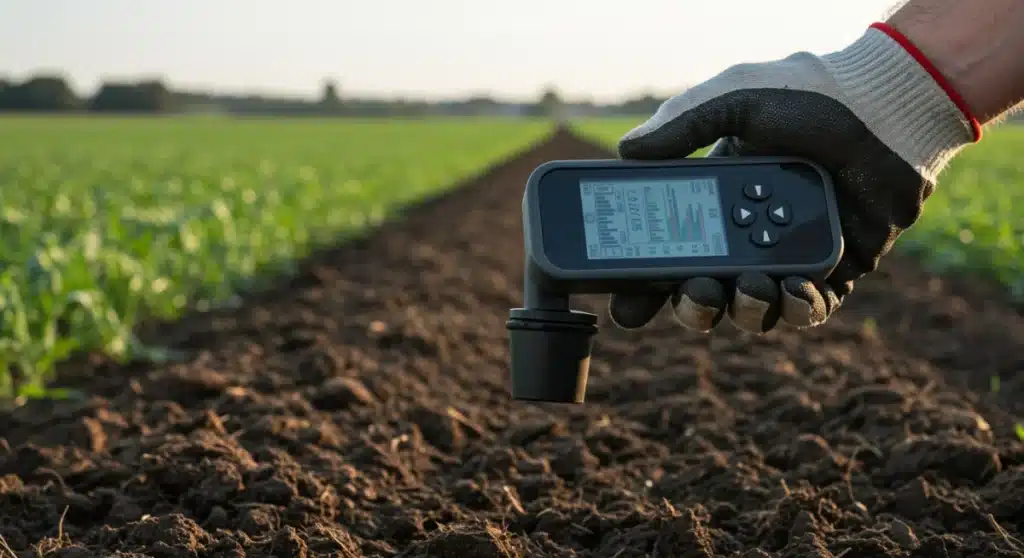
Real-time soil analysis represents a significant leap forward from conventional methods. Instead of sending samples to a laboratory and waiting days or weeks for results, these new portable devices provide immediate data directly in the field. This immediacy empowers farmers to make on-the-spot adjustments, ensuring nutrients are applied precisely where and when they are most needed.
The core of this technology lies in its advanced sensor capabilities. These devices are equipped to measure a wide array of soil parameters with high accuracy, offering a comprehensive snapshot of soil health. This instant feedback loop is invaluable for dynamic farm management.
Key technologies enabling real-time analysis
Several advanced technologies converge to make real-time soil analysis possible:
- Near-Infrared (NIR) Spectroscopy: Measures organic matter, moisture content, and sometimes even nitrogen levels by analyzing light absorption.
- Electrochemical Sensors: Detect specific ion concentrations, such as nitrates, phosphates, and potassium, providing immediate nutrient availability data.
- GPS and GIS Integration: Links soil data to precise geographic coordinates, enabling creation of detailed nutrient maps for variable-rate application.
- IoT Connectivity: Allows data to be instantly uploaded to cloud platforms for analysis, historical tracking, and integration with farm management systems.
These components work in concert to deliver a holistic view of soil conditions, moving beyond isolated measurements to provide actionable intelligence. The portability and ruggedness of these new devices mean they can withstand the demanding conditions of agricultural environments, making them practical tools for everyday farm use.
The mechanics of new portable devices in 2025
The portable soil analysis devices anticipated for 2025 are a far cry from their bulky predecessors. They are designed for ease of use, speed, and accuracy, integrating seamlessly into existing farm workflows. These devices are not just measuring tools; they are intelligent systems that interpret data and suggest actions.
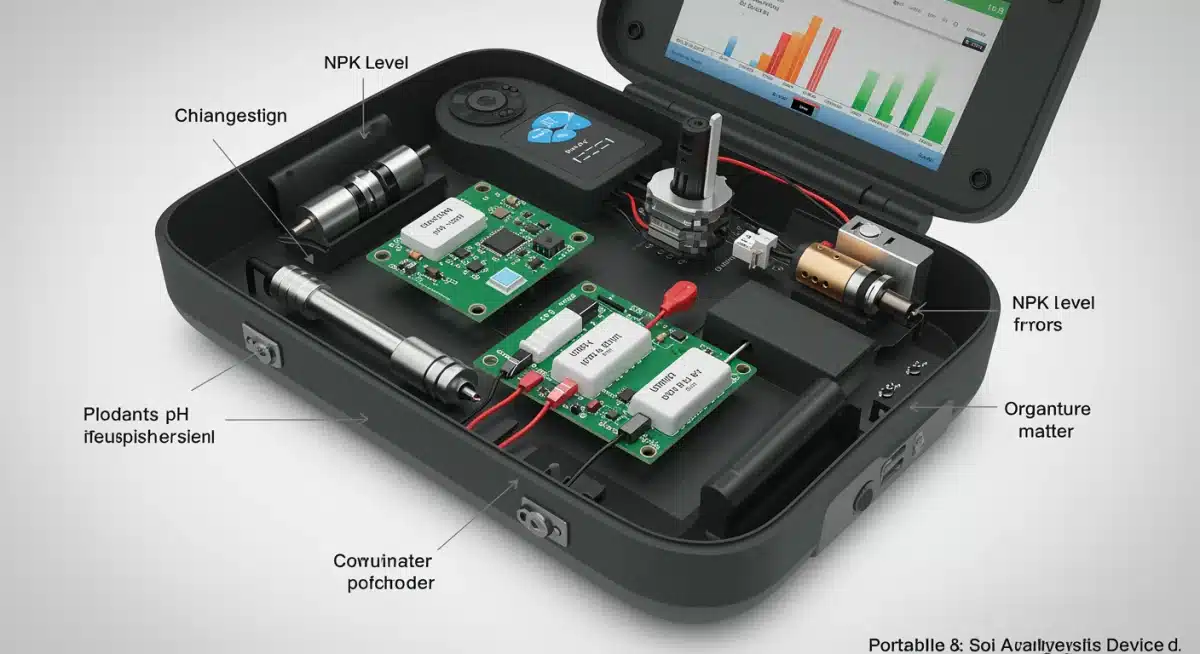
A typical device might involve inserting a probe directly into the soil, with results appearing on a handheld screen within seconds. Some models even connect wirelessly to smartphones or tablets, displaying sophisticated visualizations and recommendations.
Enhanced sensor capabilities and data interpretation
The next generation of portable devices will feature:
- Multi-sensor arrays: Combining multiple sensing technologies for a more complete and accurate profile of soil nutrients, pH, moisture, and organic carbon.
- AI-driven analytics: Embedded artificial intelligence algorithms will process raw sensor data, correlate it with crop requirements, and provide specific fertilizer recommendations tailored to soil type and crop stage.
- Cloud integration and machine learning: Data collected from individual farms will contribute to larger datasets, allowing machine learning models to refine predictions and recommendations over time, improving accuracy for all users.
These advancements mean that farmers won’t just get numbers; they will receive actionable intelligence. The devices will suggest the optimal type, amount, and timing of fertilizer application, taking into account current weather, crop growth stage, and even historical yield data from that specific field section. This level of personalized advice is what drives the projected 10% increase in efficiency.
Impacting fertilizer application efficiency by 10%
The projected 10% improvement in fertilizer application efficiency by 2025 is a conservative estimate, reflecting the transformative potential of real-time soil analysis. This efficiency gain isn’t just about reducing waste; it’s about optimizing every aspect of nutrient delivery to the plant, leading to healthier crops and higher yields.
By providing immediate, precise data, these portable devices enable farmers to move beyond blanket applications. They can identify specific zones within a field that are deficient or overloaded with certain nutrients, allowing for variable-rate application that targets these areas with surgical precision. This targeted approach ensures that no nutrient is applied unnecessarily, and no crop suffers from deficiency.
Mechanisms of efficiency improvement
The 10% efficiency gain stems from several key areas:
- Reduced Over-Application: Identifying areas with sufficient nutrient levels prevents unnecessary fertilizer use, saving costs and preventing environmental runoff.
- Optimized Under-Application: Pinpointing nutrient deficiencies allows for targeted application, ensuring crops receive what they need to maximize growth and yield potential.
- Timely Adjustments: Real-time data allows for immediate mid-season corrections, adapting to unexpected weather patterns or crop stress, something impossible with traditional testing.
- Improved Nutrient Uptake: Applying the correct nutrients at the right time and location enhances the plant’s ability to absorb them, minimizing losses to leaching or volatilization.
This holistic approach not only cuts down on input costs but also contributes to stronger, more resilient crops. The 10% efficiency target represents a significant step towards a more sustainable and profitable agricultural sector, demonstrating the tangible economic and environmental benefits of adopting these advanced technologies.
Benefits beyond efficiency: sustainability and profitability
While the 10% increase in fertilizer efficiency is a compelling headline, the ripple effects of real-time soil analysis extend far beyond mere input reduction. These devices are catalysts for a broader transformation in farm management, fostering both environmental sustainability and enhanced profitability for agricultural operations.
For farmers, the direct financial benefits are substantial. Reduced fertilizer expenses mean a lower cost of production, directly impacting the farm’s net income. Furthermore, healthier, well-nourished crops are more resistant to pests and diseases, potentially lowering the need for other chemical inputs and improving overall yield quality.
Long-term advantages for farmers and the environment
The adoption of real-time soil analysis brings numerous long-term advantages:
- Enhanced Soil Health: Precise nutrient management prevents nutrient imbalances that can degrade soil structure and microbial activity, promoting a healthier soil ecosystem over time.
- Reduced Environmental Impact: Minimizing excess fertilizer runoff protects waterways from eutrophication and reduces greenhouse gas emissions, aligning with sustainable farming goals.
- Increased Crop Resilience: Optimally fed plants are better equipped to withstand environmental stresses, leading to more stable yields even in challenging conditions.
- Data-Driven Decision Making: Accumulation of real-time soil data provides invaluable insights for long-term planning, crop rotation strategies, and continuous improvement of farm practices.
These benefits paint a picture of a more robust and responsible agricultural system. Real-time soil analysis isn’t just a technological upgrade; it’s an investment in the future of farming, ensuring that agricultural productivity can continue to grow without compromising the health of our planet.
Challenges and the path forward for adoption
Despite the undeniable benefits of real-time soil analysis, its widespread adoption isn’t without hurdles. The agricultural sector, while innovative, can also be resistant to change, especially when new technologies require significant upfront investment or a steep learning curve. Addressing these challenges is crucial for realizing the full potential of these portable devices.
One primary concern for many farmers is the initial cost of acquiring these sophisticated tools. While the long-term return on investment is clear, the capital outlay can be a barrier for smaller operations. Additionally, integrating new data streams and analytical tools into existing farm management systems requires technical literacy and support.
Overcoming adoption barriers
Several strategies are being explored to facilitate broader adoption:
- Cost-effective solutions: Manufacturers are working to develop more affordable devices and flexible financing options, including leasing programs.
- User-friendly interfaces: Simplifying the device operation and data interpretation through intuitive software and visual dashboards will lower the learning curve.
- Educational programs and support: Providing comprehensive training and ongoing technical support for farmers will build confidence and competence in using these new technologies.
- Integration with existing platforms: Ensuring seamless compatibility with popular farm management software will streamline data flow and decision-making.
Government incentives and agricultural extension services also play a vital role in promoting these technologies, highlighting their economic viability and environmental advantages. By proactively tackling these challenges, the agricultural community can pave the way for a future where real-time soil analysis becomes a standard practice, driving efficiency and sustainability across the board.
| Key Aspect | Brief Description |
|---|---|
| Efficiency Target | 10% improvement in fertilizer application by 2025. |
| Core Technology | Portable devices with advanced sensors, AI, and cloud integration. |
| Key Benefits | Reduced costs, increased yields, enhanced soil health, and environmental protection. |
| Adoption Challenges | Initial cost, technical complexity, and need for training. |
Frequently asked questions about real-time soil analysis
Real-time soil analysis involves using portable, in-field devices to instantly measure soil parameters like nutrient levels, pH, and moisture. This technology eliminates the delays of traditional lab testing, providing immediate data for on-the-spot agricultural decision-making and precise fertilizer application.
The 10% efficiency gain comes from precise, targeted fertilizer application. Real-time data prevents over-application in areas with sufficient nutrients and ensures deficient zones receive optimal amounts, reducing waste, costs, and environmental impact while maximizing nutrient uptake by crops.
New portable devices integrate multi-sensor arrays (NIR, electrochemical), AI-driven analytics, GPS, and IoT connectivity. They offer user-friendly interfaces, instant data interpretation, and often connect wirelessly to smart devices, providing actionable recommendations directly in the field.
Beyond cost savings, benefits include enhanced soil health, reduced environmental pollution from runoff, increased crop resilience to stress, and improved overall farm profitability. It supports sustainable agricultural practices by optimizing resource use and promoting healthier ecosystems.
Key challenges include the initial cost of devices, the technical learning curve for farmers, and integration with existing farm management systems. Overcoming these requires affordable solutions, user-friendly designs, robust training programs, and supportive government incentives.
Conclusion
The advent of real-time soil analysis with sophisticated portable devices marks a pivotal moment for agriculture. The projected 10% improvement in fertilizer application efficiency by 2025 is not just a statistical goal but a testament to the power of precision technology to reshape farming. By embracing these innovations, farmers can look forward to more profitable operations, healthier soils, and a significantly reduced environmental footprint. The future of agriculture is undeniably precise, sustainable, and driven by immediate, actionable data.