Reducing Water Use by 30%: Smart Irrigation for US Farms
Anúncios
Achieving a 30% water usage reduction on US farms by 2025 is attainable with smart irrigation systems, which leverage advanced technologies to optimize water application, enhance crop yield, and promote environmental sustainability.
Anúncios
As the agricultural landscape evolves, the imperative to conserve resources becomes increasingly critical. For US farms, the goal of reducing water usage by 30% with smart irrigation by 2025 is not just an ambitious target, but a vital step towards sustainable and profitable operations. This comprehensive guide delves into the practicalities and benefits of adopting intelligent irrigation strategies, offering a roadmap for farmers aiming to enhance efficiency and resilience in the face of changing environmental and economic pressures.
The Urgency of Water Conservation in US Agriculture
Water is the lifeblood of agriculture, yet its availability is increasingly threatened by climate change, population growth, and competing demands. For US farms, inefficient irrigation practices contribute significantly to water waste, impacting both environmental health and operational costs. Addressing this challenge requires a proactive approach, integrating innovative solutions that can deliver precise water where and when it’s needed most.
Anúncios
The agricultural sector accounts for a substantial portion of global freshwater withdrawals, making it a prime candidate for efficiency improvements. In the United States, many regions face recurring droughts and stricter water regulations, pushing farmers to seek more sustainable methods. Embracing smart irrigation isn’t merely about compliance; it’s about securing the future viability of farming operations.
Understanding the Water Challenge
The traditional “set it and forget it” approach to irrigation often leads to overwatering, resulting in runoff, nutrient leaching, and increased energy consumption. This not only wastes a precious resource but also diminishes crop health and financial returns. Modern agriculture demands a more nuanced understanding of plant water needs and soil dynamics.
- Depleting aquifers and surface water sources
- Rising energy costs for pumping water
- Environmental impact of agricultural runoff
- Increased competition for water resources
By recognizing these challenges, farmers can better appreciate the transformative potential of smart irrigation technologies. These systems provide the data and control necessary to move from reactive to proactive water management, ensuring every drop counts.
Ultimately, the transition to water-efficient farming practices is essential for both ecological balance and economic stability. Achieving significant water savings requires a commitment to adopting new technologies and rethinking established irrigation habits. This shift will position US farms at the forefront of sustainable agriculture.
What is Smart Irrigation? Technologies and Principles
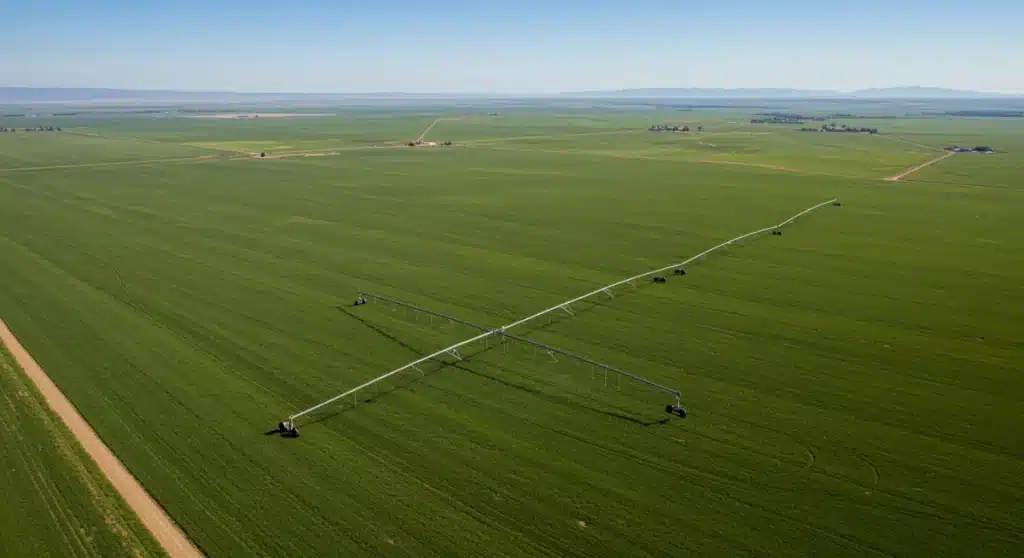
Smart irrigation refers to systems that determine the optimal amount of water to apply and when to apply it, based on real-time data from various sources. These technologies move beyond traditional timer-based systems, offering unparalleled precision and efficiency. The core principle is to match water supply precisely with crop demand, minimizing waste and maximizing effectiveness.
These systems integrate sensors, data analytics, and automation to create a highly responsive irrigation schedule. By continuously monitoring environmental conditions and plant needs, smart irrigation can adapt to dynamic changes, ensuring crops receive exactly what they require without excess. This level of control is revolutionary for water management in agriculture.
Key Technologies Driving Smart Irrigation
Several advanced technologies form the backbone of modern smart irrigation systems. Understanding these components is crucial for farmers looking to implement effective water-saving strategies. Each technology plays a vital role in collecting data, making decisions, and delivering water efficiently.
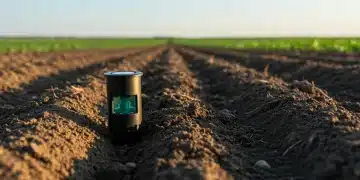
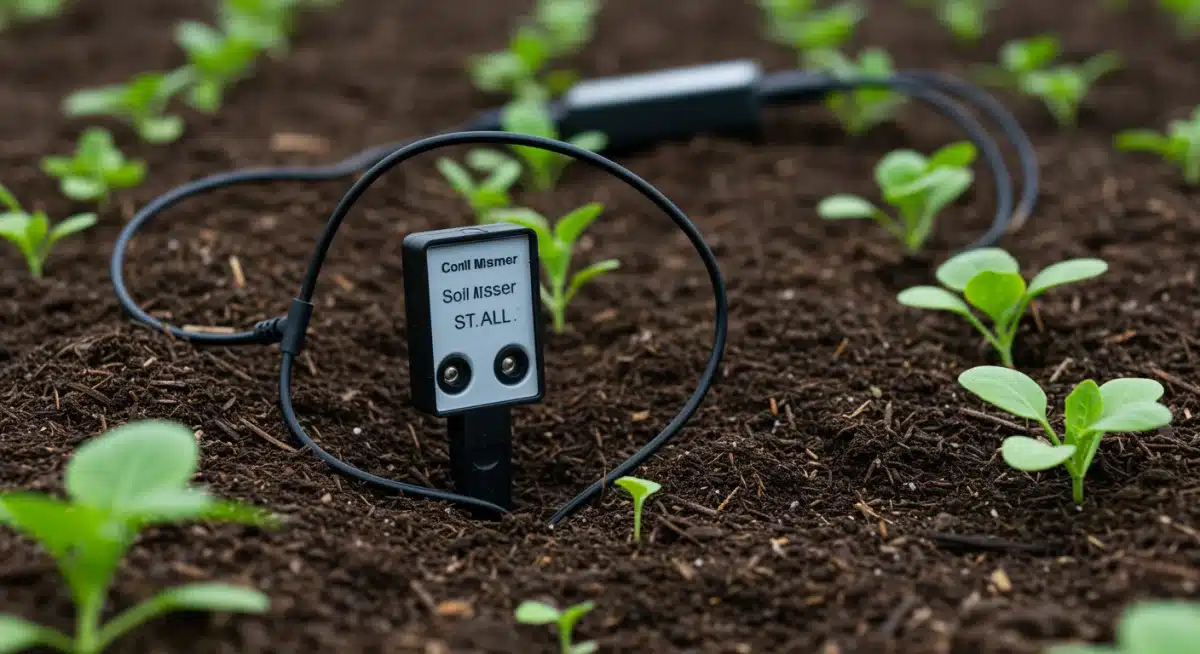
- Soil moisture sensors: These devices measure the volumetric water content in the soil, providing direct insights into plant available water.
- Weather stations: On-site or networked weather stations provide data on rainfall, temperature, humidity, wind speed, and solar radiation, which are critical for calculating evapotranspiration (ET).
- Remote sensing and IoT: Satellite imagery, drones, and ground-based sensors collect data on crop health and canopy temperature, indicating water stress.
- Automated irrigation controllers: These controllers integrate data from sensors and weather stations to adjust irrigation schedules automatically, often accessible via smartphone apps.
The combination of these technologies creates a powerful system that can significantly reduce water consumption. By replacing guesswork with data-driven decisions, farmers can achieve their water reduction goals more effectively.
Implementing smart irrigation involves a shift from manual oversight to automated, precision-driven processes. This leads to not only water savings but also improved crop uniformity and reduced labor costs. The initial investment in these systems quickly pays for itself through operational efficiencies and enhanced yields.
Implementing Smart Irrigation: A Step-by-Step Approach
Adopting smart irrigation on a farm requires careful planning and a phased implementation strategy. It’s not about a one-size-fits-all solution, but rather tailoring technologies to specific crop types, soil conditions, and farm layouts. A systematic approach ensures successful integration and maximizes the benefits of these advanced systems.
Farmers should begin by assessing their current irrigation practices and identifying areas where water waste is most prevalent. This initial audit provides a baseline for measuring improvements and helps in prioritizing which technologies will offer the greatest return on investment. Collaboration with agricultural extension services or irrigation specialists can be highly beneficial during this phase.
Assessment and Planning
Before investing in new equipment, a thorough understanding of the farm’s unique characteristics is essential. This includes mapping out field topography, soil types, and existing irrigation infrastructure. Proper planning minimizes potential challenges and ensures the selected smart irrigation components are compatible and effective.
- Conduct a detailed water audit to identify current usage and inefficiencies.
- Map out fields, soil types, and existing irrigation zones.
- Determine crop water requirements for each specific crop grown.
- Research available smart irrigation technologies suitable for the farm’s scale and budget.
This foundational work is critical for designing an irrigation system that is truly smart and responsive to the farm’s needs. Without a clear understanding of current practices and future goals, even the most advanced technology may fall short.
Once the assessment is complete, farmers can develop a phased implementation plan, starting with smaller, manageable projects and scaling up as they gain experience and confidence. This iterative approach allows for adjustments and optimization along the way, ensuring long-term success in reducing water usage.
Benefits Beyond Water Saving: Enhanced Crop Health and Yield
While the primary goal of smart irrigation is to reduce water consumption, its advantages extend far beyond mere conservation. By delivering water precisely, these systems also contribute significantly to improved crop health, increased yields, and a more sustainable farming operation overall. This holistic benefit makes smart irrigation an indispensable tool for modern agriculture.
When plants receive the optimal amount of water, they experience less stress, leading to stronger growth and better nutrient uptake. This precision watering prevents both underwatering, which stunts growth, and overwatering, which can lead to root diseases and nutrient loss. The result is healthier, more resilient crops that are better equipped to withstand environmental challenges.
Maximizing Agricultural Productivity
The direct impact of smart irrigation on crop productivity is often a major driver for adoption. Farmers report higher quality produce and larger yields due to the consistent and tailored water supply. This translates directly into increased profitability and a stronger market position.
- Reduced plant stress from inconsistent watering.
- Improved nutrient uptake and utilization.
- Higher quality produce with better market value.
- Increased overall crop yields per acre.
Furthermore, by optimizing water application, smart irrigation systems also reduce the need for certain inputs, such as fertilizers, which can be leached away by excessive irrigation. This not only saves money but also minimizes environmental pollution, aligning with broader sustainable agriculture goals.
The long-term benefits of enhanced crop health and yield underscore the value proposition of smart irrigation. It represents an investment not just in water conservation, but in the overall productivity and sustainability of the farm.
Challenges and Solutions in Adopting Smart Irrigation
While the benefits of smart irrigation are clear, farmers often face several challenges during adoption. These can range from initial investment costs to the complexity of integrating new technologies. However, with careful planning and access to resources, many of these hurdles can be overcome, making smart irrigation accessible to a wider range of farms.
The learning curve associated with new technologies can be daunting for some. Farmers may worry about the technical expertise required to operate and maintain sophisticated systems. Addressing these concerns through adequate training and support is crucial for successful implementation.
Overcoming Implementation Obstacles
Financial constraints are often a significant barrier. The upfront cost of sensors, controllers, and automation equipment can be substantial. Fortunately, various solutions and incentives are available to help mitigate these expenses.
- High initial investment: Explore grants, subsidies, and financing options specifically for sustainable agricultural technologies.
- Technical complexity: Seek training programs from manufacturers, local agricultural extension offices, or consulting services.
- Data management: Utilize user-friendly software interfaces and cloud-based platforms for easier data analysis and decision-making.
- Infrastructure compatibility: Conduct thorough assessments to ensure new systems integrate seamlessly with existing infrastructure.
Government programs and agricultural organizations often provide financial assistance and technical guidance for farms adopting water-saving technologies. Leveraging these resources can significantly ease the transition and accelerate the return on investment.
Despite the challenges, the long-term economic and environmental benefits of smart irrigation typically outweigh the initial difficulties. With a strategic approach and willingness to embrace innovation, US farms can successfully navigate the adoption process and achieve their water reduction targets.
Future Outlook: Scaling Smart Irrigation for Widespread Impact
The journey towards widespread adoption of smart irrigation across US farms is ongoing, with significant potential for future growth and impact. As technologies evolve and become more accessible, the vision of a water-efficient agricultural sector moves closer to reality. The focus now shifts to scaling these solutions and making them standard practice rather than niche innovations.
Continued advancements in artificial intelligence, machine learning, and sensor technology promise even greater precision and automation in irrigation. These developments will further refine water application, making systems even more responsive and efficient, and easier for farmers to manage. The integration of predictive analytics will allow for even more proactive water management.
Innovations Driving Future Efficiency
The future of smart irrigation will likely involve more interconnected systems, where various farm technologies communicate seamlessly to optimize resource use. This integrated approach will unlock new levels of efficiency and sustainability.
- Integration with farm management software for holistic decision-making.
- Development of more affordable and durable sensor technologies.
- Enhanced predictive modeling for weather and crop water demand.
- Expansion of drone and satellite imagery for wide-area crop monitoring.
Policy support and educational initiatives will also play a crucial role in accelerating adoption. By providing incentives and sharing best practices, governments and agricultural organizations can encourage more farms to invest in smart irrigation. This collective effort is vital for achieving national water conservation goals.
Ultimately, scaling smart irrigation for widespread impact will secure a more resilient and sustainable future for US agriculture. It’s a critical component of adapting to climate change and ensuring food security for generations to come, transforming how we think about water in farming.
| Key Point | Brief Description |
|---|---|
| Water Conservation Goal | Targeting a 30% reduction in water usage on US farms by 2025 through smart irrigation. |
| Smart Irrigation Tech | Utilizes sensors, weather data, and automation for precise, data-driven water application. |
| Benefits for Farms | Beyond water savings, it enhances crop health, increases yields, and reduces operational costs. |
| Implementation Strategy | Requires assessment, planning, and leveraging available financial and technical support. |
Frequently Asked Questions About Smart Irrigation
Smart irrigation refers to systems that automatically adjust water application based on real-time data from soil moisture sensors, weather stations, and crop conditions. It ensures plants receive precise water amounts, eliminating waste and optimizing growth.
Studies and field results indicate that smart irrigation can reduce agricultural water usage by 20-50%. The 30% target for US farms by 2025 is an achievable goal through widespread adoption of these technologies.
Key components typically include soil moisture sensors, weather stations (on-site or networked), automated controllers, and sometimes remote sensing tools like drones or satellite imagery for broader field analysis.
Yes, many federal and state programs, like those from the USDA, offer grants, subsidies, and technical assistance for farmers implementing water-saving technologies. It’s advisable to check local agricultural extension offices for specific opportunities.
By preventing both overwatering and underwatering, smart irrigation reduces plant stress, optimizes nutrient uptake, and minimizes disease risk. This leads to more consistent growth, higher quality produce, and ultimately, increased yields.
Conclusion
The imperative to conserve water in agriculture has never been more pressing, and for US farms, the path to a more sustainable future lies significantly in the adoption of smart irrigation. By embracing these advanced technologies, farms can not only achieve the ambitious goal of reducing water usage by 30% by 2025 but also unlock a myriad of benefits, from enhanced crop health and increased yields to reduced operational costs. While challenges exist, the combination of technological innovation, strategic planning, and available support makes this transition both feasible and highly rewarding. The widespread implementation of smart irrigation is a critical step towards ensuring the long-term viability and environmental stewardship of American agriculture.