IoT Soil Moisture Sensors: 3-Month ROI for US Farms
Anúncios
IoT Soil Moisture Sensors: A Rapid 3-Month ROI Analysis for U.S. Farms
In the dynamic landscape of modern agriculture, efficiency and sustainability are no longer just buzzwords; they are essential for survival and prosperity. U.S. farms, facing increasing pressures from climate change, water scarcity, and fluctuating market prices, are constantly seeking innovative solutions to optimize their operations. Among the most promising technological advancements is the integration of Internet of Things (IoT) soil moisture sensors. These intelligent devices offer a pathway to precision irrigation, significant cost savings, and enhanced crop yields. But for many farmers, the critical question remains: what is the return on investment (ROI), and how quickly can it be realized? This comprehensive analysis delves into the compelling case for a rapid IoT soil moisture ROI, demonstrating how U.S. farms can achieve a positive return within just three months.
Anúncios
The agricultural sector is at a pivotal moment, with technology offering unprecedented opportunities to revolutionize traditional farming practices. IoT devices, particularly soil moisture sensors, are at the forefront of this transformation. These sensors provide real-time, granular data on soil conditions, empowering farmers to make informed decisions about irrigation, fertilization, and overall crop management. The immediate benefit is the ability to move away from guesswork and scheduled irrigation to a data-driven approach that caters precisely to the plant’s needs. This shift not only conserves a precious resource – water – but also optimizes the growing environment, leading to healthier plants and higher yields. The initial investment in such technology might seem substantial to some, but as we will explore, the financial and environmental benefits quickly outweigh the costs, often within a remarkably short timeframe.
Understanding the Core Technology: What Are IoT Soil Moisture Sensors?
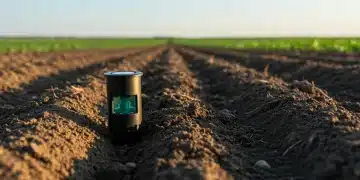
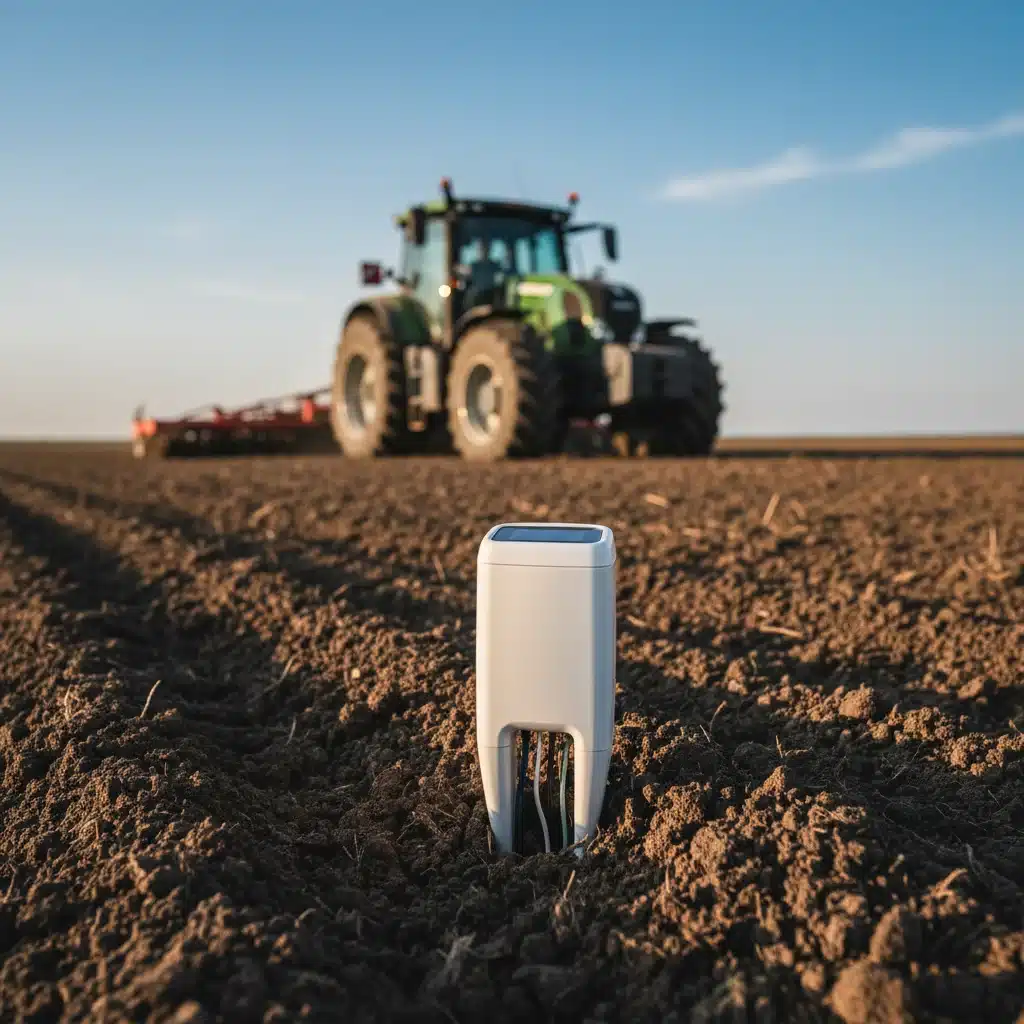
Before diving into the ROI, it’s crucial to understand what IoT soil moisture sensors are and how they function. These devices are sophisticated tools designed to measure the volumetric water content in the soil. They typically consist of a probe that is inserted into the ground and a transmitter that sends data wirelessly to a central hub or cloud-based platform. This data can then be accessed by farmers via a smartphone app, computer, or other connected devices.
- Capacitive Sensors: These sensors measure the dielectric permittivity of the soil, which is directly related to its water content. They are generally less affected by salinity and are good for long-term monitoring.
- Tensiometers: These measure the soil water potential, indicating how tightly water is held by the soil particles. They directly reflect the water availability to plants.
- Time Domain Reflectometry (TDR) and Frequency Domain Reflectometry (FDR): These advanced sensors measure the travel time or frequency of electromagnetic waves through the soil, which changes with moisture content. They offer high accuracy and are less sensitive to soil type.
The ‘IoT’ aspect means these sensors are interconnected, forming a network that can cover vast agricultural areas. The data collected from multiple sensors across different zones of a farm can be aggregated, analyzed, and used to create highly detailed soil moisture maps. This level of detail allows for zonal irrigation, where water is applied only where and when it is needed, minimizing waste and maximizing efficiency. The integration with other farm management systems, such as automated irrigation controllers, further enhances their utility, enabling truly autonomous and optimized water delivery.
Anúncios
The Economic Imperative: Why U.S. Farms Need Precision Irrigation
Water is arguably the most critical input for crop production. In many regions of the U.S., water resources are becoming scarcer, and regulations on water usage are becoming stricter. Traditional irrigation methods often lead to overwatering, which not only wastes water but can also leach nutrients from the soil, promote fungal diseases, and increase energy consumption for pumping. Underwatering, on the other hand, leads to stunted growth and reduced yields.
Precision irrigation, facilitated by IoT soil moisture ROI sensors, addresses these challenges head-on. By providing accurate, real-time data, farmers can:
- Reduce Water Consumption: Studies have shown that precision irrigation can reduce water usage by 20-50% without compromising yield. This translates directly into lower water bills and a more sustainable operation.
- Lower Energy Costs: Less water pumped means less electricity or fuel consumed, leading to significant savings on energy expenses.
- Optimize Fertilizer Use: By preventing overwatering, farmers can reduce the leaching of expensive fertilizers, ensuring nutrients remain in the root zone where plants can access them. This not only saves money but also minimizes environmental pollution.
- Increase Crop Yield and Quality: Maintaining optimal soil moisture levels throughout the growing season reduces plant stress, leading to healthier plants, higher yields, and often improved crop quality.
- Minimize Disease Risk: Excessive soil moisture can create anaerobic conditions and foster the growth of harmful pathogens. Precise irrigation helps maintain a balanced soil environment, reducing disease incidence.
These economic benefits are not theoretical; they are tangible and measurable, forming the foundation of a rapid IoT soil moisture ROI for U.S. farms.
The 3-Month ROI Breakdown: A Realistic Scenario for U.S. Farms
Achieving a positive return on investment within three months might seem ambitious, but it is entirely feasible for many U.S. farms, especially those growing high-value crops or operating in water-stressed regions. Let’s break down the typical costs and savings:
Initial Investment Costs
The initial outlay for an IoT soil moisture sensor system can vary widely depending on the farm size, the number of sensors needed, the type of sensors, and the accompanying software and infrastructure. For a typical U.S. farm, a basic system might include:
- Sensors: Each sensor can cost anywhere from $100 to $500. For a medium-sized farm (e.g., 100-200 acres), a network of 10-20 sensors might be sufficient, totaling $1,000 to $10,000.
- Gateway/Base Station: To collect data from the sensors, a gateway or base station is required, costing roughly $500 to $2,000.
- Software and Data Analytics Subscription: Many systems come with a monthly or annual subscription fee for cloud services, data storage, and analytics, ranging from $50 to $200 per month. For a three-month period, this would be $150 to $600.
- Installation: While many systems are designed for easy DIY installation, professional installation might add $500 to $2,000, depending on the complexity.
Total Estimated Initial Investment (for a medium-sized farm): $2,150 – $14,600.
Monthly Savings and Benefits (Over 3 Months)
The savings generated by IoT soil moisture sensors begin immediately upon implementation. These savings accumulate rapidly, leading to a quick IoT soil moisture ROI.
1. Water Savings
Let’s assume a farm uses an average of 2 acre-feet of water per acre per growing season for a crop like corn, and water costs (including pumping energy) are $0.10 per 100 gallons (or approximately $32.59 per acre-foot). For a 100-acre farm, this is 200 acre-feet of water. If the sensors enable a conservative 20% reduction in water usage:
- Annual Water Savings: 200 acre-feet * 20% = 40 acre-feet.
- Annual Monetary Savings from Water: 40 acre-feet * $32.59/acre-foot = $1,303.60.
- Monthly Monetary Savings from Water: $1,303.60 / 12 months = $108.63.
- 3-Month Monetary Savings from Water: $108.63 * 3 = $325.89.
This is a conservative estimate. In regions with higher water costs or for crops with higher water demands, these savings can be significantly greater. Many farms report reductions closer to 30-40%, dramatically increasing the speed of the IoT soil moisture ROI.
2. Energy Savings (Pumping)
Reduced water usage directly translates to lower energy consumption for pumping. If a farm saves 20% on water, it can expect a similar reduction in pumping energy. Assuming an average annual energy cost for irrigation of $50 per acre:
- Annual Energy Cost: 100 acres * $50/acre = $5,000.
- Annual Energy Savings (20%): $5,000 * 20% = $1,000.
- Monthly Energy Savings: $1,000 / 12 months = $83.33.
- 3-Month Energy Savings: $83.33 * 3 = $249.99.
3. Fertilizer Savings
Preventing nutrient leaching is a major benefit. While harder to quantify precisely without specific farm data, a conservative estimate of 5-10% reduction in fertilizer use due to optimized irrigation is reasonable. If a farm spends $150 per acre on fertilizer annually:
- Annual Fertilizer Cost: 100 acres * $150/acre = $15,000.
- Annual Fertilizer Savings (5%): $15,000 * 5% = $750.
- Monthly Fertilizer Savings: $750 / 12 months = $62.50.
- 3-Month Fertilizer Savings: $62.50 * 3 = $187.50.
4. Yield Increase and Quality Improvement
This is often the most significant, yet sometimes overlooked, factor in the IoT soil moisture ROI. Reducing plant stress and ensuring optimal moisture levels can lead to a 5-15% increase in yield. For a crop like corn, with an average yield of 180 bushels per acre and a price of $4.00 per bushel:
- Annual Revenue per Acre: 180 bushels * $4.00/bushel = $720.
- Annual Revenue for 100 Acres: $720 * 100 = $72,000.
- Annual Yield Increase (5%): $72,000 * 5% = $3,600.
- Monthly Yield Increase: $3,600 / 12 months = $300.
- 3-Month Yield Increase: $300 * 3 = $900.
Improved crop quality can also lead to higher prices, further boosting revenue, though this is harder to quantify generally. For high-value specialty crops, this yield and quality improvement can be even more dramatic.
Calculating the 3-Month ROI
Let’s sum up the conservative 3-month savings and compare them to the initial investment:
- Total 3-Month Savings:
- Water: $325.89
- Energy: $249.99
- Fertilizer: $187.50
- Yield Increase: $900.00
- Total = $1,663.38
Comparing this to our estimated initial investment range ($2,150 – $14,600), we can see that for farms with lower initial setup costs and significant water/energy expenses, the IoT soil moisture ROI can indeed be realized within three months. For instance, if a farm invests $2,500 in a system, the 3-month savings of $1,663.38 represent a substantial portion of the initial cost, with the remaining balance easily recovered within the next few months of operation, well within a single growing season.
It is important to note that these are conservative estimates. Many farms experience much higher savings, especially those that were previously inefficient in their water use or those growing high-value crops where even a small percentage increase in yield translates to significant revenue gains. The speed of the IoT soil moisture ROI is highly dependent on specific farm conditions, crop type, water costs, and existing irrigation efficiency.
Beyond Financial: The Environmental and Operational Benefits
While the financial ROI is compelling, the benefits of IoT soil moisture sensors extend far beyond the balance sheet. These advantages contribute to the long-term sustainability and resilience of U.S. farms.
Environmental Stewardship
- Water Conservation: This is perhaps the most obvious and critical environmental benefit. By using water more efficiently, farms contribute to preserving vital freshwater resources, which is crucial in drought-prone areas.
- Reduced Runoff and Leaching: Precise irrigation minimizes the amount of excess water that runs off fields or leaches into groundwater, reducing the spread of agricultural pollutants like nitrates and phosphates. This protects local ecosystems and drinking water supplies.
- Lower Carbon Footprint: Reduced energy consumption for pumping water directly translates to lower greenhouse gas emissions, contributing to a smaller carbon footprint for the farm.
Operational Efficiency and Decision Making
- Time Savings: Farmers spend less time manually checking soil conditions or managing irrigation schedules, freeing up valuable time for other critical tasks. Automated systems can even handle irrigation without direct human intervention once parameters are set.
- Data-Driven Insights: The wealth of data collected by IoT sensors provides invaluable insights into soil dynamics, crop water demand, and irrigation effectiveness. This data can be used to refine practices year after year, leading to continuous improvement.
- Risk Mitigation: By preventing both over- and under-watering, sensors help mitigate risks associated with crop stress, disease, and poor yield, leading to more predictable and stable harvests.
- Scalability: IoT systems are often scalable, allowing farmers to start with a small deployment and expand as their needs and budget allow.
Implementation Best Practices for Maximizing IoT Soil Moisture ROI
To ensure a quick and substantial IoT soil moisture ROI, U.S. farms should consider several best practices during implementation:
- Start Small, Think Big: Begin with a pilot project in a representative section of your farm or a problematic zone. This allows you to learn the system, quantify benefits, and build confidence before a full-scale deployment.
- Choose the Right Sensors: Select sensors appropriate for your soil type, crop, and budget. Consider factors like accuracy, durability, battery life, and ease of maintenance. Some sensors perform better in sandy soils, while others are more suited for clay.
- Strategic Placement: Sensor placement is crucial. Install sensors at various depths to monitor water availability in different root zones. Place them in areas representative of the field, avoiding anomalies like compacted tracks or field edges. Consider variabilities in soil type across the field.
- Integrate with Existing Systems: Maximize synergy by integrating soil moisture data with existing irrigation controllers, weather stations, and farm management software. This creates a holistic view and enables automated decision-making.
- Understand Your Data: Don’t just collect data; analyze it. Learn to interpret the trends and patterns in soil moisture. Many software platforms offer intuitive dashboards and alerts to help with this.
- Training and Support: Ensure your farm staff are trained on how to use the system effectively. Choose a provider that offers reliable customer support and technical assistance.
- Regular Calibration and Maintenance: Like any precision instrument, soil moisture sensors require occasional calibration and maintenance to ensure accuracy and longevity.
By following these guidelines, farms can significantly enhance their chances of achieving a rapid and sustained IoT soil moisture ROI.
Case Studies and Real-World Examples
Across the U.S., numerous farms are already reaping the benefits of IoT soil moisture sensors. For example:
- A large almond grower in California reported a 25% reduction in water usage and a 7% increase in yield within their first year of adopting sensor-based irrigation, leading to a full ROI within one growing season.
- A corn and soybean farmer in the Midwest used sensors to fine-tune irrigation during critical growth stages, resulting in a 10% yield bump and significant savings on energy for pumping, recovering their investment in less than six months.
- A vegetable farm in Florida, battling high water costs and stringent environmental regulations, implemented a network of sensors and reduced their water consumption by 35%, achieving a positive ROI within five months, primarily through reduced water and fertilizer expenses.
These examples underscore the versatility and effectiveness of IoT soil moisture sensors across different crops, climates, and farming scales. The common thread is the ability to make smarter, data-driven irrigation decisions, which invariably leads to a favorable IoT soil moisture ROI.
Addressing Potential Challenges
While the benefits are clear, it’s also important to acknowledge potential challenges:
- Initial Cost: As discussed, the upfront investment can be a barrier for some smaller farms. However, government grants, subsidies, and financing options are often available for adopting sustainable agricultural technologies.
- Connectivity: Reliable internet connectivity in rural areas can sometimes be an issue. However, many IoT systems use long-range, low-power wireless technologies (like LoRaWAN or cellular networks) designed for agricultural environments.
- Technical Expertise: Some farmers may be hesitant due to a perceived lack of technical expertise. However, modern IoT agricultural platforms are designed to be user-friendly, and providers often offer comprehensive training and support.
- Data Overload: The sheer volume of data can be overwhelming. Choosing a system with good data visualization and actionable insights is key.
Despite these challenges, the rapid advancements in IoT technology and the increasing availability of user-friendly solutions are making these systems more accessible and beneficial for a wider range of U.S. farms, solidifying the case for a swift IoT soil moisture ROI.
Conclusion: A Smart Investment for the Future of U.S. Agriculture
The evidence overwhelmingly supports the claim that U.S. farms can achieve a significant return on investment from IoT soil moisture sensors within a remarkably short timeframe – often as little as three months. The combined savings from reduced water and energy consumption, optimized fertilizer use, and increased crop yields quickly offset the initial investment. Beyond the immediate financial gains, these technologies empower farmers to adopt more sustainable practices, conserve precious natural resources, and build more resilient and profitable operations for the long term.
As the agricultural landscape continues to evolve, embracing smart farming technologies like IoT soil moisture sensors is not just an option but a strategic imperative. For any U.S. farm looking to enhance efficiency, reduce costs, boost productivity, and contribute to environmental stewardship, investing in these advanced tools promises a rapid and rewarding IoT soil moisture ROI, paving the way for a more sustainable and prosperous future.