The 2026 Outlook for Biofuel Markets: Opportunities and Challenges for US Corn and Soybean Producers
The global energy landscape is in constant flux, driven by a confluence of environmental concerns, technological advancements, and geopolitical shifts. Within this dynamic environment, the biofuel market outlook for 2026 presents a fascinating study of both immense opportunities and significant challenges, particularly for US corn and soybean producers. As the world strives to reduce its reliance on fossil fuels and transition towards more sustainable energy sources, biofuels derived from agricultural commodities like corn and soybeans are poised to play a crucial role. However, this role is not without its complexities, encompassing policy uncertainties, market volatility, and the ever-present debate surrounding food versus fuel.
For decades, US agriculture has been a cornerstone of the nation’s biofuel production. Corn is primarily used for ethanol, a widely blended gasoline additive, while soybeans are the dominant feedstock for biodiesel. The symbiotic relationship between these agricultural sectors and the renewable energy industry has created economic benefits for rural communities, increased demand for crops, and contributed to national energy security. As we approach 2026, understanding the trajectory of the biofuel market outlook becomes paramount for producers, policymakers, and investors alike. This comprehensive analysis will delve into the various facets shaping this future, from regulatory frameworks and technological innovations to global demand patterns and the economic implications for US farmers.
Anúncios
Understanding the Current Biofuel Landscape
Before peering into the future, it’s essential to grasp the current state of the biofuel industry. The US has been a global leader in biofuel production, largely due to supportive government policies, particularly the Renewable Fuel Standard (RFS). The RFS mandates that a certain volume of renewable fuels be blended into the nation’s transportation fuel supply. This policy has been instrumental in creating a stable demand for corn ethanol and soybean biodiesel, directly impacting the profitability and planting decisions of US farmers.
Ethanol production in the US primarily relies on corn, transforming starch into fuel. This process has become highly efficient over the years, with co-products like distillers’ grains serving as valuable animal feed. Biodiesel, on the other hand, is predominantly produced from soybean oil, offering a cleaner-burning alternative to traditional diesel. The infrastructure for both production and distribution of these biofuels is well-established across the country, particularly in the Midwest, where corn and soybean cultivation are concentrated.
Anúncios
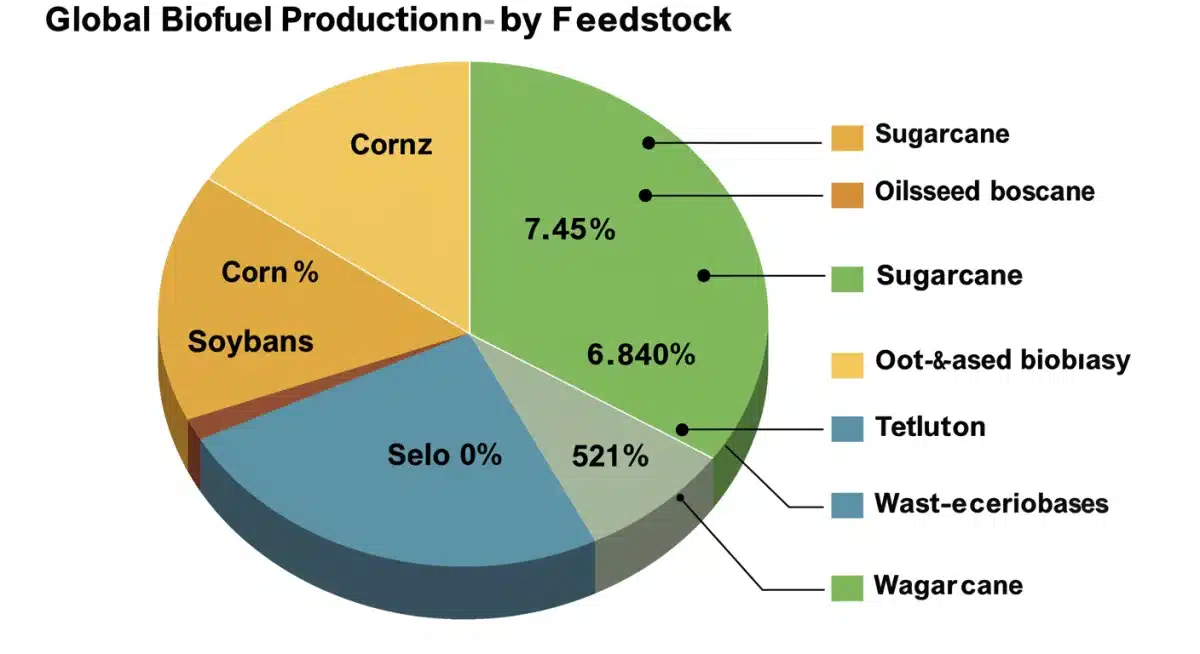
Globally, the picture is more diverse, with different regions utilizing various feedstocks based on local agricultural strengths. Brazil, for instance, is a major producer of sugarcane ethanol, while palm oil is a significant feedstock in Southeast Asia. However, environmental concerns associated with deforestation for palm oil cultivation have led to increased scrutiny and restrictions in certain markets. This global context influences the competitive landscape and potential export opportunities for US-produced biofuels, further shaping the biofuel market outlook.
Key Drivers Shaping the 2026 Biofuel Market Outlook
Several critical factors will determine the trajectory of the biofuel market outlook by 2026. These drivers can be broadly categorized into policy and regulatory frameworks, technological advancements, global demand and supply dynamics, and economic considerations.
Policy and Regulatory Frameworks: The Foundation of Biofuel Demand
Government policies are arguably the most influential factor in the biofuel sector. In the US, the future of the RFS beyond its original statutory deadlines and potential modifications will significantly impact demand for corn and soybean-based biofuels. The Environmental Protection Agency (EPA) periodically sets renewable volume obligations (RVOs), and these targets directly dictate the amount of biofuel that must be blended. Any changes to these RVOs, whether increases or decreases, will send ripples through the agricultural markets.
Beyond the RFS, state-level policies, such as California’s Low Carbon Fuel Standard (LCFS), are increasingly important. LCFS programs incentivize fuels with lower carbon intensities, which can benefit advanced biofuels and those produced with more sustainable practices. The expansion of such programs to other states could create new markets and premium prices for specific biofuel products. Internationally, climate change commitments and carbon reduction targets adopted by various nations will also influence global biofuel demand and trade policies, affecting US exports.
Technological Advancements: Enhancing Efficiency and Sustainability
Innovation in biofuel production technologies continues to evolve rapidly. For corn ethanol, advancements focus on improving yields, reducing energy consumption in the production process, and developing new co-products. This includes technologies for cellulosic ethanol, which utilizes corn stover and other agricultural residues, potentially diversifying feedstocks and enhancing the sustainability profile of ethanol production. While cellulosic ethanol has faced commercialization hurdles, ongoing research and development could see breakthroughs by 2026.
In the biodiesel sector, research is exploring alternative feedstocks beyond soybean oil, such as camelina, algae, and waste oils. These alternatives could reduce the pressure on food crops and offer even lower carbon footprints. Furthermore, advancements in catalytic processes and biorefinery concepts aim to produce a wider range of bio-based chemicals and products alongside fuels, enhancing the economic viability of biorefineries and creating new revenue streams for agricultural producers. These technological leaps are crucial for a positive biofuel market outlook.
Global Demand and Supply Dynamics: A Complex Web
The global demand for biofuels is influenced by numerous factors, including population growth, economic development, energy security concerns, and environmental regulations. Emerging economies, particularly in Asia and Africa, could see increased demand for transportation fuels, potentially boosting biofuel consumption. However, the pace of adoption of electric vehicles (EVs) and other alternative transportation technologies will also play a significant role. A rapid shift to EVs could temper demand for liquid transportation fuels, including biofuels, in certain segments.
On the supply side, global agricultural production of corn and soybeans will dictate feedstock availability and prices. Weather patterns, geopolitical events affecting major agricultural exporters, and changes in land use policies can all impact supply. Competition for land and resources between food, feed, and fuel production remains a persistent challenge and a critical consideration within the biofuel market outlook. The balance between these competing demands will be a key determinant of market stability and pricing.
Economic Considerations: Profitability and Competitiveness
The economic viability of biofuel production is heavily tied to crude oil prices, agricultural commodity prices, and government incentives. When crude oil prices are high, biofuels become more competitive. Conversely, low oil prices can make biofuels less attractive without significant policy support. Similarly, fluctuations in corn and soybean prices directly affect the cost of production for ethanol and biodiesel, respectively. Farmers’ planting decisions are often a direct response to anticipated crop prices, which in turn are influenced by biofuel demand.
The cost-effectiveness of biofuel production, including capital expenditures for new facilities and operational costs, will also shape investment decisions. Access to financing, tax credits, and other economic incentives will continue to be vital for the growth and sustainability of the biofuel industry. Understanding these intricate economic relationships is fundamental to projecting the biofuel market outlook accurately.
Opportunities for US Corn and Soybean Producers by 2026
Despite the challenges, the biofuel market outlook for US corn and soybean producers presents several compelling opportunities in the lead-up to 2026.
Continued Demand from the Renewable Fuel Standard (RFS)
Even with potential adjustments, the RFS is expected to remain a foundational policy supporting biofuel demand in the US. This provides a relatively stable market for corn ethanol and soybean biodiesel, ensuring a baseline demand for these crops. Producers who can efficiently meet this demand will continue to benefit from the program’s structure. The EPA’s recent decisions on RVOs suggest a sustained commitment to renewable fuels, offering some predictability for farmers.
Growing Low Carbon Fuel Standard (LCFS) Markets
The expansion of LCFS-type programs beyond California offers a significant opportunity. These programs often reward fuels with lower carbon intensity scores, which can incentivize advanced production practices and offer premium prices. US corn and soybean producers who adopt sustainable farming practices, such as no-till farming, cover cropping, and optimized fertilizer use, can improve the carbon footprint of their feedstocks, making their biofuels more attractive in LCFS markets. This creates a pathway for differentiation and higher value for sustainably produced crops.
Export Market Potential
As more countries set ambitious decarbonization goals, the demand for biofuels in international markets is likely to increase. The US, with its robust agricultural output and established biofuel industry, is well-positioned to be a significant exporter of biofuels or biofuel feedstocks. Trade agreements and international sustainability standards will be crucial in unlocking this potential. For instance, increasing demand for sustainable aviation fuel (SAF), which can be derived from soybean oil, presents a burgeoning export opportunity.
Development of New Bio-based Products
Beyond traditional fuels, biorefineries are increasingly developing new bio-based chemicals, plastics, and materials from corn and soybeans. This diversification reduces reliance solely on fuel markets and creates additional revenue streams for producers. For example, corn can be used to produce lactic acid for biodegradable plastics, while soybean oil can be used in lubricants, paints, and other industrial applications. This expansion into the bio-economy broadens the market for these agricultural commodities and strengthens the overall biofuel market outlook.
Enhanced Sustainability Practices and Premium Markets
Consumers and regulators are increasingly demanding sustainable products. Producers who can demonstrate strong environmental stewardship through certifications and verifiable practices may access premium markets for their corn and soybeans. This includes practices that reduce greenhouse gas emissions, improve soil health, and conserve water. Investing in these practices not only benefits the environment but also provides a competitive edge in a market that increasingly values sustainability.
Challenges Facing US Corn and Soybean Producers by 2026
Alongside the opportunities, several significant challenges could impact the biofuel market outlook for US corn and soybean producers by 2026.
Policy Uncertainty and Regulatory Shifts
The biggest challenge remains policy uncertainty. While the RFS has been a cornerstone, its long-term future and specific RVO targets are always subject to political and economic pressures. Any significant reduction in mandates or changes in how they are implemented could reduce demand and depress crop prices. The political landscape frequently shifts, making it difficult for farmers and biofuel producers to make long-term investment decisions with confidence.
Competition from Other Feedstocks and Technologies
The biofuel sector is dynamic, with continuous research into new feedstocks and production methods. Cellulosic ethanol from agricultural residues, advanced biofuels from algae, and even direct air capture technologies for synthetic fuels could become more commercially viable, potentially competing with corn and soybean-based fuels. Furthermore, the rapid adoption of electric vehicles (EVs) in the transportation sector poses a long-term threat to demand for all liquid fuels, including biofuels, impacting the overall biofuel market outlook.
Food vs. Fuel Debate and Land Use Concerns
The ethical debate surrounding using food crops for fuel continues to be a challenge. Critics argue that diverting corn and soybeans for biofuel production can drive up food prices and exacerbate food insecurity, particularly in developing nations. While proponents highlight the economic benefits for farmers and the environmental advantages, this debate can influence public perception and policy decisions. Land use change associated with expanding biofuel feedstock production also raises environmental concerns, particularly regarding biodiversity and carbon emissions.

Market Volatility and Price Fluctuations
Agricultural commodity markets are inherently volatile, influenced by weather, global supply and demand, and speculative trading. This volatility directly impacts the profitability of biofuel production and, consequently, the demand for corn and soybeans. Farmers face the challenge of managing price risk in an environment where both their input costs and output prices can fluctuate dramatically. Geopolitical events, such as conflicts or trade disputes, can further amplify this market instability, making the biofuel market outlook less predictable.
Infrastructure Limitations for Advanced Biofuels
While advanced biofuels hold great promise, their widespread adoption is often hampered by existing infrastructure limitations. New pipelines, storage facilities, and blending infrastructure may be required to accommodate different types of biofuels. The capital investment needed for such infrastructure upgrades can be substantial, posing a barrier to market entry and expansion for novel biofuel products. This can slow the transition away from conventional corn and soybean-based biofuels even when more sustainable alternatives exist.
Strategies for US Producers to Thrive in the 2026 Biofuel Market
To navigate the evolving biofuel market outlook, US corn and soybean producers can adopt several strategic approaches:
Diversification of Income Streams
Relying solely on biofuel demand for crop prices can be risky. Producers should explore diversifying their income streams, such as growing specialty crops, engaging in direct-to-consumer sales, or participating in carbon credit markets. This reduces their exposure to the fluctuations of the biofuel market and provides greater financial stability. Investing in on-farm renewable energy production, such as solar or wind, can also create additional revenue.
Adoption of Sustainable and Regenerative Agricultural Practices
Embracing sustainable and regenerative farming practices is not just good for the environment; it can also be a competitive advantage. Practices like cover cropping, reduced tillage, and precision agriculture improve soil health, reduce input costs, and can lead to higher yields over time. Furthermore, these practices can enhance the carbon intensity score of their crops, making them more valuable in LCFS markets and appealing to environmentally conscious buyers. This proactive approach will be key to a positive biofuel market outlook for individual farms.
Advocacy for Supportive Biofuel Policies
Active engagement with policymakers and industry associations is crucial. Producers should advocate for stable, long-term biofuel policies that provide certainty for investment and growth. This includes supporting the RFS, advocating for the expansion of LCFS programs, and ensuring that agricultural interests are represented in climate and energy discussions. A strong, unified voice can help shape a favorable regulatory environment.
Investment in On-Farm Technology and Data Analytics
Leveraging technology, such as advanced sensors, satellite imagery, and data analytics, can help producers optimize their operations, improve efficiency, and reduce environmental impact. Precision agriculture techniques allow for more targeted application of inputs, leading to cost savings and higher yields. Data-driven decision-making can also help farmers identify new market opportunities and adapt to changing conditions more effectively, enhancing their resilience in the dynamic biofuel market outlook.
Exploring Niche Markets and Value-Added Products
Instead of solely focusing on commodity markets, producers can explore niche markets for their corn and soybeans. This could involve growing specific varieties for high-value food applications, participating in certified organic or non-GMO markets, or partnering with food companies to produce value-added products. For instance, growing high-oleic soybeans for specialized oil markets can offer a premium over conventional varieties. This diversification helps mitigate risks associated with the broader biofuel market.
The Role of Biofuel in a Decarbonized Future
Looking beyond 2026, the biofuel market outlook will increasingly be shaped by the broader global push towards decarbonization. While electric vehicles are gaining traction for light-duty transportation, sectors like heavy-duty trucking, aviation, and marine shipping are harder to electrify and will likely rely on liquid fuels for the foreseeable future. This is where advanced biofuels, including sustainable aviation fuel (SAF) and renewable diesel, offer significant potential.
SAF, in particular, is a rapidly growing area of interest, with airlines and governments committing to ambitious targets for its adoption. Soybean oil is a key feedstock for SAF production, creating a new, high-value market for soybean producers. Similarly, renewable diesel, chemically identical to petroleum diesel but made from biomass, is gaining popularity due to its ‘drop-in’ nature and lower carbon footprint. These advanced biofuels represent a significant evolution in the industry, moving beyond simple blending to direct replacement fuels, opening new avenues for agricultural feedstocks.
Furthermore, the concept of a circular bioeconomy, where agricultural waste and byproducts are valorized into fuels, chemicals, and materials, will become more prominent. This integrated approach not only enhances the sustainability of biofuel production but also creates a more resilient and diversified agricultural sector. US corn and soybean producers, by being at the forefront of these developments, can secure their position as vital contributors to a sustainable energy future.
Conclusion: Navigating the Future of Biofuel Markets
The biofuel market outlook for 2026 presents a complex yet promising landscape for US corn and soybean producers. While challenges such as policy uncertainty, market volatility, and the food vs. fuel debate persist, significant opportunities exist through continued RFS demand, expanding LCFS markets, export potential, and the growth of new bio-based products. The key to success will lie in adaptability, innovation, and a commitment to sustainable practices.
Producers who actively engage in sustainable farming, leverage advanced technologies, diversify their income streams, and advocate for stable, supportive policies will be best positioned to thrive. As the world continues its journey towards a lower-carbon future, biofuels derived from US corn and soybeans will undoubtedly play a critical role, contributing to energy security, rural economic development, and environmental sustainability. The coming years will be pivotal in shaping this future, and proactive engagement from the agricultural sector will be essential in maximizing the benefits and mitigating the risks within the evolving biofuel market outlook.