US Agri Exports: Navigating Global Economic Slowdown & 2% Decline by 2026
Anúncios
The global economic landscape is a complex tapestry woven with threads of trade, finance, and geopolitical shifts. For the United States, a powerhouse in agricultural production and US Agri Exports, understanding and adapting to these global dynamics is paramount. Recent projections suggest a potential 2% decline in US agricultural exports by 2026, largely attributable to a looming global economic slowdown. This forecast isn’t just a number; it’s a call to action for farmers, policymakers, and industry stakeholders to fortify the sector against turbulent international waters. The resilience of US agriculture hinges on proactive strategies, innovative approaches, and a keen understanding of both challenges and opportunities.
Anúncios
The Looming Shadow: Global Economic Slowdown and US Agri Exports
The specter of a global economic slowdown casts a long shadow over various industries, and agriculture is no exception. A 2% reduction in US Agri Exports by 2026, while seemingly modest, represents billions of dollars in lost revenue and significant challenges for rural economies. This potential downturn is not an isolated event but a confluence of factors, including persistent inflation, rising interest rates, geopolitical tensions, and supply chain disruptions that continue to ripple across continents. For the US agricultural sector, a decline in exports means lower commodity prices, reduced farm income, and potential job losses in an industry that forms the backbone of many communities.
Understanding the mechanisms through which a global slowdown impacts US Agri Exports is crucial. When global economies contract, consumer purchasing power diminishes, leading to reduced demand for imported goods, including agricultural products. Furthermore, currency fluctuations can make US goods more expensive for international buyers, further dampening export volumes. Trade protectionism, often a byproduct of economic uncertainty, can also erect barriers to market access, complicating the export landscape for US farmers. The interconnectedness of global markets means that economic woes in one major importing region can have a cascading effect on US producers, highlighting the need for a robust and adaptable export strategy.
Historical Precedents: Lessons from Past Economic Downturns
To prepare for the future, it’s often insightful to look to the past. Historical economic downturns offer valuable lessons on how US Agri Exports have fared and adapted. The 2008 financial crisis, for instance, saw an initial dip in global demand, but the agricultural sector, particularly essential food commodities, demonstrated a degree of resilience compared to other industries. However, the recovery was not uniform, and certain sectors experienced prolonged challenges. Similarly, the early 1980s farm crisis, driven by high interest rates, overproduction, and an export slump, underscored the vulnerability of the sector to global economic shifts and the importance of financial prudence and market diversification.
Anúncios
These historical episodes teach us that while agriculture provides essential goods, it is not immune to economic shocks. They emphasize the need for strong government support, effective risk management strategies at the farm level, and a constant search for new markets. The lessons learned from past crises can inform current strategies, helping to build a more resilient framework for US Agri Exports in the face of future economic headwinds. Key takeaways include the importance of maintaining strong trade relationships, fostering innovation, and ensuring financial stability within the agricultural sector.
Diversification: A Cornerstone of Resilience for US Agri Exports
One of the most potent strategies for mitigating the impact of a global economic slowdown on US Agri Exports is aggressive market diversification. Over-reliance on a few key trading partners or commodities can expose the sector to significant risks if those markets experience economic difficulties or impose trade restrictions. By expanding into new and emerging markets, US agriculture can spread its risk and tap into growing consumer bases.
This diversification isn’t just about geography; it’s also about product. While staple crops like corn, soybeans, and wheat remain crucial, exploring niche markets for high-value specialty crops, organic produce, or processed agricultural goods can open new avenues for growth. These products often command higher prices and can be less susceptible to the broad swings in commodity markets. Furthermore, investing in value-added processing within the US can transform raw agricultural products into finished goods, capturing more of the value chain domestically and creating additional export opportunities.
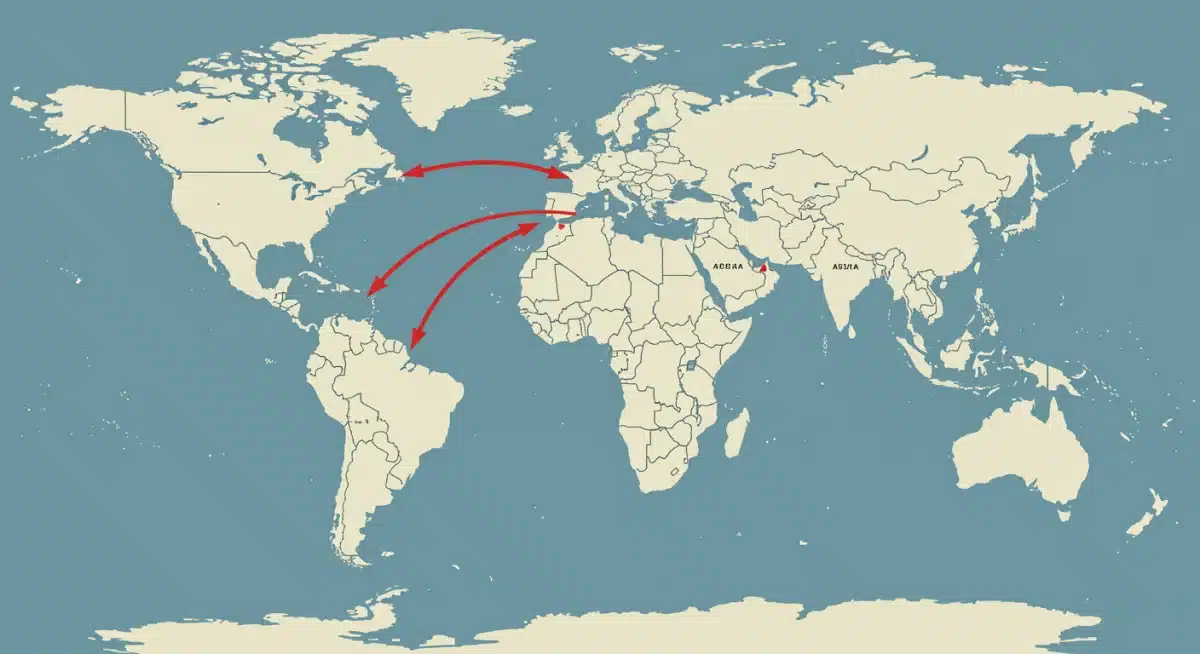
The process of market diversification requires significant effort, including market research, understanding cultural preferences, navigating complex regulatory environments, and building robust supply chains. Government agencies, trade associations, and private companies all have a role to play in identifying and developing these new markets for US Agri Exports. Trade missions, export promotion programs, and bilateral trade agreements are vital tools in this endeavor, helping to forge new connections and open doors for US agricultural products globally.
Targeting Emerging Markets: Opportunities for Growth
Emerging economies, particularly in Southeast Asia, Africa, and Latin America, present significant opportunities for US Agri Exports. These regions often have rapidly growing populations, rising incomes, and an increasing demand for diverse and high-quality food products. While traditional markets in Europe and North America remain important, focusing on these dynamic economies can provide a buffer against slowdowns in established markets.
However, entering emerging markets comes with its own set of challenges, including varying food safety standards, infrastructure limitations, and different consumer preferences. Successful entry requires tailored strategies, including adapting products to local tastes, investing in cold chain logistics, and building strong relationships with local distributors. Education and outreach programs about the quality and safety of US agricultural products can also play a crucial role in building trust and demand in these new markets.
Policy Interventions: Government’s Role in Supporting US Agri Exports
Government policies play a pivotal role in shaping the landscape for US Agri Exports. In anticipation of a potential 2% decline, strategic policy interventions become even more critical. These interventions can range from enhancing export promotion programs to negotiating favorable trade agreements and providing financial support to farmers.
Strengthening Trade Agreements and Reducing Barriers
Bilateral and multilateral trade agreements are essential for ensuring predictable and fair access to international markets for US Agri Exports. The US government can prioritize the negotiation of new agreements and the strengthening of existing ones, focusing on reducing tariffs, eliminating non-tariff barriers, and harmonizing standards. This proactive approach can help to level the playing field for US farmers and make their products more competitive globally, even in a challenging economic environment.
Furthermore, addressing retaliatory tariffs and resolving trade disputes promptly can prevent prolonged disruptions to export flows. The ability to navigate complex international trade relations will be key to safeguarding the interests of the US agricultural sector and maintaining a strong position in global markets. Policymakers must also advocate for science-based regulations to prevent arbitrary restrictions on agricultural trade.
Export Promotion and Financial Support
Government-funded export promotion programs, such as those offered by the USDA’s Foreign Agricultural Service (FAS), are vital for helping US agricultural businesses identify and penetrate new markets. These programs provide market intelligence, technical assistance, and financial incentives that can significantly reduce the risks associated with exporting. Increased investment in these programs can yield substantial returns by boosting US Agri Exports and supporting rural economies.
Additionally, financial support mechanisms, such as export credit guarantees and crop insurance programs, can provide a crucial safety net for farmers. These tools can help mitigate the financial risks associated with volatile global markets and adverse weather events, encouraging farmers to continue investing in production and export-oriented activities. Ensuring the accessibility and effectiveness of these programs is paramount.
Innovation and Technology: Driving Competitiveness in US Agri Exports
In an increasingly competitive global market, innovation and technology are indispensable for maintaining the competitiveness of US Agri Exports. From precision agriculture to biotechnology, technological advancements can enhance productivity, improve efficiency, and reduce costs, making US products more attractive to international buyers.
Precision Agriculture and Sustainable Practices
Precision agriculture technologies, including GPS-guided machinery, drones, and sensor networks, allow farmers to optimize resource use, leading to higher yields and reduced environmental impact. By precisely applying water, fertilizers, and pesticides, farmers can lower production costs while also meeting the growing global demand for sustainably produced food. Highlighting these sustainable practices can also be a strong marketing point for US Agri Exports in environmentally conscious markets.
Investing in research and development for climate-resilient crops, drought-resistant varieties, and advanced pest management techniques can further enhance the sector’s long-term sustainability and reliability as a global supplier. These innovations not only address environmental concerns but also contribute to the economic viability of farming operations, making them more resilient to external shocks.
Biotechnology and Value-Added Products
Biotechnology offers immense potential for developing crops with enhanced nutritional profiles, longer shelf lives, and improved resistance to diseases. These advancements can create new market opportunities for US Agri Exports, particularly in regions where food security and nutritional deficiencies are pressing concerns. Communicating the benefits and safety of these biotechnological advancements to international consumers is crucial for widespread acceptance.

Furthermore, the development of value-added agricultural products, such as processed foods, biofuels, and specialty ingredients, can diversify the export portfolio and increase the overall revenue generated from raw agricultural commodities. This shift towards higher-value products can insulate the sector from the volatility of raw commodity markets and create more stable income streams for farmers and processors.
Strengthening Domestic Demand and Supply Chain Resilience
While focusing on US Agri Exports is vital, strengthening domestic demand and ensuring the resilience of the internal supply chain are equally important. A robust domestic market can provide a stable base during periods of international market instability, and an efficient supply chain ensures that products can move from farm to consumer, both domestically and internationally, without undue delays or costs.
Promoting ‘Buy American’ Initiatives
Encouraging domestic consumption of US agricultural products through ‘Buy American’ initiatives can help absorb surplus production and provide a stable revenue stream for farmers. This can involve public awareness campaigns, partnerships with retailers, and government procurement policies that prioritize domestically grown food. A strong domestic market acts as a buffer against fluctuations in export demand, offering a degree of stability to the agricultural sector.
Investing in Infrastructure and Logistics
An efficient and resilient supply chain is critical for both domestic and international markets. Investing in transportation infrastructure, including roads, railways, and ports, is essential for moving agricultural products efficiently. Modernizing storage facilities, cold chains, and processing plants can reduce post-harvest losses and enhance the competitiveness of US Agri Exports.
Furthermore, digitalizing supply chain processes and leveraging data analytics can improve transparency, traceability, and efficiency, allowing for quicker responses to disruptions and better management of inventory. A well-functioning supply chain is not just about moving goods; it’s about building trust and reliability with both domestic and international customers.
Risk Management and Financial Prudence for Farmers
At the farm level, effective risk management and financial prudence are indispensable for navigating the challenges posed by a global economic slowdown and potential decline in US Agri Exports. Farmers operate in an inherently risky environment, subject to weather variability, market price fluctuations, and evolving trade policies. Proactive financial planning and risk mitigation strategies can make a significant difference in their ability to withstand economic shocks.
Hedging and Futures Markets
Utilizing hedging strategies and participating in futures markets can help farmers lock in prices for their commodities, providing a degree of certainty amidst market volatility. While these tools require careful understanding and execution, they can protect against sharp declines in commodity prices that often accompany economic downturns. Education and access to expert advice are crucial for farmers to effectively use these financial instruments.
Crop Insurance and Diversified Income Streams
Robust crop insurance programs are a cornerstone of risk management for US farmers. These programs provide financial protection against yield losses due to adverse weather or market price declines, ensuring that farmers can recover from setbacks and continue their operations. Expanding the scope and accessibility of these programs can further enhance the sector’s resilience.
Additionally, diversifying income streams beyond traditional commodity production can provide stability. This could include engaging in agritourism, direct-to-consumer sales, value-added processing on the farm, or even exploring renewable energy projects. Multiple income sources can reduce reliance on a single market or commodity, making farms more resilient to economic fluctuations affecting US Agri Exports.
Collaboration and Stakeholder Engagement
Addressing the multifaceted challenges posed by a global economic slowdown requires a concerted effort from all stakeholders. Collaboration between government agencies, agricultural organizations, research institutions, and private businesses is essential for developing and implementing effective strategies to support US Agri Exports.
Public-Private Partnerships
Public-private partnerships can leverage the strengths of both sectors to drive innovation, market development, and infrastructure improvements. For example, joint ventures between government export promotion agencies and private agricultural companies can lead to more effective market penetration strategies and tailored product offerings for international buyers. These partnerships can also facilitate the sharing of market intelligence and best practices, benefiting the entire agricultural ecosystem.
Research and Development Investment
Continued investment in agricultural research and development is paramount. Universities and research institutions play a critical role in developing new crop varieties, sustainable farming techniques, and innovative technologies that enhance productivity and competitiveness. Funding for these initiatives should be prioritized to ensure that US agriculture remains at the forefront of global innovation, providing a long-term competitive advantage for US Agri Exports.
Farmer Education and Training
Equipping farmers with the knowledge and skills necessary to adapt to changing market conditions is vital. This includes training on new technologies, sustainable practices, financial management, and export procedures. Extension services and agricultural education programs can play a crucial role in disseminating this knowledge, empowering farmers to make informed decisions that enhance their resilience and profitability.
Conclusion: Charting a Resilient Future for US Agri Exports
The prospect of a 2% decline in US Agri Exports by 2026 due to a global economic slowdown presents a significant challenge, but it is not insurmountable. By embracing a multi-pronged approach that includes aggressive market diversification, strategic policy interventions, technological innovation, strengthening domestic demand, and fostering financial prudence at the farm level, the US agricultural sector can not only mitigate the impact of this slowdown but also emerge stronger and more resilient.
The future of US Agri Exports hinges on proactive planning, continuous adaptation, and collaborative efforts across the entire agricultural value chain. By learning from the past, investing in the present, and strategically planning for the future, the US can ensure its agricultural sector continues to be a vital contributor to both the domestic economy and global food security, navigating economic turbulence with strength and ingenuity.
The journey ahead will undoubtedly have its complexities, but with a unified vision and a commitment to sustainable growth, US agriculture is well-positioned to maintain its global leadership and overcome the challenges of a changing economic climate. The ability to innovate, adapt, and build strong international relationships will define the success of US Agri Exports in the years to come.