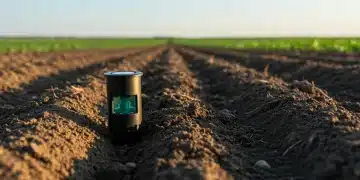
Precision Irrigation 2026: AI-Driven Water Savings in US Agriculture
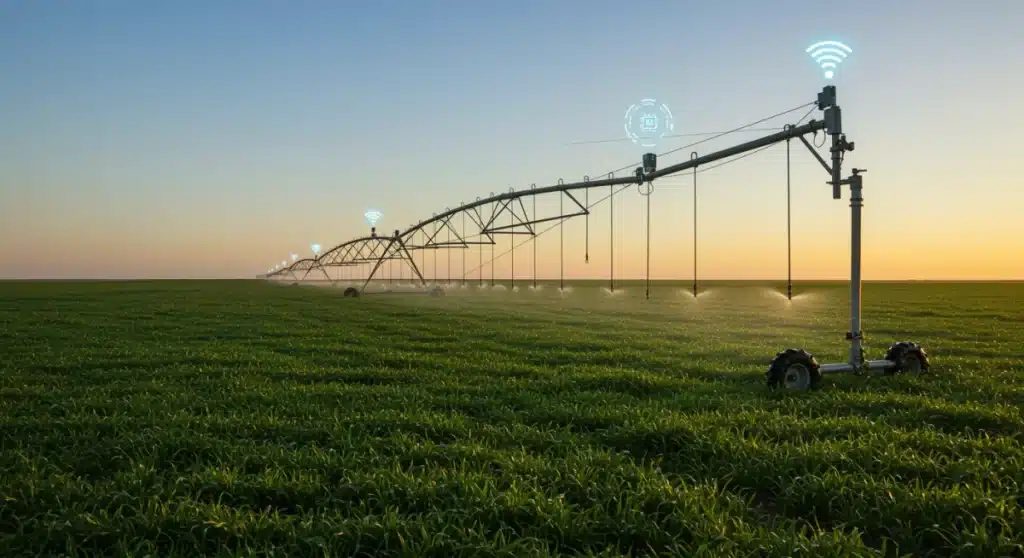
By 2026, AI-driven precision irrigation systems are set to revolutionize US agriculture, enabling a significant 15% reduction in water usage through advanced data analysis and autonomous control for optimized crop hydration.
In the dynamic landscape of modern agriculture, the quest for efficiency and sustainability is paramount. As we look towards 2026, the integration of artificial intelligence into farming practices, particularly in irrigation, is no longer a futuristic concept but a present reality promising transformative results. Precision irrigation AI is poised to deliver remarkable water savings, with projections indicating a potential 15% reduction in water consumption across US agriculture. This isn’t just about saving a precious resource; it’s about optimizing crop yield, reducing operational costs, and bolstering the resilience of our food systems against climate variability. How exactly are these intelligent systems reshaping the way we water our crops, and what practical solutions are farmers implementing today?
the urgent need for water efficiency in US agriculture
The agricultural sector in the United States faces increasing pressure to manage water resources more effectively. Decades of conventional irrigation methods, while productive, have often led to significant water waste through evaporation, runoff, and over-application. This unsustainable model is no longer viable given growing populations, climate change impacts, and competing demands for water from urban and industrial sectors.
Water scarcity is not a uniform issue across the US; regions like the Southwest grapple with chronic drought, while others face seasonal limitations. The economic implications of inefficient water use are substantial, affecting farmers’ bottom lines through higher utility bills and reduced yields when water is scarce. Environmental concerns also play a critical role, as excessive water use can deplete aquifers, degrade soil quality, and contribute to nutrient runoff into waterways, impacting ecosystems.
rising operational costs and environmental impact
Farmers are constantly balancing the need for productivity with the escalating costs of inputs. Water, once considered a relatively cheap commodity, is now a significant operational expense, particularly for large-scale operations. The energy required to pump and distribute water further adds to these costs, creating a dual challenge for profitability and environmental stewardship.
- Increased energy consumption for pumping.
- Higher water utility charges in regulated areas.
- Soil degradation from over-irrigation and nutrient leaching.
- Contribution to groundwater depletion and surface water contamination.
Addressing these challenges requires a paradigm shift from traditional, generalized watering schedules to highly localized, data-driven approaches. This shift is exactly what precision irrigation systems, especially those enhanced with AI, are designed to achieve, offering a path towards both economic viability and ecological responsibility.
The imperative for water efficiency extends beyond individual farm profitability; it’s a matter of national food security and environmental health. Adopting advanced irrigation technologies is crucial for ensuring the long-term sustainability of US agricultural practices.
understanding AI’s role in modern irrigation systems
Artificial intelligence is transforming irrigation from a manual, often guesswork-driven process into a highly optimized, data-informed science. At its core, AI in irrigation involves algorithms that analyze vast amounts of data to make real-time decisions about when, where, and how much water to apply to crops. This intelligence moves beyond simple automation, enabling systems to learn, adapt, and predict.
The integration of AI begins with data collection. Sensors deployed throughout fields gather information on soil moisture levels, temperature, humidity, and even crop health. Weather forecasts, historical climate data, and specific crop water requirements are also fed into the AI models. These diverse data points are then processed by sophisticated algorithms to create a precise irrigation schedule tailored to the exact needs of each section of a field.
data fusion and predictive analytics
One of the most powerful aspects of AI in irrigation is its ability to fuse disparate data sources and apply predictive analytics. Instead of reacting to current conditions, AI models can anticipate future water needs based on predicted weather patterns and crop growth stages. This proactive approach prevents both under-watering and over-watering, ensuring optimal conditions for plant development.
- Real-time soil moisture and nutrient monitoring.
- Integration with hyper-local weather forecasting.
- Analysis of satellite imagery and drone data for crop health.
- Machine learning models for irrigation scheduling optimization.
By continuously learning from past performance and current environmental conditions, AI systems can refine their recommendations, leading to increasingly accurate and efficient water application over time. This adaptive capability is what sets AI apart from traditional automated systems, offering a dynamic solution to the complexities of agricultural irrigation.
Ultimately, AI empowers farmers with unprecedented control and insight, allowing them to make informed decisions that conserve water, reduce costs, and improve crop quality, positioning them for greater success in a resource-constrained future.
key technologies driving precision irrigation in 2026
The projected 15% water savings in US agriculture by 2026 are not a mere aspiration but a tangible goal underpinned by a suite of rapidly evolving technologies. These innovations, often working in concert, form the backbone of advanced precision irrigation systems, moving beyond basic automation to intelligent, adaptive control. The synergy between these components is what allows for such significant efficiency gains.
At the forefront are advanced sensor networks. These aren’t just simple moisture probes; they include sophisticated devices that measure soil electrical conductivity, temperature, nutrient levels, and even plant physiological stress. Coupled with high-resolution remote sensing from drones and satellites, which provide detailed imagery on crop vigor and canopy temperature, a comprehensive picture of field conditions emerges.
sensor networks and IoT connectivity
The Internet of Things (IoT) is critical for connecting these diverse sensors and devices, enabling seamless data flow to central AI platforms. This connectivity allows for real-time monitoring and control, making it possible to adjust irrigation in milliseconds rather than hours or days. Robust, low-power wireless communication protocols are essential for deployment across vast agricultural landscapes.
- High-density soil moisture and nutrient sensors.
- Weather stations with hyper-local climate data.
- Aerial imagery from drones and satellites (NDVI, thermal imaging).
- Wireless mesh networks for field-wide data transmission.
Beyond data collection, the irrigation hardware itself has seen significant advancements. Variable rate irrigation (VRI) systems, which can apply different amounts of water to different sections of a field simultaneously, are becoming more sophisticated. When integrated with AI, these VRI systems can adjust water flow and pressure with unparalleled precision, responding directly to the localized needs identified by the AI algorithms.
These technological advancements represent a holistic approach to water management, where every drop is accounted for and applied optimally, leading directly to the ambitious water saving targets we anticipate for 2026.
achieving 15% water savings: practical solutions for farmers
The promise of 15% water savings is compelling, but farmers need practical, implementable solutions to realize this potential. The transition to AI-driven precision irrigation involves more than just installing new equipment; it requires a strategic approach to technology adoption and management. Several key solutions are making this transition feasible and beneficial for US farmers today.
One primary solution involves leveraging existing infrastructure with smart upgrades. Many farms already utilize pivot or drip irrigation systems. Integrating AI-powered controllers, sensors, and software platforms can transform these traditional systems into intelligent ones without the need for a complete overhaul. This modular approach reduces initial investment barriers and allows for gradual adoption.
integrating AI with existing irrigation infrastructure
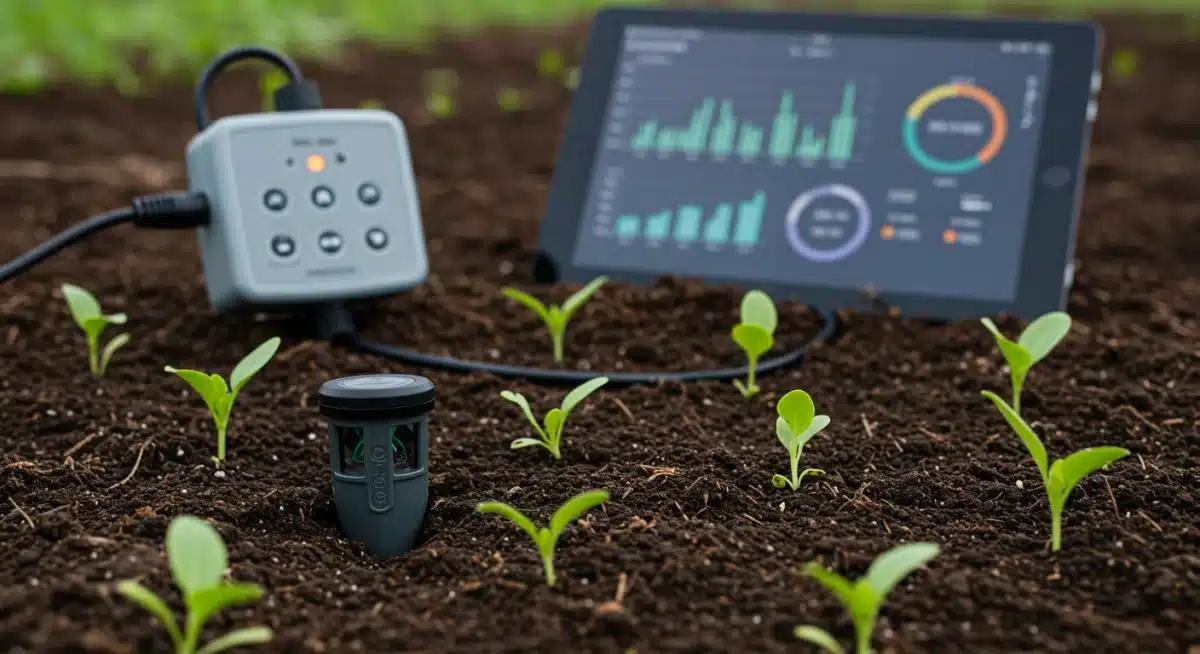
Farmers can begin by implementing soil moisture sensors in key zones of their fields and linking them to an AI-enabled control unit. This immediate feedback loop allows the system to deliver water only when and where it’s truly needed, avoiding the pitfalls of time-based or calendar-based irrigation schedules. The AI learns from historical data and real-time inputs to continuously refine its watering decisions.
- Retrofitting existing pivot systems with VRI technology and AI controllers.
- Deploying smart drip irrigation systems with zone-specific AI management.
- Utilizing farm management software that integrates AI irrigation modules.
- Accessing cloud-based AI platforms for data analysis and irrigation scheduling.
Another practical solution is the availability of user-friendly interfaces and decision support systems. AI doesn’t have to be a black box; modern platforms offer intuitive dashboards that provide farmers with clear insights into water usage, crop health, and system performance. These tools empower farmers to understand and trust the AI’s recommendations, fostering greater adoption and effective use of the technology.
By focusing on practical, scalable solutions, US agriculture can systematically move towards higher water efficiency, ensuring both economic prosperity and environmental sustainability.
challenges and opportunities in AI irrigation adoption
While the benefits of AI-driven precision irrigation are clear, widespread adoption in US agriculture faces several challenges. Overcoming these hurdles is crucial to realizing the full potential of water savings and sustainable farming practices. However, these challenges also present significant opportunities for innovation, investment, and collaboration within the agricultural technology sector.
One of the primary challenges is the initial investment cost. While the long-term return on investment (ROI) is substantial through water, energy, and labor savings, the upfront capital expenditure for advanced sensor networks, AI controllers, and VRI equipment can be prohibitive for some smaller or mid-sized farms. This financial barrier often slows down the pace of adoption, despite the clear advantages.
bridging the knowledge gap and financial barriers
Another significant hurdle is the technological learning curve. Farmers, many of whom have decades of experience with traditional methods, may require training and support to effectively understand and operate complex AI systems. Bridging this knowledge gap through accessible educational programs and robust technical support is vital for successful integration.
- High initial investment costs for advanced systems.
- Lack of technical expertise and training among some farmers.
- Data privacy and security concerns with cloud-based platforms.
- Interoperability issues between different smart agriculture technologies.
Despite these challenges, opportunities abound. Government incentives, grants, and favorable loan programs can significantly reduce the financial burden of adoption. Furthermore, the development of more affordable and user-friendly AI solutions, perhaps through subscription-based models, can make these technologies accessible to a broader range of farmers. The expanding ecosystem of agritech companies is continuously innovating to address these market needs.
The push for sustainable agriculture also creates a strong market for AI irrigation solutions, attracting investment and fostering a competitive environment that drives down costs and improves functionality. Collaboration between researchers, technology providers, and farming communities will be key to overcoming these barriers and unlocking the full potential of AI in irrigation.
the future outlook: beyond 2026 for smart irrigation
The 15% water savings projected for US agriculture by 2026 with AI-driven systems is merely a stepping stone towards an even more optimized and sustainable future. The trajectory of innovation in precision irrigation suggests continued advancements that will further refine water management, integrate with broader farm operations, and adapt to increasingly complex environmental challenges. The landscape of smart irrigation is dynamic, promising even greater efficiencies and resilience.
Beyond 2026, we can anticipate a deeper integration of AI with other agricultural technologies. This includes seamless communication between AI irrigation systems and autonomous farm machinery, such as planting and harvesting robots. Imagine a scenario where planting patterns are optimized for water distribution, and irrigation schedules are instantly adjusted based on real-time data from autonomous crop scouts detecting early signs of stress.
hyper-localization and advanced resource management
The trend towards hyper-localization will continue, moving beyond field-level precision to individual plant-level water management. Miniaturized sensors and AI-powered micro-drones could monitor individual plants, delivering bespoke water and nutrient solutions. This level of granularity would virtually eliminate waste and maximize resource uptake, leading to unprecedented efficiency.
- Integration with autonomous farm robotics for holistic farm management.
- Development of plant-level irrigation and nutrient delivery systems.
- Enhanced AI models for climate change adaptation and extreme weather events.
- Blockchain technology for transparent water usage tracking and compliance.
Furthermore, AI models will become even more sophisticated, incorporating genetic data of specific crop varieties to predict their precise water needs at different growth stages. The ability of AI to learn and adapt will extend to predicting disease outbreaks or pest infestations based on water stress patterns, allowing for preventative measures that reduce the need for chemical interventions. This holistic approach to farm management, driven by intelligent systems, will redefine agricultural productivity and sustainability.
The future of smart irrigation is one where water is not just conserved but intelligently managed as a vital component of a fully integrated, resilient, and highly productive agricultural ecosystem, ensuring food security for generations to come.
| Key Aspect | Brief Description |
|---|---|
| Water Savings Target | Achieve 15% reduction in agricultural water usage by 2026 in the US. |
| AI Integration | AI analyzes data from sensors, weather, and crop models for precise irrigation. |
| Key Technologies | Sensor networks, IoT, variable rate irrigation, and predictive analytics. |
| Practical Solutions | Upgrading existing infrastructure, user-friendly AI platforms, and training. |
frequently asked questions about AI precision irrigation
AI-driven precision irrigation utilizes artificial intelligence algorithms to analyze real-time data from sensors, weather forecasts, and crop models. This allows for highly optimized and localized water application, ensuring plants receive the exact amount of water needed, when needed, minimizing waste and maximizing efficiency.
Projections indicate that AI-driven precision irrigation systems are capable of achieving a significant 15% reduction in water usage across US agricultural operations by 2026. This saving is attributed to the systems’ ability to prevent over-watering and tailor hydration precisely to crop requirements.
Key technologies include advanced sensor networks (soil moisture, nutrient, weather), Internet of Things (IoT) connectivity for data transmission, variable rate irrigation (VRI) systems for precise water delivery, and sophisticated AI/machine learning algorithms for data analysis and decision-making.
While initial investment can be a challenge, the market is seeing continuous innovation towards more affordable and modular AI solutions. Retrofitting existing infrastructure, government grants, and subscription-based services are making AI irrigation increasingly accessible to small and mid-sized agricultural operations.
Beyond immediate water savings, long-term benefits include reduced energy costs, improved crop yields and quality, enhanced soil health, decreased environmental impact, and increased resilience to climate change. AI also offers valuable data insights for overall farm management and sustainability.
conclusion
The journey towards achieving 15% water savings in US agriculture by 2026 through AI-driven precision irrigation is well underway, marking a pivotal moment for sustainable farming. This technological revolution is not just about conserving a vital resource; it’s about fundamentally enhancing the efficiency, profitability, and environmental stewardship of agricultural practices. By embracing intelligent systems that learn, adapt, and optimize, farmers are empowered to make data-informed decisions, transforming traditional irrigation into a highly precise and responsive operation. The continued integration of AI with advanced sensor networks, IoT, and variable rate technology promises a future where water is managed with unprecedented accuracy, ensuring the resilience and productivity of US agriculture for generations to come.